HeadPowder, a leading manufacturer in the field of material handling solutions, specializes in providing advanced pneumatic conveying systems for various industrial applications. This company, based in Shandong, China, is dedicated to delivering high-quality and reliable equipment for the glass manufacturing industry. The following article explores the working principle and key features of the glass particle pneumatic conveying system equipment, highlighting its efficiency, reliability, and suitability for handling delicate materials like glass particles.

Introduction to Glass Particle Pneumatic Conveying Systems
Glass particle pneumatic conveying systems are engineered to transport glass particles from one location to another using a pressurized or vacuum air stream. These systems are widely used in the glass manufacturing industry due to their ability to handle fragile materials without causing damage, ensuring high product quality and minimal waste. The system operates by creating a controlled airflow that propels the glass particles through a pipeline network, enabling seamless material transfer between production stages, storage areas, or processing units.

Working Principle of the Glass Particle Pneumatic Conveying System
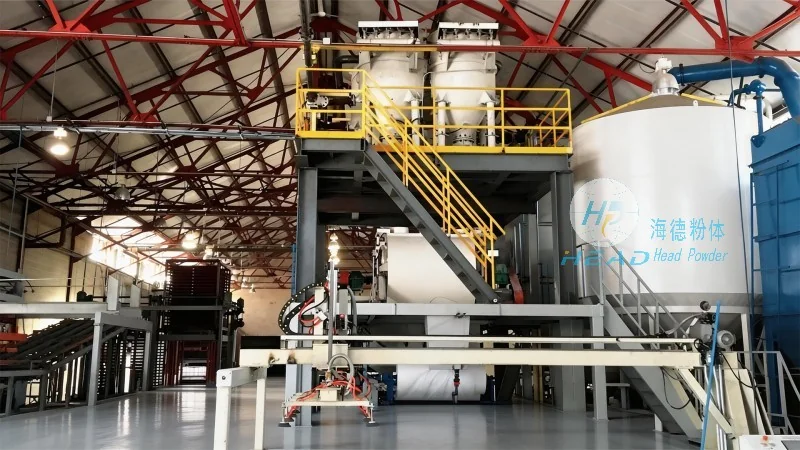
The core working principle of the glass particle pneumatic conveying system involves the use of air as the conveying medium. The system typically consists of a blower or vacuum pump that generates the necessary air pressure or suction to move the glass particles. The process begins with the glass particles being fed into the system, either through a hopper or a feeder, where they are then introduced into the conveying line. As the air stream flows through the pipeline, it lifts and transports the glass particles to the desired destination. The system may incorporate components such as in-line filters, cyclone separators, and silencers to ensure efficient particle separation and noise reduction. The air, now carrying the glass particles, is then discharged into a collection hopper or processing unit, where the particles are separated from the air stream through a series of filtration and separation steps. This process allows for the continuous and automated transfer of glass particles with minimal human intervention.

Key Features and Advantages of the Glass Particle Pneumatic Conveying System
The glass particle pneumatic conveying system offers several distinct features and advantages that make it an ideal choice for glass manufacturing operations. Firstly, it provides a dust-free and clean transfer process, which is crucial for maintaining the purity of glass particles and preventing contamination. The system operates in a closed loop, minimizing the exposure of glass particles to the environment and reducing the risk of dust inhalation or environmental pollution. Secondly, the system is highly efficient in terms of energy consumption and material handling speed. It can transport glass particles over long distances with minimal energy input, making it cost-effective for large-scale production. Thirdly, the system is designed to handle fragile glass particles without causing breakage or abrasion, preserving the quality and integrity of the material. This is achieved through the use of smooth, corrosion-resistant pipelines and gentle air flow, which reduces the impact forces on the particles. Additionally, the system offers flexibility in terms of layout and configuration, allowing it to be customized to fit the specific requirements of different production facilities. It can be integrated with existing equipment and processes, providing a seamless solution for material transfer. The system also features easy maintenance and operation, with accessible components that can be easily cleaned and serviced. This ensures minimal downtime and high availability of the system, contributing to overall operational efficiency.
Applications and Industries Served by the Glass Particle Pneumatic Conveying System
The glass particle pneumatic conveying system is widely used in various industries that require the handling of glass particles, including glass manufacturing, glass processing, and glass recycling. In glass manufacturing, the system is used to transport raw glass materials from storage to the production line, ensuring a continuous supply of materials for glass production. It is also used to transfer finished glass products from the production line to packaging or storage areas. In glass processing, the system is employed to move glass particles between different processing stages, such as grinding, polishing, or cutting. This allows for efficient material flow and reduces the need for manual handling, which can be hazardous and inefficient. In glass recycling, the system is used to transport recycled glass particles from collection points to processing facilities, enabling the recycling process to be carried out efficiently and effectively. The system's ability to handle fragile glass particles without damage makes it particularly suitable for these applications, as it preserves the quality of the recycled material and minimizes waste.
Conclusion: The Importance of Glass Particle Pneumatic Conveying Systems
In conclusion, the glass particle pneumatic conveying system is a vital component in the glass manufacturing and processing industry. Its working principle, based on the use of air as a conveying medium, provides an efficient and reliable method for transporting glass particles. The key features and advantages of the system, including its dust-free operation, energy efficiency, and ability to handle fragile materials, make it an ideal choice for various industrial applications. The system's flexibility and ease of maintenance further enhance its value, ensuring long-term operational performance. As the demand for high-quality glass products continues to grow, the glass particle pneumatic conveying system plays a crucial role in meeting the needs of the industry, providing a seamless and efficient solution for material handling. HeadPowder, with its expertise in material handling solutions, continues to provide advanced and reliable pneumatic conveying systems that meet the evolving needs of the glass industry.




