HeadPowder, a leading manufacturer in the field of material handling solutions, specializes in the design, development, and production of advanced conveying equipment tailored for the lithium-ion battery industry. With a strong focus on precision, efficiency, and reliability, our company, Shandong HeadPowder Engineering Co., Ltd., based in Shandong, China, provides comprehensive solutions that meet the stringent demands of modern battery production lines.

Overview of Lithium-Ion Battery Material Conveying Equipment
Lithium-ion battery material conveying equipment is a critical component in the manufacturing process of lithium-ion batteries. These systems are engineered to handle various raw materials such as cathode active materials, anode materials, and electrolytes with precision and consistency. The equipment is designed to ensure that materials are transported safely and efficiently from storage to processing units, minimizing downtime and maximizing production throughput. HeadPowder's solutions are built to integrate seamlessly with existing production lines, offering customizable configurations that adapt to specific production requirements.
Step-by-Step Operation Process of the Conveying Equipment
The operation process of lithium-ion battery material conveying equipment typically involves several key stages. Initially, raw materials are loaded into the system, often via bulk storage silos or hoppers. The equipment then uses a combination of mechanisms such as screw conveyors, belt conveyors, or pneumatic systems to transport materials through the production line. Each stage is carefully controlled to maintain the integrity of the materials, preventing contamination or degradation. For instance, in the handling of cathode materials, the system ensures that the powders are conveyed without agglomeration, which is crucial for maintaining the desired particle size distribution. The conveying process is monitored in real-time, with sensors and control systems adjusting the speed and direction of the material flow as needed. This dynamic control helps optimize the throughput while ensuring product quality. At the end of the conveying process, materials are delivered to the next processing unit, such as mixing or coating equipment, where they undergo further transformation into battery components.

Working Principle of the Conveying Equipment
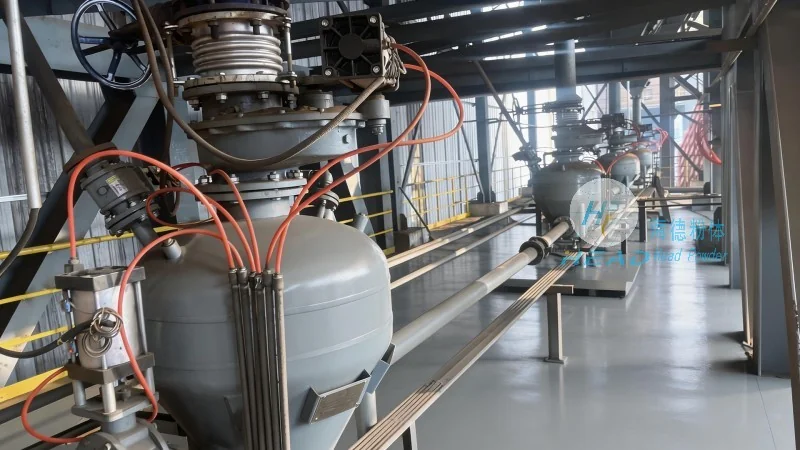
The working principle of lithium-ion battery material conveying equipment is based on mechanical and sometimes pneumatic systems that facilitate the movement of bulk materials. The core components include feeders, conveyors, and control units. Feeders, such as rotary valves or vibratory feeders, regulate the flow rate of materials from the storage silos to the conveyor system. These feeders ensure a consistent and controlled feed, preventing overloading or underloading of the conveying equipment. The conveyor system, which can be a screw conveyor, belt conveyor, or bucket elevator, then transports the materials horizontally or vertically. Screw conveyors use rotating screws to push materials forward, while belt conveyors utilize moving belts to carry materials along a path. Pneumatic conveying systems, on the other hand, use compressed air to transport materials in a closed pipeline, which is particularly useful for handling fine powders that are prone to dust or contamination. The control unit, equipped with sensors and programmable logic controllers (PLCs), monitors the entire process. It adjusts the speed of the conveyors, the flow rate of the feeders, and responds to any abnormalities, such as blockages or material jams. This closed-loop control system ensures that the conveying process operates smoothly and efficiently. Additionally, the equipment is designed with safety features, including emergency stop buttons and overload protection, to prevent accidents and equipment damage. The integration of these components allows for a reliable and efficient material handling solution that supports high-volume production in the lithium-ion battery industry.
Key Features and Benefits of HeadPowder's Conveying Solutions
HeadPowder's lithium-ion battery material conveying equipment is equipped with several advanced features that enhance performance and reliability. One of the key features is the use of high-quality materials for the construction of the conveying components, such as stainless steel or corrosion-resistant alloys, which are essential for handling chemically active materials. The equipment is also designed with easy-to-clean surfaces to maintain hygiene standards, which is critical in battery production where contamination can affect battery performance. Another important feature is the integration of dust collection systems, which helps in controlling airborne particles and maintaining a clean working environment. The conveying systems are also equipped with real-time monitoring and data logging capabilities, allowing operators to track the performance and identify areas for improvement. These features contribute to the overall efficiency and longevity of the equipment. The benefits of using HeadPowder's conveying solutions include increased production throughput, reduced material waste, improved product quality, and lower operational costs. By ensuring that materials are handled with precision and care, the equipment helps manufacturers achieve higher yields and meet the growing demand for lithium-ion batteries. Additionally, the customizable nature of the equipment allows it to be adapted to different production scales, from small-scale pilot lines to large-scale industrial production. This flexibility makes HeadPowder's solutions suitable for a wide range of applications in the battery manufacturing industry.
Conclusion and Application in Battery Manufacturing
In conclusion, lithium-ion battery material conveying equipment plays a vital role in the efficient and reliable production of lithium-ion batteries. The operation process, which involves material loading, conveying, and delivery to processing units, is carefully designed to ensure precision and consistency. The working principle, based on mechanical and pneumatic systems, provides a robust and adaptable solution for handling various raw materials. HeadPowder, with its expertise and commitment to quality, offers advanced conveying equipment that meets the stringent requirements of the battery industry. By integrating these systems into production lines, manufacturers can enhance productivity, maintain product quality, and stay competitive in the market. The company's solutions, based in Shandong, China, are tailored to provide customized material handling solutions that support the evolving needs of the lithium-ion battery sector. As the demand for lithium-ion batteries continues to grow, the importance of efficient material conveying equipment will only increase, making it a critical investment for any battery manufacturer.




