Polycrystalline silicon is a critical material in the semiconductor industry, and efficient material handling is essential for maintaining production efficiency and quality. Pneumatic conveying systems have emerged as a preferred solution for transporting polycrystalline silicon due to their ability to handle fine powders and granules with precision. This article explores the working principle and key features of polycrystalline silicon material pneumatic conveying equipment, highlighting how such systems enhance operational performance in industrial settings.

Introduction to Polycrystalline Silicon Pneumatic Conveying Systems
Polycrystalline silicon, often used in solar panels and semiconductor manufacturing, requires specialized handling to prevent contamination and ensure consistent particle size distribution. Pneumatic conveying systems utilize air or gas to transport these materials, offering a dust-free and enclosed method that minimizes product degradation. The systems are designed to handle the unique properties of polycrystalline silicon, such as its fine particle size and potential for static charge accumulation.
Working Principle of Pneumatic Conveying for Polycrystalline Silicon
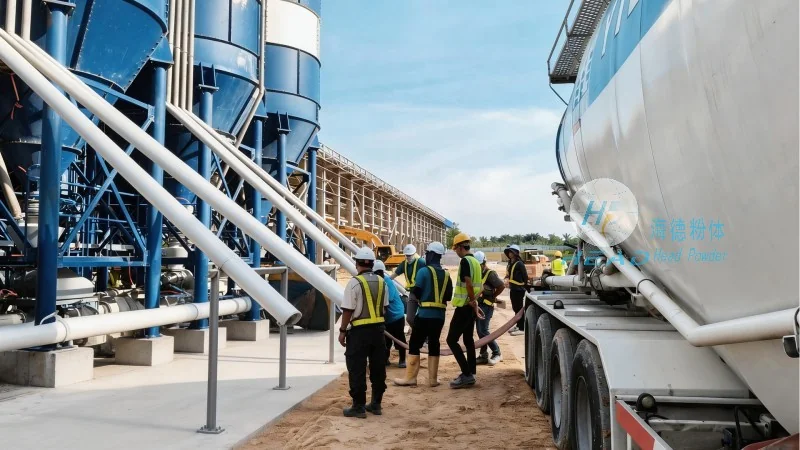
The core working principle of polycrystalline silicon pneumatic conveying involves the use of a pressurized or vacuum system to move material through a pipeline. In a typical setup, the material is fed into a hopper or feeder, where it is then introduced into a conveying line with compressed air. The air flow creates a drag force that lifts and transports the material to the destination. This process can be categorized into two main types: dilute-phase and dense-phase conveying. Dilute-phase systems use higher air velocities to transport material in a dispersed state, while dense-phase systems use lower velocities and higher material concentrations to ensure stable flow and reduced particle breakage.

Key Features of Polycrystalline Silicon Pneumatic Conveying Equipment
Polycrystalline silicon pneumatic conveying equipment is engineered with several key features to optimize performance and safety. These include: Advanced Material Feeding Systems, which ensure consistent and controlled material introduction to prevent blockages or uneven flow. Specialized Air Conditioning and Filtration, designed to maintain a clean environment and prevent contamination from external particles. Static Control Measures, such as anti-static coatings and grounding systems, to mitigate the risk of static discharge that could damage sensitive polycrystalline silicon particles. Modular and Scalable Design, allowing for easy integration into existing production lines and expansion as demand grows. Additionally, the equipment often incorporates Real-Time Monitoring and Control capabilities, enabling operators to track flow rates, pressure, and material levels for enhanced process control.
Application Benefits and Technical Advantages
Implementing polycrystalline silicon pneumatic conveying systems offers numerous benefits for industrial operations. The enclosed, dust-free environment reduces product loss and contamination, which is critical for maintaining the high purity required in semiconductor applications. The systems also improve safety by eliminating the need for manual handling of fine powders, reducing the risk of respiratory hazards and material exposure. From a technical standpoint, these systems provide precise control over material flow, allowing for consistent particle size and distribution, which directly impacts the quality of the final product. Furthermore, the energy efficiency of pneumatic conveying, especially in dense-phase configurations, contributes to lower operational costs over time.

Company Profile and Expertise
Shandong HeadPowder Engineering Co., Ltd., a leading manufacturer in the field, specializes in the design and production of advanced pneumatic conveying systems tailored for polycrystalline silicon and other fine materials. With a strong commitment to innovation and quality, the company has developed state-of-the-art equipment that meets the stringent requirements of the semiconductor industry. HeadPowder's expertise lies in customizing solutions to address specific customer needs, ensuring that each system is optimized for the unique characteristics of the material being handled. The company's facilities, located in Shandong, China, are equipped with modern manufacturing capabilities and rigorous quality control processes to deliver reliable and durable equipment. By partnering with HeadPowder, industries can benefit from decades of experience in material handling technology, ensuring efficient and safe operation of their polycrystalline silicon processing lines.




