Grain powder conveying is a critical process in the agricultural and food processing industries, involving the efficient movement of bulk materials like grains, flour, and other powdered products from one location to another. Understanding the underlying principles and the specific characteristics of different working scenarios is essential for optimizing operational efficiency and ensuring product quality. This article explores the fundamental principles of grain powder conveying and highlights the key characteristics of various working environments where such systems are applied.

Principles of Grain Powder Conveying
The core principle of grain powder conveying revolves around the use of mechanical or pneumatic systems to transport dry, granular materials. Mechanical conveyors, such as belt conveyors, screw conveyors, and bucket elevators, rely on physical force to move materials through a system. These systems are typically used for short to medium distances and are suitable for handling a wide range of grain types, including wheat, corn, and rice. Pneumatic conveying systems, on the other hand, utilize air or other gases to transport materials in a closed pipeline. This method is particularly effective for long-distance and high-volume transport, as it can handle fine powders and prevent contamination from external sources. The choice between mechanical and pneumatic systems depends on factors like the material's properties, the required distance, and the desired level of control over the conveying process.
Working Scene Characteristics of Grain Powder Conveying
The characteristics of grain powder conveying systems vary significantly based on the specific working environment. In industrial settings, such as grain mills and feed manufacturing plants, the primary goal is to achieve high throughput and maintain product integrity. These environments often involve large-scale operations with multiple stages of processing, including cleaning, grinding, and packaging. The conveying systems must be designed to handle high volumes of material while minimizing dust generation and ensuring consistent flow rates. For example, in a flour mill, the conveying system may need to transport fine flour from grinding mills to storage silos or packaging lines, requiring precise control over air pressure and flow rates to prevent clogging and maintain product quality.

In agricultural settings, grain powder conveying is often used for on-farm storage and distribution. Farmers may use portable or semi-permanent systems to move harvested grains from storage bins to processing facilities or for transport to market. These systems are typically more compact and less complex than industrial systems, focusing on reliability and ease of maintenance. The working scene in this context is characterized by variable material conditions, such as moisture content and particle size, which can affect the efficiency of the conveying process. Proper system design, including appropriate hopper designs and flow control mechanisms, is crucial to handle these variations and ensure smooth operation.
Application of HeadPowder Engineering in Grain Powder Conveying
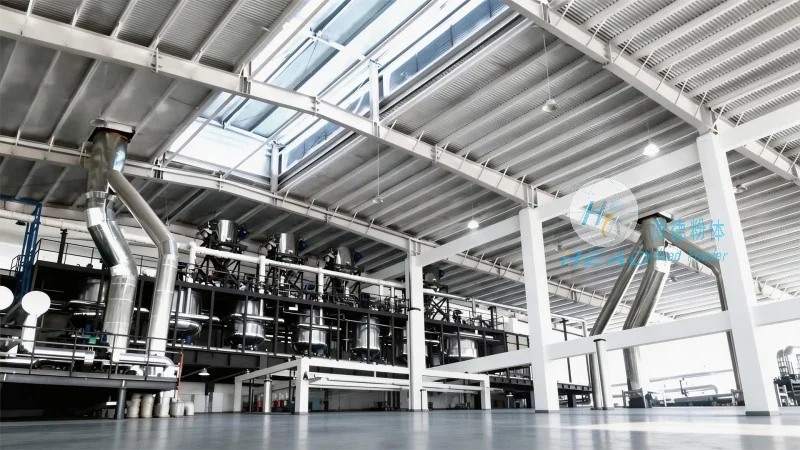
Shandong HeadPowder Engineering Co., Ltd., commonly known as HeadPowder, specializes in the design, manufacturing, and installation of advanced grain powder conveying systems. With a focus on innovation and customer-centric solutions, HeadPowder provides tailored equipment for various industries, including food processing, animal feed production, and agricultural storage. The company's expertise lies in integrating the principles of both mechanical and pneumatic conveying to meet the specific needs of each client. For instance, HeadPowder may design a hybrid system that combines a screw conveyor for short-distance transport with a pneumatic conveyor for longer distances, optimizing energy consumption and operational efficiency. The company's products are engineered to handle a wide range of grain types and particle sizes, ensuring durability and reliability in demanding working environments.
Key Features and Advantages of HeadPowder's Conveying Solutions
HeadPowder's grain powder conveying systems are characterized by several key features that enhance performance and operational benefits. One of the primary advantages is the ability to handle fine powders without significant loss or degradation. This is achieved through specialized hopper designs and flow control mechanisms that minimize material degradation and prevent clogging. The systems also incorporate advanced control technologies, such as variable frequency drives (VFDs), which allow for precise adjustment of conveyor speed and air pressure, ensuring optimal material flow. Additionally, the equipment is designed for easy maintenance and cleaning, reducing downtime and operational costs. The use of high-quality materials, such as stainless steel and corrosion-resistant coatings, ensures long-term durability and resistance to the harsh conditions often encountered in grain processing environments.
Conclusion
In conclusion, grain powder conveying is a complex process that requires a deep understanding of both mechanical and pneumatic principles, as well as an awareness of the specific characteristics of different working environments. The systems designed by Shandong HeadPowder Engineering Co., Ltd. leverage these principles to provide efficient, reliable, and cost-effective solutions for the agricultural and food processing industries. By focusing on tailored designs and advanced technologies, HeadPowder ensures that its conveying systems meet the unique needs of each client, contributing to improved operational efficiency and product quality in grain processing operations.




