For clients seeking efficient and reliable solutions for handling fly ash, the fly ash silo pneumatic conveying system represents a sophisticated technology designed to optimize material transport processes. This system is integral to modern industrial applications, particularly in power plants and waste management facilities, where the safe and effective movement of fly ash is critical. The following overview provides a detailed look at the system's structure and operational principles, highlighting its key components and how they work in unison to achieve seamless material handling.

Key Components of the Fly Ash Silo Pneumatic Conveying System
The fly ash silo pneumatic conveying system comprises several essential components that work together to facilitate the transport of fly ash from the silo to the desired destination. The primary components include the fly ash silo, the pneumatic conveying pipeline, the air compressor or blower unit, the control system, and the discharge equipment. Each component plays a crucial role in ensuring the system operates efficiently and safely.
Firstly, the fly ash silo serves as the storage vessel for the fly ash. It is typically constructed from durable materials such as steel or concrete, designed to withstand the weight and chemical properties of the material. The silo is equipped with a hopper or outlet valve that allows the fly ash to be discharged into the conveying pipeline. The design of the silo, including its internal geometry and outlet configuration, is critical for preventing material buildup and ensuring smooth flow.
Secondly, the pneumatic conveying pipeline is the backbone of the system. It consists of a network of pipes that transport the fly ash using air pressure. The pipeline is usually made of corrosion-resistant materials like stainless steel or PVC to handle the abrasive nature of fly ash. The system may include various fittings, such as elbows, tees, and valves, which are strategically placed to direct the flow and control the pressure within the pipeline.
Thirdly, the air compressor or blower unit generates the necessary air pressure to move the fly ash through the pipeline. This component can be either positive displacement or centrifugal, depending on the system's requirements. The compressor is responsible for supplying a consistent flow of air, which is mixed with the fly ash to create a slurry or suspension that can be transported over long distances. The air pressure and flow rate are carefully controlled to ensure optimal performance and prevent material degradation.

Fourthly, the control system manages the operation of the entire conveying process. It includes sensors, valves, and a control panel that monitors parameters such as pressure, flow rate, and material level. The control system allows operators to start and stop the conveying process, adjust the air pressure, and detect any abnormalities, such as blockages or pressure drops. This ensures the system operates safely and efficiently, minimizing downtime and maximizing productivity.
Fifthly, the discharge equipment is responsible for delivering the fly ash to its final destination. This may include a hopper, a silo, or a storage container. The discharge equipment is designed to handle the high flow rates and abrasive nature of the fly ash, ensuring that the material is discharged smoothly and without causing damage to the equipment.
Working Principle of the Fly Ash Silo Pneumatic Conveying System
The operation of the fly ash silo pneumatic conveying system follows a systematic process that involves several steps. The system begins with the filling of the fly ash silo, where the material is stored until it is ready to be transported. Once the conveying process is initiated, the air compressor starts to generate air pressure, which is introduced into the conveying pipeline.
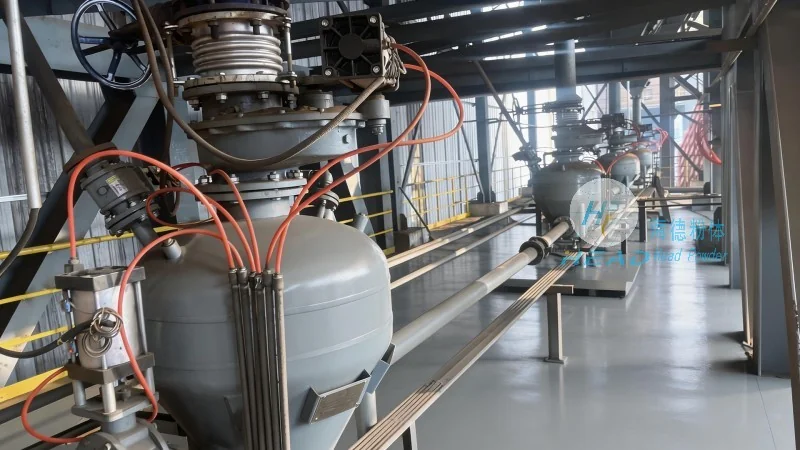
As the air flows through the pipeline, it mixes with the fly ash from the silo, creating a suspension. The air pressure pushes this mixture through the pipeline, transporting the fly ash to the discharge equipment. The velocity of the air and the concentration of the fly ash determine the efficiency of the conveying process. The system is designed to maintain a consistent flow rate, ensuring that the material is transported without any blockages or excessive pressure drops.
During the conveying process, the control system continuously monitors the pressure and flow rate to ensure that the system operates within safe limits. If any abnormalities are detected, such as a blockage or a pressure drop, the control system will automatically shut down the system to prevent damage to the equipment or the material. Once the fly ash reaches the discharge equipment, it is collected and stored for further use or disposal.
Advantages of the Fly Ash Silo Pneumatic Conveying System
The fly ash silo pneumatic conveying system offers several advantages over traditional material handling methods. Firstly, it provides a dust-free and clean operation, as the material is transported within a sealed pipeline. This reduces the risk of dust exposure for operators and minimizes environmental pollution. Secondly, the system is highly efficient, as it can transport large quantities of fly ash over long distances with minimal energy consumption. Thirdly, the system is flexible and can be easily adapted to different applications and requirements. It can be used to transport fly ash from the silo to various destinations, such as a storage facility or a disposal site.

Additionally, the system is relatively low maintenance, as it has fewer moving parts compared to other material handling systems. The components are designed to withstand the abrasive nature of fly ash, reducing the need for frequent repairs and replacements. This results in lower operational costs and increased productivity. The system also offers a high degree of safety, as it eliminates the need for manual handling of fly ash, which can be hazardous due to its dust and chemical properties.
Applications and Industries
The fly ash silo pneumatic conveying system is widely used in various industries, particularly in power generation and waste management. In power plants, the system is used to transport fly ash from the boiler to the storage silos or to other facilities for further processing. In waste management, the system is used to transport fly ash from waste incineration plants to disposal sites or recycling facilities. The system is also used in other industries, such as cement production and chemical processing, where fly ash is used as a raw material or a byproduct.
The system's versatility and efficiency make it an ideal solution for handling fly ash in various applications. It can be customized to meet the specific requirements of different industries, ensuring that the material is transported safely and effectively. The system's ability to handle large quantities of fly ash over long distances makes it a cost-effective solution for many industrial applications.
Conclusion
In conclusion, the fly ash silo pneumatic conveying system is a sophisticated and efficient technology designed to handle the transport of fly ash. Its key components and working principles work together to ensure that the material is transported safely and effectively. The system offers several advantages over traditional material handling methods, including dust-free operation, high efficiency, and low maintenance. It is widely used in various industries, particularly in power generation and waste management, and is an ideal solution for handling large quantities of fly ash over long distances.




