Headpowder, a leading manufacturer based in Shandong, China, specializes in the design and production of advanced pneumatic conveying systems for fly ash handling. This equipment is crucial in modern industrial applications, particularly in power plants and construction material processing, where efficient and reliable transport of fly ash is essential.
Working Principle of Pneumatic Conveying Systems
The core of the fly ash material pneumatic conveying equipment lies in its ability to transport bulk materials like fly ash through a pipeline using a gas stream, typically air or other suitable gases. The system operates by creating a pressure differential between the inlet and outlet of the conveying line. At the inlet, a fan or blower generates the necessary airflow, which draws the fly ash particles into the pipeline. The air and ash mixture then travels through the pipeline to the discharge point, where the air is separated from the ash, often using cyclone separators or other filtration methods. This principle ensures that the fly ash is transported without the need for mechanical components like belts or buckets, reducing maintenance and operational costs.

Key Components and Their Functions
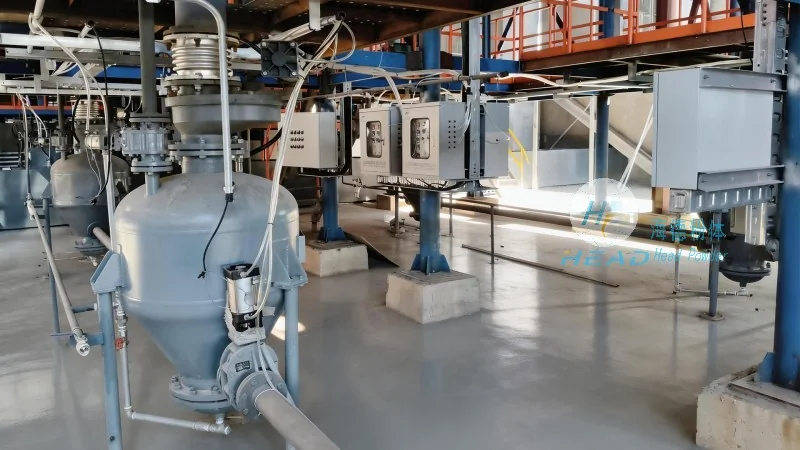
The pneumatic conveying system for fly ash consists of several critical components, each playing a vital role in the overall operation. The primary components include the material feeder, which feeds the fly ash into the conveying line at a controlled rate; the air supply system, which provides the necessary pressure and volume of air; the conveying pipeline, which transports the ash; and the separation and collection system, which separates the ash from the air and collects it in a storage container. Each component is designed to work in harmony to ensure efficient and continuous operation.

Operation Process Step-by-Step
The operation of the fly ash material pneumatic conveying equipment follows a systematic process. First, the fly ash is fed into the material hopper or feeder. The feeder then controls the flow rate of the ash into the conveying line. Simultaneously, the air supply system activates, generating the required airflow. The air and ash mixture is then drawn into the pipeline and transported to the discharge point. At the discharge end, the mixture enters a cyclone separator or a similar device, where the air is separated from the ash due to centrifugal force. The ash is then collected in a storage bin or silo, while the air is either recirculated back into the system or vented to the atmosphere, depending on the system design. This process is typically automated, with sensors and control systems monitoring the flow rates and pressure to maintain optimal operation.
Advantages of Using Pneumatic Conveying for Fly Ash
Employing pneumatic conveying systems for fly ash offers numerous advantages over traditional mechanical conveying methods. Firstly, it eliminates the need for moving parts like conveyor belts or buckets, which reduces maintenance requirements and extends the equipment's lifespan. Secondly, the system provides a dust-free and enclosed transport environment, minimizing the risk of ash dispersion and improving workplace safety. Thirdly, pneumatic conveying allows for flexible and scalable system designs, enabling the equipment to handle varying ash flow rates and distances. Additionally, the system can be integrated with other industrial processes, such as ash utilization or disposal, enhancing overall operational efficiency.

Applications and Industries
Headpowder's fly ash material pneumatic conveying equipment is widely used in various industries, particularly in the power generation sector. In coal-fired power plants, the equipment efficiently transports fly ash from the boiler to storage facilities or to other processing units for further use. It is also utilized in construction material production, where fly ash is used as a supplementary cementitious material in concrete production. The equipment's versatility makes it suitable for a range of applications, from small-scale industrial operations to large-scale power plant installations.




