Maltose, a disaccharide widely utilized in the food and beverage sector, necessitates efficient and reliable handling systems to preserve its quality and safety throughout processing. Pneumatic conveying equipment provides an effective solution by transporting maltose and other similar bulk materials through an air-driven mechanism. This article delves into the operation process and working principle of such equipment, emphasizing its benefits and technical aspects.
About Shandong HeadPowder Engineering Co., Ltd.
Shandong HeadPowder Engineering Co., Ltd., headquartered in Shandong, China, specializes in the design, manufacturing, and supply of advanced material handling solutions. With years of industry experience, the company has developed expertise in creating customized pneumatic conveying systems tailored to the specific needs of clients, including those working with maltose and other food-grade materials.
Key Components of Pneumatic Conveying Systems
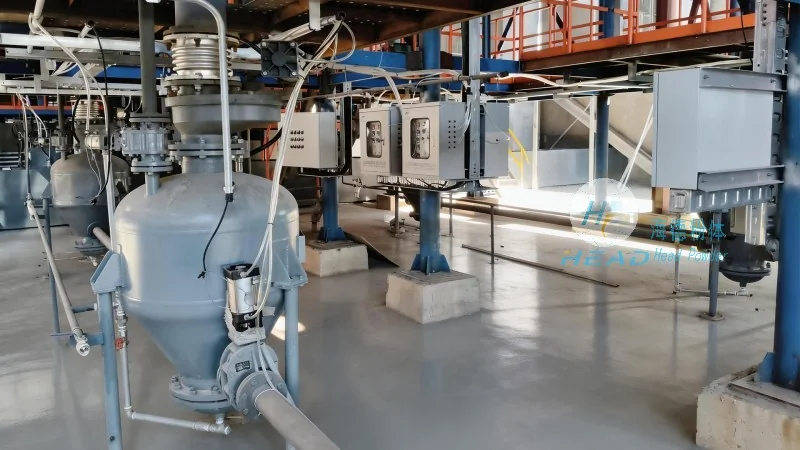
A typical pneumatic conveying system for maltose comprises several critical components that operate in unison to achieve efficient material transport. These include a hopper for material storage, a feeder to regulate the flow rate, a conveying line (usually constructed from stainless steel to maintain hygiene), a dust collector to capture airborne particles, and a receiver for the discharged material. Each component plays a vital role in ensuring the system functions smoothly and safely.

The Operation Process of Maltose Pneumatic Conveying
The operation process of maltose pneumatic conveying involves a series of sequential steps. Initially, the maltose is fed into the hopper from a storage silo or bulk container. The feeder then controls the flow rate of material into the conveying line, ensuring a consistent and controlled feed. Concurrently, a fan or blower generates a high-pressure air stream that propels the maltose particles through the conveying line. The air and material mixture travels through the pipeline to the receiver, where the material is deposited. The air, now carrying fine particles, is then filtered by the dust collector to remove any residual maltose dust before being released or recirculated as needed.
Working Principle of Pneumatic Conveying
The working principle of pneumatic conveying relies on the force of compressed air to move the material. In a positive pressure system, the air is pressurized and forced through the conveying line, carrying the maltose particles along with it. The air velocity must be sufficient to overcome gravitational and frictional forces acting on the particles, ensuring they remain suspended and transported efficiently. The system can operate in either dilute phase (where particles are dispersed in the air stream) or dense phase (where particles are more concentrated), depending on material characteristics and required transport distance. For maltose, a dilute phase system is often preferred due to its ability to handle fine powders and minimize product degradation.
Advantages of Pneumatic Conveying for Maltose Handling
Implementing pneumatic conveying equipment for maltose offers several advantages over traditional methods such as belt conveyors or bucket elevators. Firstly, it provides a hygienic and closed system, preventing contamination from external sources and maintaining the purity of the maltose. Secondly, it reduces the risk of product degradation due to minimal contact with air and reduced friction. Thirdly, the system is flexible and can be easily integrated into existing production lines, allowing for seamless material transfer between processes. Additionally, pneumatic conveying systems are relatively compact, requiring less floor space compared to other bulk handling solutions.

Customization and Application Considerations
Shandong HeadPowder Engineering Co., Ltd. recognizes that each maltose processing facility has unique requirements. Consequently, the company offers customized pneumatic conveying solutions tailored to specific production volumes, material characteristics, and operational conditions. Factors such as maltose particle size, moisture content, and required transport distance are carefully evaluated during the design phase to ensure optimal performance. The company’s engineers collaborate closely with clients to assess their needs and provide recommendations on the most suitable system configuration, including the choice of conveying line diameter, air pressure, and control mechanisms.
Conclusion
Pneumatic conveying equipment is a critical component in the efficient handling of maltose and other bulk materials. By understanding the operation process and working principle of such systems, manufacturers can optimize their material handling processes, improve product quality, and enhance operational efficiency. Shandong HeadPowder Engineering Co., Ltd. remains committed to providing high-quality, customized pneumatic conveying solutions that meet the stringent requirements of the food and beverage industry, ensuring reliable and safe transport of maltose and other valuable materials.




