HeadPowder, a leading enterprise in the field of pneumatic conveying technology, specializes in the design, manufacturing, and application of systems for transporting cement particles. This article provides an in-depth exploration of the working principle and key characteristics of cement particle pneumatic conveying systems, highlighting the technical aspects and operational advantages that define this critical process in industrial material handling.
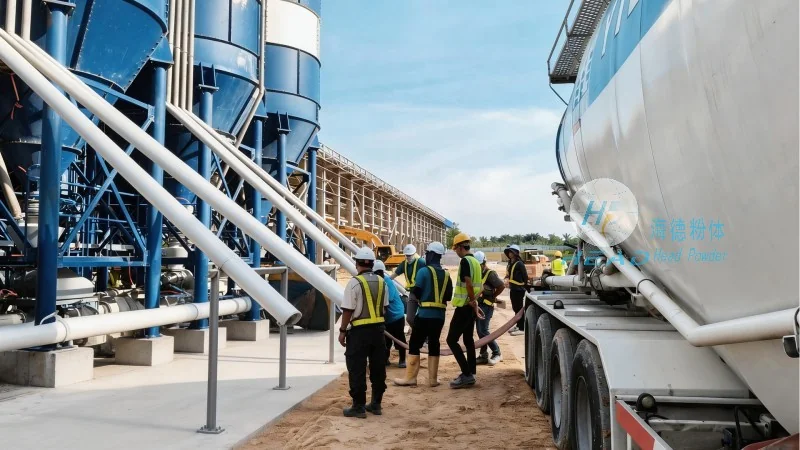
Understanding the Working Principle of Cement Particle Pneumatic Conveying
Cement particle pneumatic conveying operates on the fundamental principle of using a gas stream, typically air or a mixture of air and other gases, to transport solid particles through a pipeline. The process involves several key steps that ensure efficient and reliable material transport. First, the cement particles are introduced into the conveying line, often via a hopper or feeder, where they are then entrained by the high-velocity gas flow. This entrainment allows the particles to be carried along the pipeline, overcoming gravitational forces and other resistance factors. The system typically includes components such as a blower or compressor to generate the necessary air pressure, a filter to remove dust and particulate matter from the exhaust, and a receiver or discharge unit to collect the conveyed material at the destination.
The choice of conveying method—whether dilute phase or dense phase—significantly impacts the system's performance. Dilute phase systems use higher gas velocities to transport particles in a dispersed state, suitable for shorter distances and lighter loads. Dense phase systems, on the other hand, operate at lower velocities, allowing for the transportation of larger particles and over longer distances with less wear on equipment. The selection of the appropriate phase depends on the specific characteristics of the cement, such as particle size, density, and moisture content, as well as the distance and volume requirements of the application.

Key Characteristics of Cement Particle Pneumatic Conveying Systems
Several distinct characteristics define the performance and advantages of cement particle pneumatic conveying systems. One of the most notable features is the ability to handle fine, abrasive materials like cement without the need for mechanical components that might suffer from wear and tear. The absence of moving parts in the conveying line reduces maintenance requirements and extends the operational lifespan of the system. Additionally, pneumatic conveying systems offer high efficiency in terms of material transport speed and capacity, enabling rapid and continuous movement of cement from storage to processing or packaging units.
Another critical characteristic is the system's flexibility in terms of layout and integration. Cement particle pneumatic conveying can be adapted to various industrial settings, including factories, storage facilities, and processing plants, with the ability to route the pipeline in multiple directions to accommodate complex operational needs. This adaptability is particularly valuable in environments where space is limited or where the material flow needs to be reconfigured for different production stages.

The environmental and operational benefits of cement particle pneumatic conveying are also significant. Unlike traditional mechanical conveying methods, which may generate dust and require additional dust control measures, pneumatic systems can incorporate filtration and dust collection systems to minimize environmental impact. This makes them more suitable for applications where air quality and regulatory compliance are critical. Furthermore, the enclosed nature of the conveying line prevents material spillage and contamination, maintaining the purity of the cement and reducing the risk of product degradation.
Applications and Operational Considerations in Cement Industry
Cement particle pneumatic conveying is widely used in the cement industry for various applications, including the transport of raw materials, finished cement products, and additives. In raw material handling, the system efficiently conveys limestone, clay, and other minerals from storage silos to the grinding and mixing processes. For finished product transport, it enables the movement of cement from production lines to storage silos or directly to packaging units, ensuring a seamless supply chain. The ability to handle both bulk and small quantities makes it versatile for different production scales.

Operational considerations for cement particle pneumatic conveying systems include the selection of appropriate air velocity, pressure, and pipeline diameter to match the specific properties of the cement. For example, high moisture content in the cement can affect the flow characteristics and may require adjustments to the system's design to prevent blockages or increased wear. Regular maintenance, such as cleaning filters and checking for air leaks, is essential to maintain system efficiency and prevent downtime. Additionally, the system's energy consumption must be managed effectively, as the blower or compressor accounts for a significant portion of the operational costs.
Conclusion: Advantages and Future Prospects
In conclusion, cement particle pneumatic conveying systems offer a highly efficient and reliable method for transporting cement particles, characterized by minimal wear, high capacity, and flexibility. The working principle, based on gas entrainment and controlled air flow, ensures that cement can be moved safely and effectively across various distances and conditions. The key characteristics of these systems, including their ability to handle abrasive materials, adapt to different layouts, and minimize environmental impact, make them a preferred choice in the cement industry. As industrial material handling continues to evolve, the importance of efficient and sustainable conveying systems like those offered by Shandong HeadPowder Engineering Co., Ltd. remains paramount, ensuring that cement production and distribution processes remain optimized and cost-effective.




