For industrial applications involving synthetic fiber powders, understanding the specialized equipment used for their handling and transport is crucial. This article explores the synthetic fiber powder conveying system equipment, its purpose, and the fundamental design principles that govern its operation. The information is presented by Shandong HeadPowder Engineering Co., Ltd., a company based in China, known for its expertise in powder handling solutions.

Introduction to Synthetic Fiber Powder Conveying Systems
Synthetic fiber powders, such as those used in textiles, composites, and filtration materials, often require precise and efficient transport from storage to processing or packaging areas. Traditional conveying methods may not be suitable due to the unique properties of these powders, including their tendency to aggregate, static charge buildup, or sensitivity to moisture. Synthetic fiber powder conveying systems are engineered to address these challenges, ensuring safe, reliable, and efficient material movement. These systems are integral to modern manufacturing processes, enabling consistent production and minimizing downtime.

Key Components of Synthetic Fiber Powder Conveying Equipment
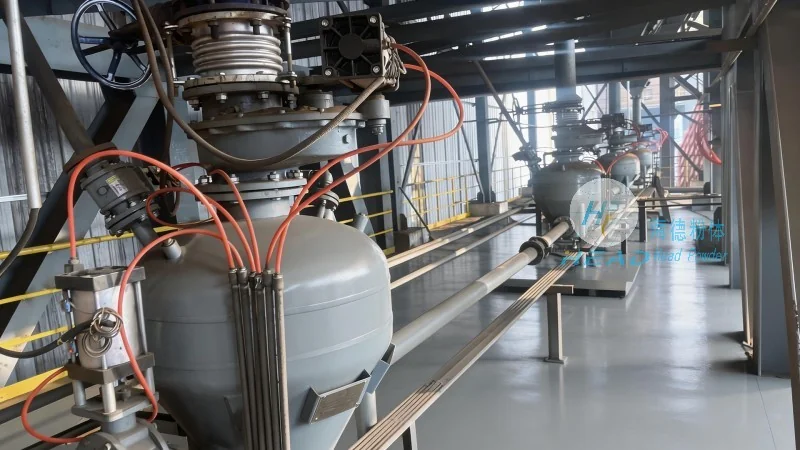
The synthetic fiber powder conveying system typically consists of several key components that work in tandem to achieve effective material transport. These components include a feeding mechanism, a conveying device, a control system, and often, a dust collection or filtration unit. The feeding mechanism is responsible for accurately delivering the synthetic fiber powder from its source, such as a hopper or silo, into the conveying line. This component must be designed to handle the specific flow characteristics of the powder, preventing blockages or uneven feeding. The conveying device, which may be a screw conveyor, pneumatic conveyor, or a combination of both, moves the powder through the system. The control system manages the operation of all components, ensuring optimal performance and safety. Finally, the dust collection or filtration unit helps maintain a clean and safe working environment by capturing airborne particles.
Design Principles for Synthetic Fiber Powder Conveying Systems
The design of synthetic fiber powder conveying systems is guided by several critical principles to ensure efficiency, safety, and longevity. One of the primary principles is the prevention of material degradation or contamination. This involves using materials that are compatible with the synthetic fiber powder, such as stainless steel or specialized plastics, to avoid chemical reactions or particle contamination. Another key principle is the management of static electricity, which can be a significant issue with synthetic fibers. Proper grounding and anti-static additives are incorporated into the system to minimize the risk of sparks or electrostatic discharge. Additionally, the design must consider the flow characteristics of the powder, including its bulk density, angle of repose, and cohesive properties. By understanding these properties, engineers can select the appropriate conveying speed and equipment configuration to prevent agglomeration or blockages. The system's design also prioritizes energy efficiency and operational reliability, with features like variable speed drives and automatic shut-off mechanisms to reduce wear and tear and improve overall performance.
Application and Benefits of Synthetic Fiber Powder Conveying Systems
Synthetic fiber powder conveying systems are widely used in various industries, including the textile industry, where they transport fibers for spinning and weaving, and the composite manufacturing industry, where they deliver fibers for reinforcement. In the filtration industry, these systems are used to transport filter media powders to production lines. The benefits of using such systems include improved process consistency, reduced labor costs, and enhanced safety. By automating the powder handling process, manufacturers can achieve higher production rates while minimizing the risk of accidents or material loss. Furthermore, the efficient design of these systems helps reduce energy consumption and maintenance costs over time, making them a cost-effective solution for long-term operation.

Conclusion and Company Overview
In summary, synthetic fiber powder conveying systems are sophisticated equipment designed to handle the unique challenges of transporting synthetic fiber powders. Their design is based on principles that ensure safety, efficiency, and material integrity. Shandong HeadPowder Engineering Co., Ltd., with its headquarters in China, specializes in providing customized powder handling solutions tailored to the specific needs of industrial applications. The company's expertise in designing and manufacturing synthetic fiber powder conveying systems ensures that clients receive reliable and effective equipment that meets their operational requirements. Whether for textile production, composite manufacturing, or filtration applications, these systems play a vital role in modern industrial processes.




