HeadPowder, a leading provider of industrial material handling solutions, specializes in the design, manufacturing, and installation of advanced pneumatic conveying systems for cement and fly ash powders. The company, headquartered in Shandong, China, offers comprehensive equipment tailored to meet the specific needs of the cement and construction industries. This article delves into the detailed operation process and underlying working principles of their cement fly ash powder pneumatic conveying equipment, highlighting the technical aspects that ensure efficient and reliable material transport.

Key Components and System Overview
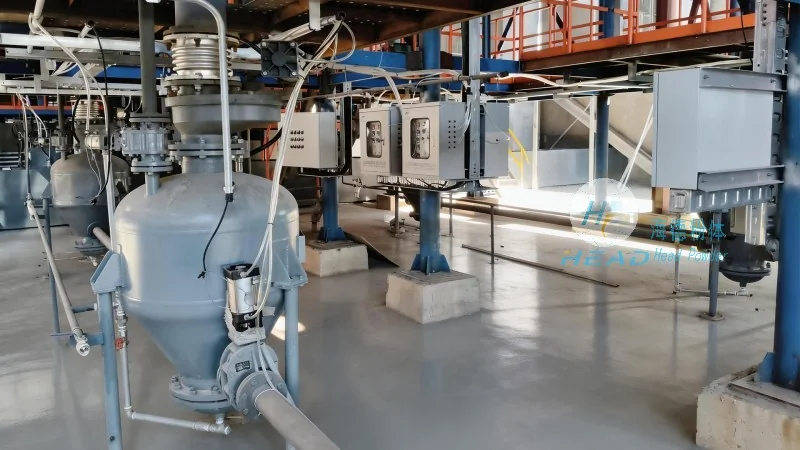
The cement fly ash powder pneumatic conveying system by HeadPowder is engineered with precision to handle the unique properties of cement and fly ash, such as high density, fine particle size, and potential moisture content. The system typically consists of several critical components, including a hopper for material storage, a rotary feeder to control the flow rate, a conveying line (often equipped with pulse jets or positive pressure blowers), and a receiver for the delivered material. Each component plays a vital role in the overall operation, ensuring seamless material transfer from the source to the destination.
Operation Process: Step-by-Step Guide
The operation of the cement fly ash powder pneumatic conveying equipment follows a systematic sequence to achieve optimal performance. The process begins with the loading of cement and fly ash into the hopper. The rotary feeder then regulates the material flow, ensuring a consistent and controlled feed rate. Simultaneously, the conveying line is activated, either by a positive pressure blower that pushes the material through the system or by a vacuum system that pulls it. The material is then transported through the pipeline, where it may encounter pulse jets to maintain flow or be accelerated by the pressure differential. Upon reaching the receiver, the material is discharged and prepared for further processing or use.

Working Principle: The Science Behind Pneumatic Conveying
The working principle of the cement fly ash powder pneumatic conveying system is based on the fundamental concept of transporting particulate materials using a gas stream. In this system, air is used as the conveying medium, either by creating a positive pressure (blowing air into the material) or a negative pressure (sucking material into the air). The key to efficient conveying lies in the balance between the air velocity and the particle size and density. For cement and fly ash, which are fine powders, the system is designed to maintain a high air-to-material ratio to prevent blockages and ensure smooth transport. The use of appropriate blower technology and pipeline design minimizes pressure losses and maximizes the conveying distance, making the system suitable for various industrial applications.
Advantages and Applications
HeadPowder's cement fly ash powder pneumatic conveying equipment offers numerous advantages, including high efficiency, low maintenance, and the ability to handle abrasive materials without causing wear and tear. The system is particularly suitable for applications in cement plants, where the transport of raw materials and finished products is critical. It also finds applications in construction material processing facilities, where the efficient handling of fly ash for cement production is essential. The equipment's design allows for easy integration into existing production lines, reducing downtime and improving overall operational productivity.

Conclusion
In conclusion, the operation process and working principle of HeadPowder's cement fly ash powder pneumatic conveying equipment are meticulously engineered to provide reliable and efficient material handling solutions. By understanding the step-by-step operation and the scientific principles behind pneumatic conveying, users can appreciate the advanced technology that underpins these systems. As a trusted provider based in Shandong, China, HeadPowder continues to deliver high-quality equipment that meets the demanding requirements of the cement and construction industries.




