Diatomite, a natural sedimentary rock composed of fossilized diatoms, is widely used in various industrial applications due to its unique properties such as high porosity, excellent filtration capabilities, and lightweight structure. The efficient handling and transportation of diatomite powder are critical for industrial processes, and pneumatic conveying systems have emerged as a reliable solution for this purpose. This article explores the fundamental principles behind diatomite powder pneumatic conveying equipment and highlights the key characteristics of its working scenes, providing insights into how these systems enhance operational efficiency in industrial settings.

Company Overview: Shandong HeadPowder Engineering Co., Ltd.
HeadPowder, the brand under Shandong HeadPowder Engineering Co., Ltd., is a leading manufacturer specializing in the design, development, and supply of advanced pneumatic conveying solutions. With a strong commitment to innovation and quality, the company has established itself as a trusted partner in the powder handling industry. HeadPowder's products are engineered to meet the specific demands of various industries, ensuring optimal performance and reliability. The company's headquarters is located in Shandong, China, where it leverages local expertise and resources to deliver cutting-edge solutions tailored to global market needs.

The Principle of Pneumatic Conveying for Diatomite Powder
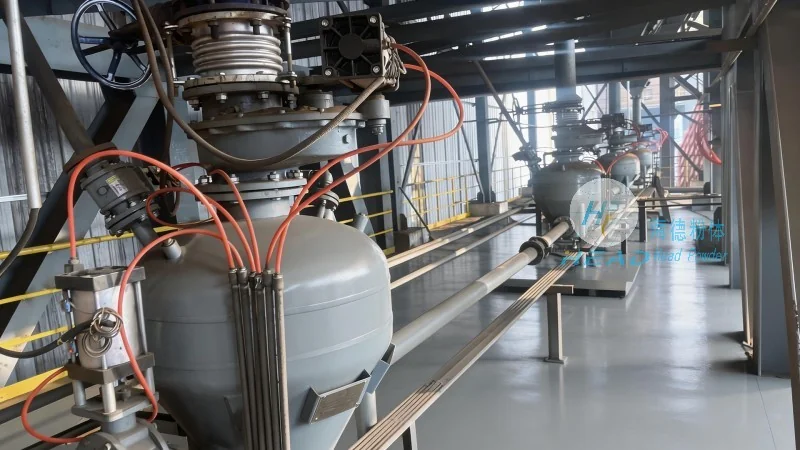
Pneumatic conveying systems utilize air or gas to transport bulk materials like diatomite powder through a pipeline network. The core principle involves creating a pressure differential between the conveying line and the ambient environment, which propels the powder particles along the pipeline. There are two primary types of pneumatic conveying: pressure and vacuum systems. Pressure systems operate by injecting compressed air into the conveying line, while vacuum systems create a negative pressure to draw the material from the source. For diatomite powder, which is often fine and abrasive, the choice of system depends on factors such as material characteristics, distance of transport, and desired flow rates. The equipment typically includes a hopper for material storage, a feeder to control the flow rate, a conveying line, and a receiver for material discharge. The air flow rate is carefully regulated to ensure that the powder particles are fully suspended and transported without clogging or degradation.

Working Scene Characteristics of Diatomite Powder Pneumatic Conveying Equipment
The working scenes where diatomite powder pneumatic conveying equipment is applied vary widely across different industries. In the chemical industry, these systems are commonly used for transporting diatomite as a filter aid in water treatment processes or as an ingredient in the production of specialty chemicals. The pharmaceutical industry also relies on such equipment to handle diatomite powder in the manufacturing of pharmaceutical excipients, where purity and consistency are paramount. Additionally, the food and beverage industry utilizes pneumatic conveying for diatomite powder in filtration applications, ensuring the removal of impurities from liquids. The equipment's ability to maintain a sterile and controlled environment is crucial in these sectors, as diatomite is often used in food processing to enhance filtration efficiency. In the construction materials sector, diatomite powder is used as a lightweight aggregate or filler in concrete and plaster, and pneumatic conveying systems facilitate its efficient transfer from storage to mixing sites. The working scenes are characterized by the need for precise control over flow rates, particle size distribution, and material purity, which the pneumatic conveying equipment from HeadPowder is designed to address effectively.
Key Features and Advantages of Diatomite Powder Pneumatic Conveying Systems
The pneumatic conveying systems developed by HeadPowder for diatomite powder offer several advantages that make them ideal for industrial applications. One of the primary benefits is the ability to transport fine and abrasive materials without the need for mechanical components that could cause wear and tear. The systems are designed to minimize material degradation, ensuring that the diatomite powder retains its original properties, which is critical for its intended use. Another advantage is the flexibility in system design, allowing for customized solutions to suit specific operational requirements. HeadPowder's equipment can handle varying flow rates and distances, from short-distance transfers to long-distance pipelines, making it suitable for diverse industrial settings. The systems also contribute to improved safety and hygiene, as they eliminate the need for manual handling of powders, reducing the risk of dust exposure and contamination. Furthermore, the energy efficiency of pneumatic conveying systems compared to traditional methods, such as bucket elevators or belt conveyors, makes them a cost-effective choice for long-term operation. The integration of advanced control systems allows for real-time monitoring and adjustment of the conveying process, enhancing overall operational efficiency and reliability.
Conclusion: Enhancing Industrial Efficiency with Diatomite Powder Pneumatic Conveying
In conclusion, the pneumatic conveying equipment for diatomite powder, as offered by Shandong HeadPowder Engineering Co., Ltd., represents a sophisticated solution for the efficient handling and transportation of this valuable material. By leveraging the principles of pneumatic transport, these systems address the unique challenges associated with diatomite powder, such as its fine particle size and abrasive nature. The working scenes across various industries benefit from the reliability, flexibility, and efficiency of these systems, which are engineered to meet stringent quality and performance standards. HeadPowder's commitment to innovation and customer-centric solutions ensures that its pneumatic conveying equipment continues to play a vital role in enhancing industrial productivity and sustainability. With its headquarters in Shandong, China, the company remains at the forefront of developing advanced powder handling technologies that meet the evolving needs of global industries.




