Ternary lithium-ion batteries, particularly those utilizing lithium nickel manganese cobalt oxide (NMC), represent a critical advancement in energy storage technology. The efficient handling of these powder materials is essential for maintaining consistent battery performance and ensuring manufacturing quality. This article examines the fundamental principles governing ternary lithium powder handling and highlights key operational characteristics that define effective material management in industrial settings.

Core Principles of Ternary Lithium Powder Handling
The handling of ternary lithium powders is guided by several interrelated principles aimed at preserving material integrity and operational safety. First, the principle of controlled environment management is fundamental. Ternary lithium powders are hygroscopic and can react with moisture or oxygen, which may degrade their chemical stability and affect battery performance. Handling systems typically incorporate sealed, inert gas-filled chambers or enclosed conveyor lines to minimize exposure to ambient air. This approach reduces the risk of oxidation or moisture absorption, thereby maintaining the powder's purity and reactivity.
Second, the principle of precise flow control is essential. Ternary lithium powders are fine and can form agglomerates or generate dust clouds if not managed properly. Advanced systems employ air-assisted or mechanical conveying methods with adjustable velocity and pressure to ensure smooth, uniform flow. This prevents material blockages, minimizes dust generation, and maintains consistent material density throughout the handling process. Precise flow control also enables accurate dosing and batching, which are critical for achieving uniform battery composition and performance.
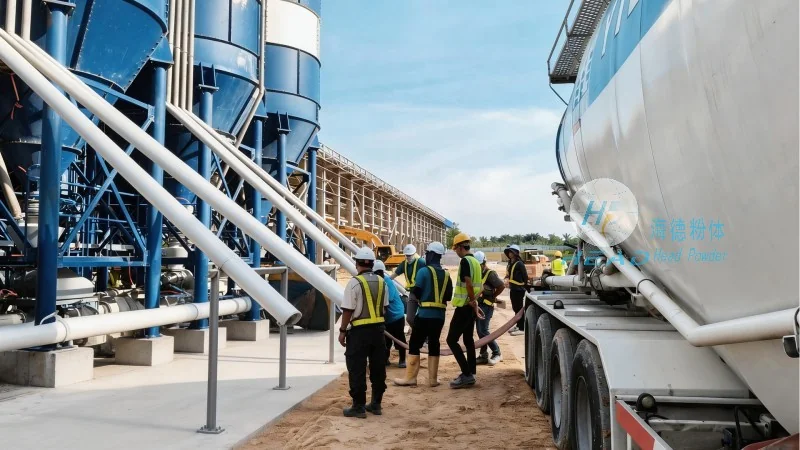
Third, the principle of contamination prevention is a non-negotiable aspect of ternary lithium powder handling. Even minute contaminants, such as metal particles or foreign debris, can have detrimental effects on battery performance, leading to reduced capacity or increased thermal runaway risk. Handling systems incorporate multiple filtration stages, including high-efficiency particulate air (HEPA) filters and particle traps, to remove airborne contaminants. Additionally, material contact surfaces are often made of non-reactive materials like stainless steel or PTFE to avoid chemical interaction with the powder. These measures collectively ensure that the powder remains free from contaminants throughout the handling and processing stages.
Working Scene Characteristics of Ternary Lithium Powder Handling
The working scene characteristics of ternary lithium powder handling systems are tailored to the demands of battery manufacturing environments. One key characteristic is the emphasis on automation and integration with larger production lines. Modern handling systems are often integrated with batching, mixing, and cell assembly equipment, creating a seamless material flow from raw powder to finished battery. This integration reduces manual handling, minimizes material exposure time, and enhances overall production efficiency. Automated systems also allow for real-time monitoring of flow rates, pressure, and temperature, enabling immediate adjustments to maintain optimal handling conditions.

Another characteristic is the focus on safety and regulatory compliance. Ternary lithium powders are classified as hazardous materials due to their flammability and reactivity. Handling systems are designed with explosion-proof components, fire suppression systems, and emergency shutdown protocols to mitigate risks. Compliance with local and international safety standards (e.g., IEC 62261 for battery safety) is a critical consideration. The working scene typically includes safety barriers, interlocked access points, and continuous monitoring of environmental parameters to ensure a safe operating environment for personnel and equipment.

A third characteristic is the adaptability to varying production scales. Ternary lithium powder handling systems can be scaled from small laboratory operations to large-scale industrial production lines. This adaptability is achieved through modular design, where components such as conveyor lengths, hopper sizes, and processing capacity can be adjusted to meet specific production needs. For example, a small-scale system might use a compact pneumatic conveyor for R&D testing, while a large-scale system employs a combination of pneumatic and mechanical conveying with automated batching for mass production. This flexibility allows manufacturers to optimize handling processes based on current and future production requirements.
Conclusion: Key Takeaways for Effective Ternary Lithium Powder Handling
In conclusion, the handling of ternary lithium powders requires a comprehensive approach that balances material integrity, operational efficiency, and safety. The core principles of controlled environment management, precise flow control, and contamination prevention are foundational to maintaining the quality and performance of lithium-ion batteries. The working scene characteristics, including automation, safety compliance, and adaptability, further enhance the effectiveness of these systems in industrial settings. By adhering to these principles and characteristics, manufacturers can ensure consistent battery performance, minimize operational risks, and meet the demands of modern energy storage applications.




