For industrial operations dealing with potassium fertilizer, efficient material handling is crucial. Pneumatic conveying systems offer a reliable method to transport these materials, ensuring safety, efficiency, and minimal environmental impact. This article explores the fundamentals of pneumatic conveying for potassium fertilizer and outlines the key design principles that underpin such systems.

Understanding Pneumatic Conveying Systems
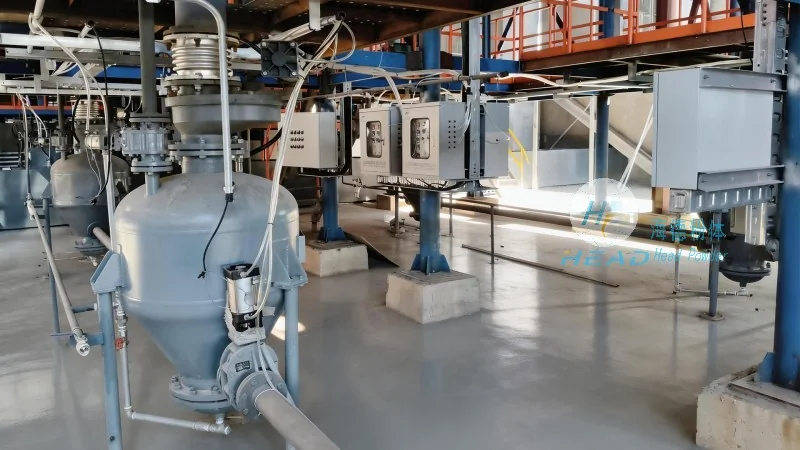
Pneumatic conveying involves the use of air or other gases to transport bulk materials through a pipeline. In the context of potassium fertilizer, this technology is particularly valuable due to the material's properties, such as its granular or crystalline structure, which can make traditional mechanical conveying methods less effective. The system typically consists of a hopper, a conveyor line, and a receiver, all connected by a network of pipes. The process begins when the fertilizer is fed into the hopper, where it is then drawn into the conveyor line by a vacuum or pressure differential created by a fan or blower.
Key Design Principles for Potassium Fertilizer Conveying
The design of a pneumatic conveying system for potassium fertilizer must consider several critical factors to ensure optimal performance. First, the system must be able to handle the specific characteristics of the fertilizer, including its particle size distribution, moisture content, and flowability. These properties directly impact the choice of conveying velocity and the type of air flow (e.g., dilute-phase or dense-phase). For example, dilute-phase systems are suitable for fine powders like potassium chloride, while dense-phase systems may be preferred for coarser materials to prevent blockages and maintain consistent flow.

Second, the system must be designed to minimize material degradation and product loss. Potassium fertilizers are often sensitive to moisture and temperature changes, which can affect their effectiveness. Therefore, the conveying system should incorporate features such as temperature control and moisture protection. This may include insulated pipes, moisture-resistant seals, and proper ventilation to maintain the material's integrity throughout the process.
Components and Their Function in the System
A pneumatic conveying system for potassium fertilizer typically includes several key components, each playing a vital role in the overall operation. The hopper serves as the storage and feeding unit, ensuring a consistent supply of material to the conveyor line. It is designed with a sloped bottom to facilitate smooth discharge and may include a rotary valve or feeder to control the flow rate. The conveyor line, made of materials resistant to corrosion and abrasion (such as stainless steel or special plastics), transports the fertilizer through the system. The line's diameter and length are carefully selected based on the material's properties and the required conveying distance. The receiver, or discharge hopper, collects the fertilizer at the end of the line and may include a discharge valve to regulate the final output.
Advantages of Pneumatic Conveying for Potassium Fertilizer
Implementing a pneumatic conveying system for potassium fertilizer offers several advantages over traditional methods. One of the primary benefits is the ability to transport materials over long distances without the need for multiple transfer points or intermediate storage. This reduces the risk of material contamination and loss, which is critical for maintaining product quality. Additionally, pneumatic conveying systems are generally more energy-efficient than mechanical systems, as they use less power to move the material and can be optimized for specific flow rates. Another advantage is the reduced need for manual handling, which enhances workplace safety and reduces labor costs.
Considerations for System Maintenance and Operation
Proper maintenance and operation are essential to ensure the longevity and efficiency of a pneumatic conveying system for potassium fertilizer. Regular cleaning of the conveyor line and components is necessary to prevent the buildup of material residue, which can lead to blockages or reduced performance. The system should also be equipped with monitoring devices, such as pressure sensors and flow meters, to detect any abnormalities and allow for timely adjustments. Additionally, training operators on the proper use and maintenance of the system is crucial to prevent accidents and ensure optimal performance.




