HeadPowder, a leading engineering firm based in Shandong, China, specializes in the design and implementation of advanced pneumatic conveying systems for various industrial applications. This article focuses on the design of a sodium sulfate pneumatic conveying system, highlighting key considerations, technical specifications, and practical applications that ensure efficient and reliable material handling.

Company Profile and Expertise
Shandong HeadPowder Engineering Co., Ltd., operating under the brand name HeadPowder, is a reputable company dedicated to providing innovative solutions in powder handling and material transport. With years of experience in the industry, HeadPowder has developed a strong reputation for delivering high-quality pneumatic conveying systems tailored to meet the specific needs of clients across diverse sectors. The company’s headquarters is located in Shandong, China, where a team of skilled engineers and technicians work collaboratively to design, manufacture, and install advanced material handling equipment.
Understanding Sodium Sulfate and Its Handling Requirements
Sodium sulfate (Na₂SO₄) is a widely used industrial chemical with applications in industries such as paper manufacturing, glass production, and chemical processing. Handling sodium sulfate requires specialized equipment due to its granular or crystalline form, which can be prone to dust generation and caking under certain conditions. Pneumatic conveying systems offer an effective solution by transporting the material in a controlled environment, minimizing exposure to air and reducing the risk of contamination or degradation. The design of a sodium sulfate pneumatic conveying system must consider factors like material flow rate, particle size distribution, and the need for dust control measures.
Key Design Considerations for the Pneumatic Conveying System
The design of a sodium sulfate pneumatic conveying system involves several critical components and considerations to ensure optimal performance and safety. First, the selection of the appropriate conveying method—whether positive or negative pressure—is crucial. Positive pressure systems, where air is forced through the material, are often preferred for sodium sulfate due to their ability to handle abrasive or sticky materials without causing excessive wear on equipment. The system design must also include a suitable hopper or feeder to ensure consistent material flow, as sodium sulfate can be prone to bridging or segregation if not properly managed.

Another important aspect is the choice of materials for the conveying pipes and components. Since sodium sulfate is a corrosive material in some applications, the system must be constructed from materials that resist chemical attack, such as stainless steel or specialized coatings. The pipeline layout is also critical, as it affects the pressure drop and energy consumption of the system. Properly sized pipes and elbows are essential to maintain the required air velocity for effective material transport, preventing blockages or reduced efficiency.
Components and Equipment in the System
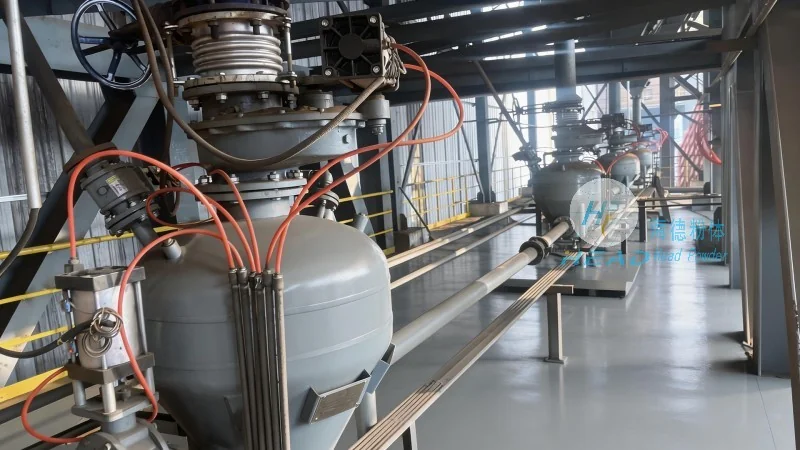
A typical sodium sulfate pneumatic conveying system includes several key components: a hopper or silo for material storage, a feeder to control the flow rate, a blower or compressor to generate the conveying air, a filter to capture dust and particles, and a receiver or discharge hopper at the destination. The hopper is designed with a conical bottom to facilitate uniform material discharge and prevent caking. The feeder, often a rotary valve or a screw feeder, ensures a steady flow of sodium sulfate into the pipeline, maintaining consistent pressure and flow rates. The blower or compressor provides the necessary air pressure, typically ranging from 0.5 to 1.5 bar, depending on the system's length and material characteristics. The filter is essential for maintaining air quality and preventing dust from entering the environment, while the receiver collects the conveyed material at the end of the pipeline.
Advantages of Pneumatic Conveying for Sodium Sulfate
Pneumatic conveying systems offer several advantages over traditional methods like belt conveyors or bucket elevators for handling sodium sulfate. These include: 1) Reduced labor costs due to automated material transport, 2) Lower risk of material contamination and degradation, 3) Improved safety by minimizing manual handling of powders, 4) Flexibility in system layout, allowing for multiple destinations or complex routes. Additionally, pneumatic conveying can handle varying material flow rates and particle sizes, making it suitable for both small-scale and large-scale operations. The system's ability to operate in a closed environment also helps in controlling dust emissions, which is crucial for compliance with environmental regulations.
Installation and Maintenance Considerations
Proper installation and regular maintenance are vital to ensure the long-term performance and reliability of a sodium sulfate pneumatic conveying system. During installation, it is essential to follow the manufacturer's guidelines for pipe sizing, elbow placement, and system alignment to minimize pressure losses and prevent blockages. Regular maintenance tasks include checking the blower or compressor for proper operation, inspecting the filter for clogging, and cleaning the hopper and feeder to prevent material buildup. Additionally, the system should be inspected periodically for signs of wear or corrosion, especially in components exposed to the corrosive nature of sodium sulfate. Proper maintenance not only extends the system's lifespan but also ensures consistent material handling efficiency and reduces downtime.
Conclusion
Designing a sodium sulfate pneumatic conveying system requires a comprehensive understanding of the material's properties, the system's components, and the operational requirements. HeadPowder, with its expertise in engineering and material handling, provides tailored solutions that address the unique challenges of sodium sulfate transport. By considering factors such as material flow rate, equipment materials, and system layout, the resulting design ensures efficient, safe, and reliable operation. For industries relying on sodium sulfate, investing in a well-designed pneumatic conveying system is a strategic decision that enhances productivity, reduces costs, and improves overall operational efficiency.




