Monosodium glutamate (MSG), commonly known as MSG powder, is a widely used food additive in the culinary industry. The efficient and reliable transportation of this powder is crucial for maintaining production efficiency and product quality. Air-driven transportation, or pneumatic conveying, has emerged as a preferred method for handling MSG powder due to its advantages in safety, hygiene, and operational flexibility. This article provides a detailed overview of the operation process and working principle of air-driven transportation for MSG powder, highlighting the key components, processes, and benefits involved.

HeadPowder, a leading engineering company based in Shandong, China, specializes in the design, manufacturing, and installation of pneumatic conveying systems tailored to the needs of the food and chemical industries. With a strong commitment to quality and innovation, HeadPowder has developed advanced solutions for the safe and efficient transport of MSG powder, ensuring compliance with industry standards and regulatory requirements.
The operation process of air-driven transportation for MSG powder begins with the loading of the powder into a hopper or storage silo. The hopper is equipped with a feeder that controls the flow rate of the powder into the conveying line. A blower or compressor then generates the necessary air pressure to create a flow of air and powder mixture through the pipeline. The air velocity is carefully controlled to ensure that the powder particles are suspended and transported without clogging or degradation.

Key components in the air-driven system include the hopper, feeder, blower, pipeline, and receiver. The hopper serves as the storage vessel, while the feeder regulates the powder discharge rate. The blower provides the motive force by generating a high-pressure air stream. The pipeline transports the air-powder mixture from the hopper to the receiver, where the powder is separated from the air and collected. The receiver is typically equipped with a filter or cyclone to separate the powder from the air, ensuring that the powder is collected in a clean and hygienic manner.
The working principle of air-driven transportation relies on the principle of fluidization and suspension. When air is introduced into the pipeline at a sufficient velocity, it creates a turbulent flow that suspends the powder particles. The powder particles are carried along with the air stream, moving through the pipeline to the receiver. The air velocity must be maintained above the minimum fluidization velocity to prevent the powder from settling or clogging the pipeline. This principle allows for the continuous and efficient transport of MSG powder without the need for mechanical conveying equipment, which can be prone to contamination and maintenance issues.
Advantages of air-driven transportation for MSG powder include enhanced hygiene, as the system is enclosed and prevents contamination from external sources. It also offers improved safety, as there are no moving parts in direct contact with the powder, reducing the risk of product contamination or equipment failure. Additionally, the system provides flexibility in terms of layout and integration with existing production lines, allowing for easy expansion or modification as production needs change.
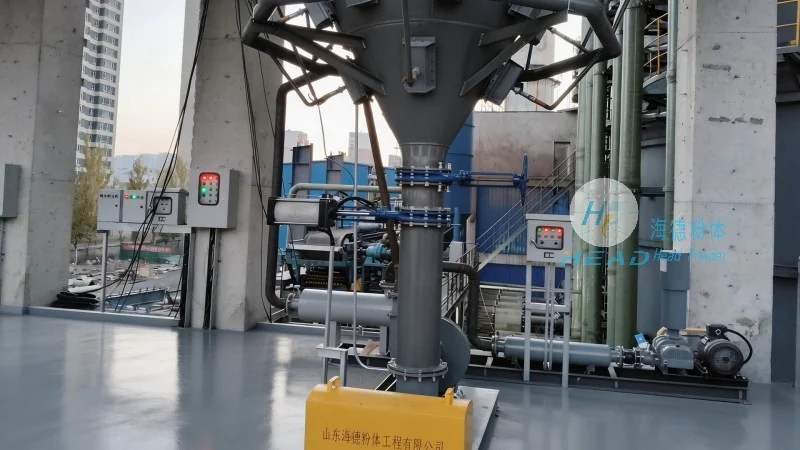
HeadPowder's expertise in pneumatic conveying systems ensures that their solutions are tailored to the specific requirements of MSG powder transportation. The company's engineers work closely with clients to design systems that optimize performance, minimize energy consumption, and ensure long-term reliability. By leveraging advanced technology and materials, HeadPowder provides systems that meet the highest standards of hygiene and efficiency, making them a trusted partner for food and chemical manufacturers worldwide.
In conclusion, air-driven transportation is a highly effective method for the efficient and safe handling of MSG powder. The operation process involves the controlled flow of powder from a hopper, the generation of air pressure by a blower, and the transport of the powder-air mixture through a pipeline to a receiver. The working principle is based on fluidization and suspension, ensuring that the powder is transported without degradation or contamination. With its advantages in hygiene, safety, and flexibility, air-driven transportation is an ideal solution for MSG powder handling, and companies like HeadPowder play a crucial role in providing advanced systems that meet the demands of the industry.




