Industrial processes that involve the handling of ceramic powders require reliable and efficient material transport systems to maintain product quality and operational efficiency. The ceramic powder pneumatic conveying line, developed by Shandong HeadPowder Engineering Co., Ltd., is a specialized solution designed to address these needs. This system leverages pneumatic technology to transport ceramic powders through a sealed pipeline using compressed air, offering advantages such as reduced product contamination, minimal degradation, and enhanced safety compared to traditional mechanical conveying methods. The system is particularly suitable for applications where precision and consistency are critical, such as in the manufacturing of ceramics, electronics, and pharmaceuticals.

Core Principles of Pneumatic Conveying Technology
The fundamental principle of ceramic powder pneumatic conveying is the use of air pressure to move particulate materials. In this process, ceramic powders are fed into a hopper or feeder, where they are then drawn into the conveying line by the pressure differential created by the air flow. The air-ceramic powder mixture travels through the pipeline, with the air providing the necessary force to overcome friction and gravitational forces. Key components of the system include the feeding unit, which controls the material flow rate; the conveying pipeline, which transports the mixture; and the discharge equipment, which delivers the material to the destination. The design of these components is critical to ensuring consistent and efficient operation, as any inefficiencies can lead to blockages, product degradation, or system failure.

Working Scene Characteristics and Application Scenarios
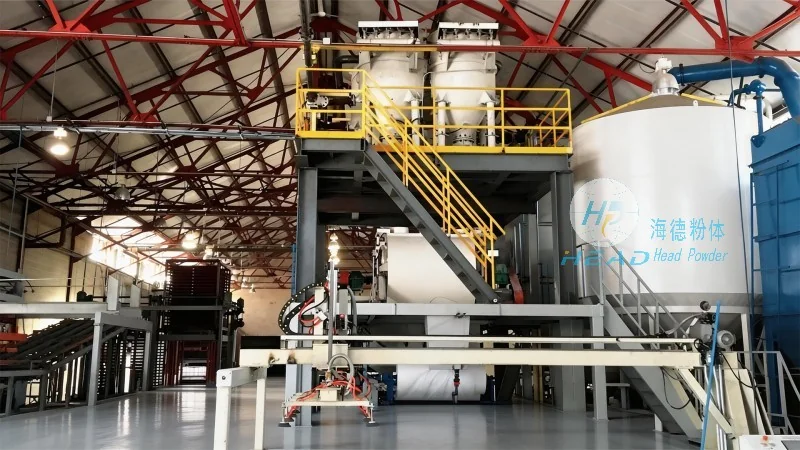
The working scene characteristics of ceramic powder pneumatic conveying lines are tailored to specific industrial environments, ensuring optimal performance in diverse settings. These systems are commonly used in applications where traditional mechanical conveying may be impractical, such as in environments with high dust sensitivity or where product purity must be strictly maintained. The flexibility of the conveying line allows for both horizontal and vertical transport paths, making it suitable for complex production layouts that require material to be moved between different levels or locations. Additionally, the system's ability to handle fine to medium-sized ceramic powders without agglomeration or degradation makes it ideal for processes like powder mixing, coating, and packaging. For example, in ceramic manufacturing, the system can transport raw materials from storage silos to processing lines, ensuring a continuous and controlled supply of materials.
Advantages in Industrial Processing
Implementing a ceramic powder pneumatic conveying line offers several key advantages that enhance overall operational efficiency and product quality. One of the primary benefits is the reduction in material handling time and labor costs, as the automated system minimizes manual intervention in the transport process. The enclosed pipeline design also contributes to improved safety by containing dust and preventing exposure to airborne particles, which is critical in maintaining a clean and healthy work environment. Furthermore, the system's ability to maintain consistent material flow rates ensures that downstream processes, such as mixing or processing, operate smoothly without interruptions or variations in feed rate. This consistency is vital for achieving uniform product quality and reducing waste in production. Additionally, the system's low maintenance requirements and long service life make it a cost-effective solution for long-term industrial use.
Customization and Integration with Existing Systems
Shandong HeadPowder Engineering Co., Ltd. specializes in providing customized pneumatic conveying solutions that integrate seamlessly with existing industrial systems. The company's approach involves a thorough analysis of the client's specific material characteristics, production requirements, and facility layout to design a tailored conveying line. This customization ensures that the system operates at peak efficiency while meeting all safety and regulatory standards. The integration process includes considerations for pressure requirements, material compatibility, and space constraints, ensuring that the final solution is both functional and cost-effective. By working closely with clients, HeadPowder engineers can develop solutions that address unique challenges, such as handling abrasive or sensitive ceramic powders, and optimize the overall production workflow. For instance, in a ceramic coating application, the system can be customized to handle fine powders with high moisture content, ensuring that the material remains dry and free-flowing throughout the transport process.




