Clay pneumatic conveying lines represent a sophisticated solution for transporting fine-grained materials, particularly clay, in industrial settings. The technology leverages pneumatic principles to move bulk materials through a pipeline using air or gas, offering advantages such as dust-free operation, flexibility, and efficiency. Understanding the underlying principles and the specific characteristics of working environments is crucial for optimizing the performance of these systems.

Company Overview: HeadPowder Engineering
HeadPowder, a prominent entity in the material handling industry, specializes in the design, manufacturing, and implementation of pneumatic conveying systems. Headquartered in Shandong, China, the company has built a reputation for delivering high-quality solutions tailored to the unique demands of various industries. With a focus on innovation and customer satisfaction, HeadPowder provides comprehensive support, from system design to maintenance, ensuring clients achieve reliable and efficient material transport.
The Fundamental Principle of Pneumatic Conveying for Clay
The core mechanism of clay pneumatic conveying involves creating a pressure differential within the conveying line. By generating airflow through the pipeline, the system can lift and transport clay particles from the source to the destination. This process typically employs a combination of positive and negative pressure zones, where the air velocity is optimized to overcome gravitational forces acting on the clay. For clay, which often exhibits cohesive properties and fine particle sizes, specialized components such as rotary airlocks and high-efficiency filters are essential to prevent blockages and maintain consistent material flow. The design of the pipeline, including diameter, length, and the placement of inlets and outlets, directly impacts the system's efficiency and capacity.

Key Working Scene Characteristics and Applications
Clay pneumatic conveying systems are deployed across diverse industrial scenarios, each with distinct operational requirements. A primary application is in the ceramics and brick manufacturing sectors, where clay is transported from storage silos to production lines. Here, the system must handle high volumes while minimizing dust emissions, aligning with safety and environmental standards. Another critical use case is in mining and quarrying operations, where clay is extracted from mines and conveyed to processing facilities. In such environments, the conveying line must be robust enough to withstand abrasive materials and varying particle sizes, ensuring long-term durability and reliability. Additionally, in pharmaceutical and food processing industries, where material purity is paramount, pneumatic conveying offers a hygienic solution, preventing contamination and maintaining product quality.
Advantages in Diverse Operational Environments
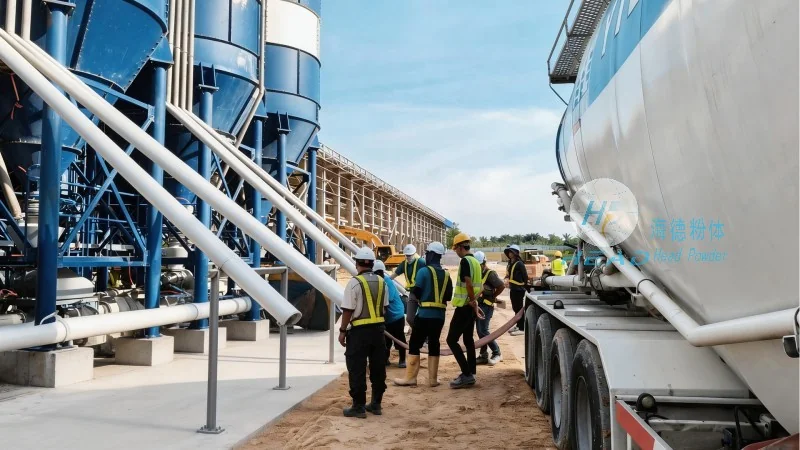
The working characteristics of clay pneumatic conveying lines are adapted to suit specific operational needs. For instance, in compact industrial spaces, compact conveying systems with shorter pipelines and optimized air flow are preferred to reduce energy consumption and space requirements. Conversely, in large-scale operations involving long-distance transport and high material throughput, more powerful blowers and larger diameter pipelines are employed to ensure efficient material movement. The flexibility of pneumatic conveying allows for seamless integration with existing production lines, minimizing the need for extensive facility modifications. Furthermore, the ability to operate in both positive and negative pressure modes provides versatility, enabling the system to handle both loading and unloading processes efficiently. This adaptability makes clay pneumatic conveying lines suitable for a wide range of applications, from small-scale artisanal production to large-scale industrial manufacturing.
Technical Considerations for Optimal Performance
Ensuring the efficient operation of clay pneumatic conveying lines requires careful attention to technical parameters. The selection of air velocity is critical; it must be high enough to prevent material settling but low enough to avoid excessive wear on the pipeline and equipment components. The use of advanced filter systems and dust collection units is essential to maintain air quality and comply with environmental regulations. Regular maintenance, including filter cleaning, pipeline inspection, and component replacement, is necessary to prevent clogging and sustain system performance. HeadPowder's engineering expertise provides comprehensive support, including system design optimization, installation guidance, and maintenance services, ensuring clients achieve maximum efficiency and longevity from their clay pneumatic conveying systems. By adhering to these technical considerations, industries can leverage the benefits of pneumatic conveying while maintaining operational reliability and cost-effectiveness.




