HeadPowder, a leading provider in the field of material handling solutions, specializes in the design and manufacturing of advanced pneumatic conveying systems tailored for inorganic salt crystals. This article delves into the core principles behind these systems and highlights the key application scenarios where they excel, offering insights into their operational efficiency and versatility.

Overview of Inorganic Salt Crystal Pneumatic Conveying Equipment
The pneumatic conveying equipment for inorganic salt crystals is a sophisticated system engineered to transport bulk materials like salt crystals through a pipeline using compressed air or other gas streams. Unlike traditional mechanical conveyors, this method offers advantages such as reduced contamination risk, lower maintenance requirements, and the ability to handle materials in a closed system, which is crucial for maintaining product purity and safety standards in industrial applications.
Core Principles of Pneumatic Conveying Technology
The fundamental principle of pneumatic conveying involves creating a flow of air or gas that lifts and propels the material particles through the pipeline. There are primarily two types of pneumatic conveying systems: dilute-phase and dense-phase. Dilute-phase systems operate at higher air velocities, typically moving particles in a dispersed state, suitable for short to medium-distance transport. Dense-phase systems, on the other hand, use lower air velocities and higher material concentrations, which is ideal for longer distances and more delicate materials that require gentle handling to prevent degradation or breakage.
Key Components and Their Functions
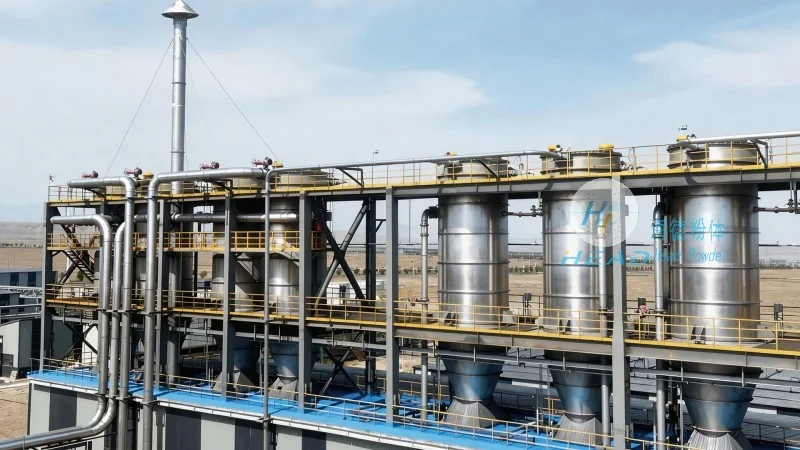
HeadPowder's inorganic salt crystal pneumatic conveying systems consist of several critical components that work in harmony to ensure efficient operation. These include the material feed hopper, which stores and feeds the salt crystals into the system; the air compressor or blower, which generates the necessary pressure and airflow; the conveying line, which transports the material; and the control system, which regulates the flow and pressure to maintain optimal performance. Each component is designed with precision to handle the specific characteristics of inorganic salt crystals, such as their size, density, and moisture content, ensuring reliable and consistent operation.
Application Scenario 1: Chemical and Fertilizer Manufacturing
In the chemical and fertilizer industry, inorganic salt crystals are commonly used as raw materials for producing various products. The pneumatic conveying equipment from HeadPowder is widely used in these facilities to transport salt crystals from storage silos to processing units, such as reactors or mixers. The closed system design minimizes dust emissions and contamination, which is essential for maintaining product quality and adhering to environmental regulations. Additionally, the gentle handling provided by the dense-phase conveying method prevents the salt crystals from breaking or degrading, ensuring consistent material quality for downstream processes.
Application Scenario 2: Food and Beverage Processing
For food and beverage applications, the handling of inorganic salt crystals requires strict adherence to hygiene and safety standards. HeadPowder's systems are designed to meet these requirements, with components made from food-grade materials and sealed to prevent contamination. The equipment is used in food processing plants to transport salt from storage to production lines, where it is used in the manufacturing of snacks, seasonings, and other food products. The closed and sanitary design of the system ensures that the salt crystals remain free from contaminants, meeting the stringent quality standards of the food industry.

Application Scenario 3: Mining and Mineral Processing
In mining operations, inorganic salt crystals may be encountered as byproducts or raw materials. The pneumatic conveying equipment from HeadPowder is utilized in mineral processing plants to transport these crystals from extraction sites to processing facilities. The system's ability to handle abrasive and high-density materials makes it suitable for this application. The closed pipeline design reduces dust and noise pollution, contributing to a safer and more environmentally friendly operation. Additionally, the system's efficiency in long-distance transport helps minimize energy consumption and operational costs, making it a cost-effective solution for mining operations.
Advantages of HeadPowder's Inorganic Salt Crystal Pneumatic Conveying Systems
HeadPowder's pneumatic conveying systems for inorganic salt crystals offer several advantages over traditional conveying methods. Firstly, the closed system design eliminates the risk of dust contamination and environmental pollution, which is critical for maintaining product purity and complying with regulations. Secondly, the gentle handling provided by the dense-phase conveying method prevents material degradation, ensuring consistent quality. Thirdly, the system's efficiency in energy consumption and maintenance reduces operational costs over time. Lastly, the versatility of the system allows it to be adapted to various application scenarios, making it a reliable solution for different industrial needs.




