HeadPowder, a leading engineering company based in Shandong, China, specializes in the design and implementation of advanced pneumatic conveying solutions. The company's focus on PUR (Polyurethane) materials in its systems reflects a commitment to durability, efficiency, and adaptability in material handling applications. This article explores the fundamental principles behind PUR pneumatic conveying systems and highlights key working scene characteristics that make them suitable for various industrial environments.

The Fundamental Principle of Pneumatic Conveying
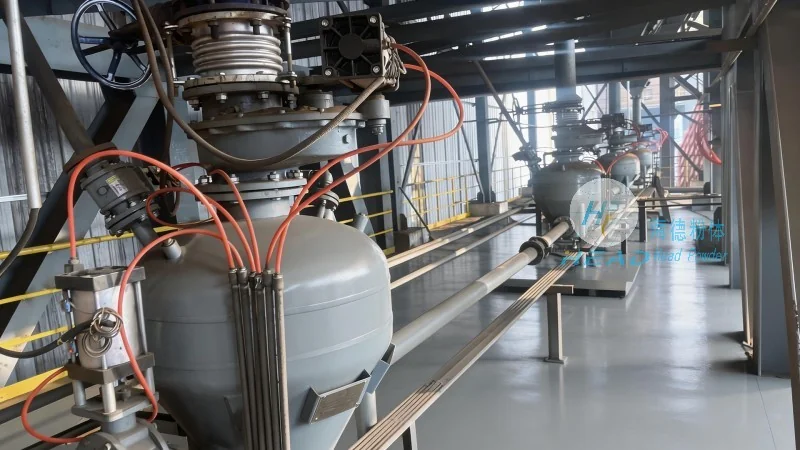
PUR pneumatic conveying systems operate on the principle of transporting bulk materials through a pipeline using a stream of air or other gas. Unlike traditional mechanical conveyors, which rely on mechanical components like belts or screws, pneumatic systems utilize air pressure to move materials. The core components of a PUR pneumatic conveying system include a material hopper, a rotary airlock feeder, a conveying pipeline, a pulse jet filter, and a dust collection system. The material is first loaded into the hopper, then fed into the pipeline through the rotary airlock, which controls the flow rate. The air, often supplied by a blower or compressor, creates a low-pressure or high-pressure environment within the pipeline, depending on the system design. This air flow propels the material particles forward, ensuring efficient transport from the source to the destination. The use of PUR materials in the components, such as the pipeline and fittings, enhances the system's resistance to abrasion, corrosion, and temperature variations, making it ideal for handling abrasive or corrosive materials.

Key Working Scene Characteristics of PUR Pneumatic Conveying Systems
The working scene characteristics of PUR pneumatic conveying systems are tailored to meet the diverse needs of industrial applications. These systems are particularly effective in environments where traditional conveyors may struggle due to material properties or space constraints. For instance, in food processing facilities, where hygiene and material purity are critical, PUR systems offer a non-stick surface that prevents material buildup and contamination. The smooth interior of the PUR pipeline reduces friction, minimizing material degradation and ensuring consistent product quality. In pharmaceutical industries, the systems' ability to maintain sterile conditions and prevent cross-contamination is paramount, and PUR's resistance to microbial growth and its easy cleaning properties make it a preferred choice. Additionally, in chemical processing plants, where materials may be corrosive or reactive, the durability of PUR components ensures long-term reliability and safety. The systems are also suitable for applications involving fine powders or granules, as the low-pressure or high-pressure design can handle a wide range of particle sizes and flow rates. The flexibility of the PUR pipeline allows for easy installation in complex layouts, adapting to the spatial constraints of modern industrial facilities. This adaptability, combined with the system's energy efficiency, makes it a cost-effective solution for continuous material handling operations.

Typical Working Scenarios and Applications
PUR pneumatic conveying systems are widely used in various industrial sectors, each with specific requirements that the system addresses effectively. In the agricultural sector, these systems are employed to transport grain, flour, and other agricultural products from storage silos to processing units. The systems' ability to handle fine powders, such as flour, ensures minimal loss and consistent quality, which is crucial for food production. In the chemical industry, they are used to convey raw materials like powders and granules to reactors and processing equipment. The systems' resistance to chemical corrosion and their ability to maintain a controlled environment prevent material degradation and ensure safety. In the pharmaceutical industry, PUR systems are integral to the handling of active pharmaceutical ingredients (APIs) and other sensitive materials. The systems' sterile design and contamination control features are essential for maintaining product integrity and meeting regulatory standards. Furthermore, in the construction materials industry, these systems are used to transport cement, sand, and other bulk materials to mixing plants and construction sites. The systems' durability and ability to handle abrasive materials, such as cement, ensure long service life and reliable performance. The working scene characteristics, including the system's adaptability to different material types and environmental conditions, make it a versatile solution for a wide range of industrial applications.
Conclusion and Company Expertise
HeadPowder Engineering Co., Ltd., with its headquarters in Shandong, China, leverages advanced engineering and material science to develop PUR pneumatic conveying systems that meet the evolving needs of modern industries. The company's commitment to quality, efficiency, and innovation is reflected in the design and implementation of these systems, which combine the principles of pneumatic transport with the durability of PUR materials. The working scene characteristics of these systems, including their ability to handle diverse materials, maintain hygiene standards, and adapt to complex layouts, make them a preferred choice for industries seeking reliable and efficient material handling solutions. As a leading provider in the field, HeadPowder continues to advance the technology, ensuring that its systems remain at the forefront of industrial material transport solutions.




