Gray calcium powder, also known as calcium hydroxide, is a widely used industrial material in sectors like construction, chemical manufacturing, and environmental treatment. Efficient and reliable transportation of this fine powder is essential for maintaining production efficiency and product quality. This article provides an overview of the gray calcium powder conveying system, detailing its structural design and operational principles.

About the Gray Calcium Powder Conveying System
The gray calcium powder conveying system is a specialized equipment setup designed to transport gray calcium powder from storage silos or production lines to processing units or packaging areas. It is engineered to address challenges such as dust generation, material segregation, and system blockage. The system integrates feeders, conveyors, dust collection systems, and control units to ensure a seamless and safe conveying process.
Company Profile: Shandong HeadPowder Engineering Co., Ltd.
HeadPowder, the manufacturer of this advanced conveying system, is a leading enterprise based in Shandong, China. With years of experience in powder handling technology, the company specializes in designing and manufacturing high-quality equipment for various powder materials. Shandong HeadPowder Engineering Co., Ltd. combines cutting-edge technology with rigorous quality control to deliver systems that meet stringent industrial requirements. The company's commitment to innovation and customer satisfaction has established it as a trusted name in the powder processing industry.

System Overview and Structural Principles
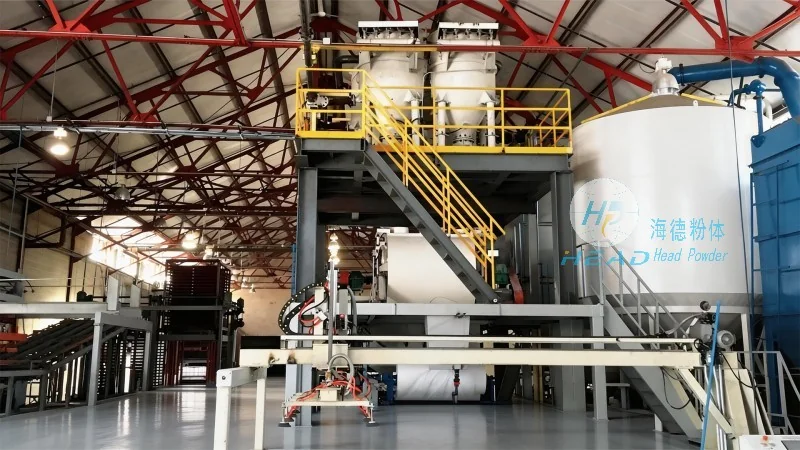
The core structure of the gray calcium powder conveying system is built around a modular design for flexibility and scalability. The system typically includes a hopper for material storage, a rotary feeder to control flow rate, a pneumatic or mechanical conveyor for transport, and a dust collection system for environmental compliance. The design prioritizes durability, ease of maintenance, and minimal material wear, critical for long-term operational efficiency.
Key Components and Their Functions
Each component of the conveying system plays a vital role. The hopper features a conical bottom to facilitate uniform discharge and prevent bridging. The rotary feeder, with adjustable speed controls, regulates feed rate to match conveyor capacity, ensuring consistent material flow. The conveyor—either pneumatic (using air pressure) or mechanical (using belts/screws)—transports powder through pipes or ducts. The dust collection system, including filters and fans, captures airborne particles, maintaining a clean and safe environment.
Working Principle of the Conveying Process
The operation follows a systematic sequence: gray calcium powder is stored in the hopper. The rotary feeder meters powder at a controlled rate into the conveyor inlet. The conveyor uses air pressure or mechanical force to move the material. Sensors and control panels monitor pressure, flow rate, and other parameters for real-time adjustments. The powder is then delivered to the target location, such as a mixer or packaging machine, for further processing or packaging.
Application Scenarios and Benefits
The system is widely used in industries requiring fine powder handling. In construction, it transports gray calcium for concrete production, providing consistent and high-quality input. In chemical manufacturing, it facilitates transport of calcium hydroxide for chemical processes, ensuring precise dosing and reducing waste. Benefits include high conveying efficiency, low energy consumption, minimal product degradation, and compliance with environmental regulations through integrated dust collection.




