For industrial applications involving copper oxide, efficient material handling is crucial. The process of pneumatic conveying offers several advantages, including reduced equipment wear, lower maintenance costs, and improved safety compared to traditional methods like belt conveyors or bucket elevators. This article explores various approaches to pneumatic conveying for copper oxide, highlighting the key considerations and solutions tailored to different operational needs.
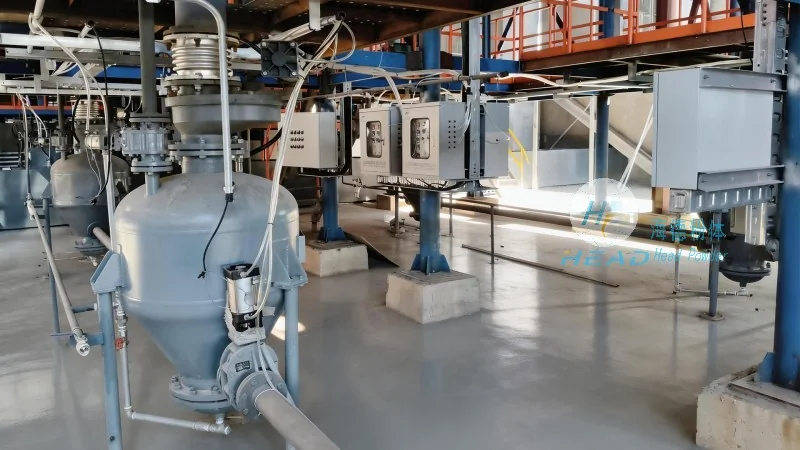
Company Overview: Shandong HeadPowder Engineering Co., Ltd.
As a leading provider in the field, Shandong HeadPowder Engineering Co., Ltd. specializes in engineering solutions for material handling and processing. With a focus on innovation and customer-centric designs, the company has developed expertise in designing and implementing pneumatic conveying systems for diverse industrial applications. HeadPowder's commitment to quality and reliability ensures that their solutions meet the stringent requirements of the copper oxide industry, supporting clients in optimizing their material transport processes.
Option 1: Dilute Phase Pneumatic Conveying
Dilute phase pneumatic conveying is a common method for transporting copper oxide, particularly over moderate distances. This approach involves transporting the material in a dilute suspension within a high-velocity air stream. The system typically consists of a blower, a hopper, and a pipeline network. The copper oxide is fed into the system, and the air stream carries the particles through the pipeline to the destination. This method is suitable for applications where the material is relatively dry and free-flowing, and the conveying distance is not excessively long. The key advantage of dilute phase conveying is its ability to handle a wide range of particle sizes and flow rates, making it versatile for various copper oxide applications.

Option 2: Dense Phase Pneumatic Conveying
Dense phase pneumatic conveying, also known as low-velocity conveying, is another effective solution for copper oxide transport. Unlike dilute phase systems, dense phase conveying operates at lower air velocities, resulting in a higher material concentration in the pipeline. This method is particularly beneficial for transporting materials that are sensitive to high velocities or for longer distances where pressure drop needs to be minimized. The system uses a positive displacement blower or a pressure vessel to create a high-pressure environment, ensuring that the copper oxide moves in a dense slug through the pipeline. Dense phase conveying reduces the risk of material degradation and equipment wear, making it ideal for handling fine copper oxide powders that require gentle handling.
Option 3: Hybrid Pneumatic Conveying Systems
Hybrid pneumatic conveying systems combine elements of both dilute and dense phase methods to address specific operational challenges. These systems are designed to optimize material transport by adjusting the air velocity and material concentration based on the application requirements. For example, a hybrid system might use a dilute phase approach for the initial portion of the pipeline to accelerate the material and then switch to a dense phase mode for the final segment to ensure gentle handling and minimize pressure drop. This flexibility allows hybrid systems to handle a broader range of copper oxide characteristics, including varying particle sizes, moisture content, and flow rates. The integration of control systems enables precise regulation of the conveying process, ensuring consistent performance and reliability.
Key Considerations for Selecting the Right Pneumatic Conveying Solution
When selecting a pneumatic conveying solution for copper oxide, several factors must be considered to ensure optimal performance and efficiency. The first consideration is the material characteristics, such as particle size distribution, moisture content, and flowability. Copper oxide powders can vary significantly in these properties, and the chosen system must be able to handle the specific characteristics of the material. The second factor is the conveying distance and layout of the facility. Longer distances may require more powerful blowers or additional booster stations to maintain the material flow. The third consideration is the environmental and safety requirements. Pneumatic conveying systems must comply with local regulations regarding dust control and air quality, ensuring that the operation is safe and environmentally friendly. Additionally, the cost of the system and its maintenance should be evaluated to ensure it aligns with the budget and operational needs of the facility.

Implementation and Maintenance of Pneumatic Conveying Systems
Implementing a pneumatic conveying system for copper oxide involves careful planning and execution to ensure successful operation. The first step is to conduct a thorough analysis of the material and operational requirements to determine the most suitable system type. This includes assessing the flow rates, particle size, and conveying distance to select the appropriate equipment, such as blowers, hoppers, and pipelines. The design phase involves creating detailed schematics and selecting components that are compatible with the copper oxide properties. For example, materials used in the construction of the system, such as pipelines and hoppers, must be resistant to corrosion and wear caused by the copper oxide particles. The installation process requires skilled technicians to ensure proper alignment and connection of the components, and the system must be tested to verify its performance before commissioning.
Maintenance of the pneumatic conveying system is critical to ensure long-term reliability and efficiency. Regular maintenance tasks include inspecting and cleaning the pipelines and hoppers to prevent clogging, checking the blower and control systems for proper operation, and replacing worn parts as needed. The frequency of maintenance depends on the system's usage and the characteristics of the copper oxide being transported. For example, systems handling fine copper oxide powders may require more frequent cleaning to prevent buildup. Proper maintenance not only extends the lifespan of the equipment but also ensures consistent material transport, reducing downtime and operational costs. HeadPowder provides comprehensive maintenance services to support their clients, ensuring that the systems operate at peak performance and meet the required standards.




