Loess powder, a fine-grained soil material prevalent in regions such as Shandong, China, often requires efficient and reliable transportation for industrial applications. The pneumatic conveying equipment designed for loess powder is a critical solution in modern material handling, offering a method that minimizes dust generation and ensures smooth material flow. This equipment is engineered to handle the unique characteristics of loess, including its fine particle size and cohesive nature, making it an essential asset for industries involved in construction, mining, and environmental remediation. By leveraging advanced technology, the system provides a safe and effective way to transport loess powder, supporting the operational needs of businesses across various sectors.
Company Overview: Shandong HeadPowder Engineering Co., Ltd.
HeadPowder, a leading manufacturer in powder handling technology, specializes in developing advanced pneumatic conveying systems tailored to diverse industrial needs. With a strong operational base in Shandong, China, the company combines decades of expertise and innovation to deliver high-quality equipment that meets international standards. The company’s commitment to customer satisfaction and product excellence has established it as a trusted partner for businesses seeking reliable solutions for powder transportation. HeadPowder’s team of engineers and technicians continuously researches and optimizes their products to enhance performance, durability, and operational efficiency, ensuring that clients receive equipment that is both effective and cost-efficient. Through rigorous quality control and adherence to industry best practices, HeadPowder maintains a reputation for delivering durable and reliable equipment that meets the evolving demands of the market.

Key Features of Loess Powder Pneumatic Conveying Equipment
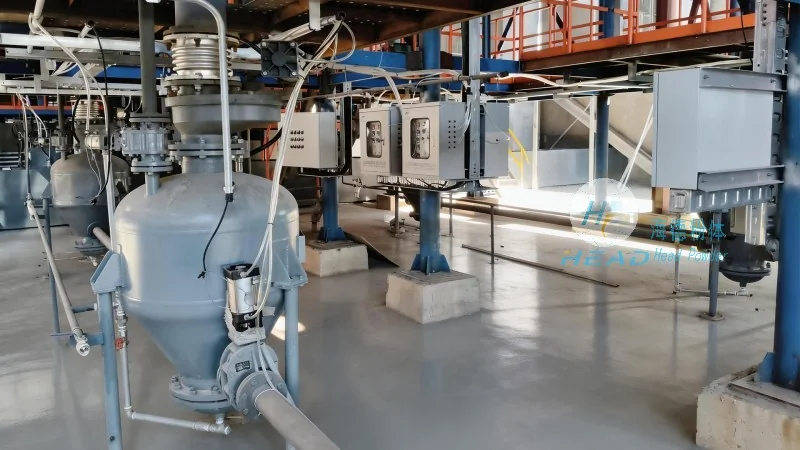
The pneumatic conveying system for loess powder incorporates several key features that address the specific challenges of handling this material. One primary feature is the selection between positive pressure and negative pressure systems, depending on the application requirements. Positive pressure systems, where air is forced through the material, are commonly used for short-distance conveying, while negative pressure systems, which draw material into the system, are suitable for longer distances or when handling dusty environments. The equipment typically includes components such as a hopper for material storage, a rotary valve for controlled discharge, a conveying pipeline, and a receiver for material collection. These components work in tandem to ensure a consistent and efficient flow of loess powder. Additionally, the system may incorporate features like dust filtration and air filtration to maintain air quality and comply with environmental regulations. The design also considers the material’s tendency to agglomerate, incorporating mechanisms such as agitators or vibrators to prevent blockages and ensure smooth operation. Advanced materials and coatings are used to prevent corrosion and wear, extending the equipment’s service life and reducing maintenance costs.

Operation Process of Loess Powder Pneumatic Conveying Equipment
The operation process of the loess powder pneumatic conveying equipment involves several steps that ensure the material is transported safely and efficiently from the source to the destination. The process begins with the loading of loess powder into the hopper. The hopper is equipped with a lid and a discharge valve, which controls the flow of material into the system. Once the hopper is filled, the rotary valve opens, allowing the material to enter the conveying pipeline. Simultaneously, the air compressor or blower starts operating, generating the necessary airflow to move the material through the pipeline. The air pressure and flow rate are carefully controlled to match the material’s properties and the distance of the conveying line. As the material travels through the pipeline, it is carried by the air stream, and the pipeline’s design, including bends and elbows, is optimized to minimize pressure loss and prevent material deposition. The receiver at the end of the pipeline collects the material, and the air is filtered and released back into the environment. The entire process is automated, with sensors and controls monitoring the system’s performance and adjusting parameters as needed to maintain optimal operation. This automated approach ensures consistent performance and reduces the need for manual intervention, enhancing operational efficiency and reducing labor costs. The system’s control panel allows operators to monitor key parameters such as pressure, flow rate, and material level, providing real-time feedback and enabling quick adjustments if any issues arise.

Working Principle of Loess Powder Pneumatic Conveying Equipment
The working principle of the loess powder pneumatic conveying equipment is based on the fundamental concept of fluidization and transport of particulate materials using air as the conveying medium. The system operates by creating a pressure differential between the source and the destination, which propels the loess powder through the pipeline. In a positive pressure system, the air compressor increases the pressure in the pipeline, forcing the air and material mixture to move forward. The air acts as a carrier, suspending the loess particles and allowing them to be transported at high speeds. The velocity of the air in the pipeline is maintained above the material’s terminal velocity to prevent settling and ensure continuous flow. In a negative pressure system, the air is drawn from the receiver and pulled through the material, creating a vacuum that pulls the loess powder into the pipeline. The material is then carried by the air stream to the destination. The equipment’s design takes into account the particle size distribution and density of the loess powder, as these factors influence the required air velocity and pressure. The use of appropriate air filtration and dust collection systems is critical to maintain air quality and prevent dust contamination in the surrounding environment. The system’s efficiency is also influenced by the pipeline’s diameter, length, and the number of bends, as these factors affect the pressure drop and energy consumption. By optimizing these parameters, the equipment can achieve high conveying rates with minimal energy input, making it an economical solution for loess powder transportation. The working principle also involves the use of appropriate air velocities and pressure differentials to ensure that the material remains suspended and transported without clogging or deposition.




