For industrial applications involving the transportation of salt, the use of pneumatic conveying systems offers an efficient and reliable method. This article provides an overview of the operation process and working principle of a salt pneumatic conveying line, highlighting the key components and steps involved in its operation. The information is presented by Shandong HeadPowder Engineering Co., Ltd., a company specializing in engineering solutions for material handling, with its headquarters located in Shandong, China.

Company Introduction
Shandong HeadPowder Engineering Co., Ltd., commonly known as headpowder, is a professional manufacturer and supplier of material handling equipment. With a strong focus on innovation and quality, the company has established itself as a trusted partner in the industry. Headquartered in Shandong, China, headpowder leverages advanced technology and extensive experience to design and produce efficient pneumatic conveying systems tailored to the needs of various industrial sectors.
Working Principle of Salt Pneumatic Conveying Line
A salt pneumatic conveying line operates by utilizing compressed air to transport solid salt particles from a source to a destination. The system typically consists of several key components, including a hopper for material storage, a feeder to control the flow of salt, a conveying pipeline, a separator to separate air from the material, and a receiver for the final product. The working principle involves the following steps:
1. Material Loading: Salt is loaded into the hopper from a storage silo or other containers. The hopper is designed to hold a sufficient quantity of salt to ensure continuous operation without frequent refilling.
2. Feeding and Air Intake: As the feeder starts, it releases a controlled amount of salt into the conveying pipeline. Simultaneously, compressed air is introduced into the pipeline, creating a pressure differential that propels the salt particles forward. The air intake is regulated to maintain an optimal air-to-material ratio, which is crucial for efficient conveying.

3. Pneumatic Conveying: The salt particles are carried through the pipeline by the moving air stream. The conveying velocity and pressure are carefully managed to prevent material degradation, blockages, or excessive energy consumption. The system may include multiple pipeline segments, with bends and transitions that are designed to minimize friction and maintain the flow of material.
4. Air-Solid Separation: At the receiving end of the line, a separator (such as a cyclone or bag filter) is used to separate the air from the salt. The air is discharged to the atmosphere, while the salt is collected in a receiver or storage bin. This step ensures that the conveyed material is clean and free from air contamination.
Operation Process of the Salt Pneumatic Conveying Line
The operation process of a salt pneumatic conveying line involves a series of sequential steps that ensure smooth and continuous material transport. The process typically begins with the preparation of the system and concludes with the completion of the conveying task. The key stages of the operation process are as follows:
1. System Preparation: Before starting the operation, all components of the pneumatic conveying line are checked for proper functionality. This includes verifying the condition of the hopper, feeder, pipeline, and separator. The compressed air system is also tested to ensure adequate pressure and flow rates. Once all checks are completed, the system is ready for operation.

2. Start-up Sequence: The operation begins with the activation of the feeder and the compressed air supply. The feeder starts feeding salt into the pipeline, and the air is introduced to create the conveying flow. The system is monitored for the initial flow of material and air, ensuring that the process is stable and without any blockages or leaks.
3. Continuous Conveying: Once the start-up sequence is completed, the system operates in a continuous mode. The feeder maintains a steady flow of salt, and the compressed air continues to transport the material through the pipeline. The receiving end collects the salt, and the air is separated and discharged. This stage is characterized by consistent performance and minimal downtime.
4. Shutdown Procedure: When the conveying task is completed, the system is shut down in a controlled manner. The feeder is stopped first, followed by the compressed air supply. The pipeline is then depressurized to prevent any residual material from being trapped or causing blockages. The hopper and receiver are emptied, and the system is prepared for the next operation cycle.
Key Features and Benefits of the Salt Pneumatic Conveying Line
The salt pneumatic conveying line offered by Shandong HeadPowder Engineering Co., Ltd. incorporates several features that enhance its performance and reliability. These features include:
1. Efficient Material Handling: The system provides a high-capacity and continuous method for transporting salt, reducing the need for manual handling and improving operational efficiency.
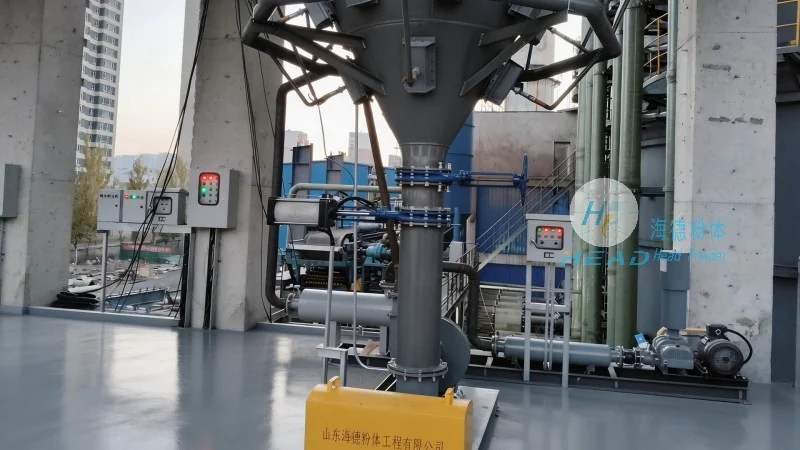
2. Low Maintenance Requirements: The design of the conveying line minimizes moving parts and uses durable materials, resulting in lower maintenance costs and longer service life.
3. Customizable Solutions: headpowder offers tailored pneumatic conveying systems that can be adapted to specific salt types, conveying distances, and industrial requirements.
4. Environmental Compliance: The air-solid separator ensures that the system operates in an environmentally friendly manner, with minimal air emissions and no dust contamination.
Conclusion
The operation process and working principle of a salt pneumatic conveying line are critical for ensuring efficient and reliable material transport in industrial applications. By understanding the key components and steps involved, users can optimize the performance of the system and achieve consistent results. Shandong HeadPowder Engineering Co., Ltd. provides advanced pneumatic conveying solutions that meet the highest standards of quality and efficiency, supporting the needs of various industries in China and beyond.




