HeadPowder, a leading manufacturer based in Shandong, China, specializes in advanced pneumatic conveying systems tailored for the battery material industry. This equipment is designed to efficiently transport bulk materials such as lithium, cobalt, nickel, and other raw components used in battery production. The following sections will detail the operational process and working principles of these systems, highlighting their efficiency and reliability in industrial applications.

Key Components and Structure of Pneumatic Conveying Systems
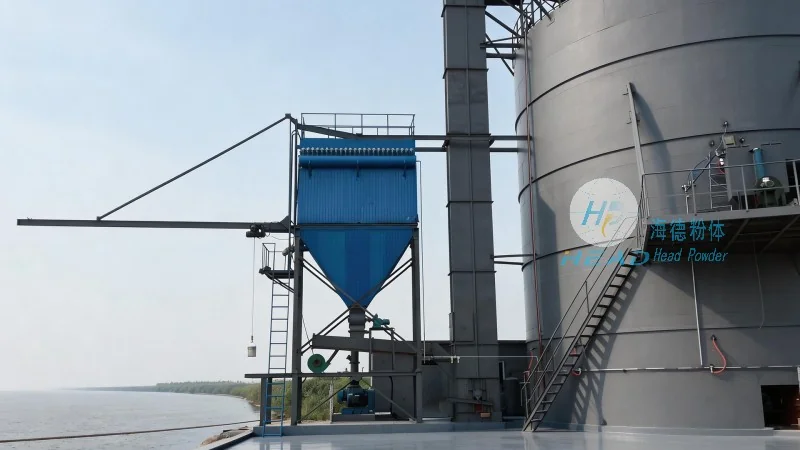
The pneumatic conveying equipment for battery materials typically consists of several core components that work in tandem to ensure smooth material transport. These include the material feed hopper, which holds the bulk material; the air compressor or blower that generates the necessary airflow; the conveying pipeline, which may be made of stainless steel or other corrosion-resistant materials to handle abrasive battery materials; and the discharge outlet where the material is deposited. The system may also incorporate features like cyclone separators or filters to separate air from the material and maintain a clean environment. Each component is engineered to withstand the harsh conditions of battery material processing, ensuring long-term durability and minimal maintenance.
Operation Process of Pneumatic Conveying Equipment
The operation process of the pneumatic conveying system for battery materials begins with the loading of raw materials into the feed hopper. The material is then drawn into the system by the air flow generated by the compressor. As the air moves through the pipeline, it carries the material particles forward, creating a dense phase or dilute phase conveying mode depending on the system design. The dense phase mode is often preferred for transporting abrasive or sensitive materials like those used in battery production, as it reduces particle impact and wear on the pipeline. The system continuously monitors the air pressure and flow rate to maintain optimal conveying conditions. When the material reaches the discharge point, the air is separated from the material using a cyclone or filter, and the material is deposited into the receiving container. The entire process is automated, with sensors and controls ensuring consistent performance and minimal downtime.
Working Principle of Pneumatic Conveying Systems
The working principle of the pneumatic conveying equipment relies on the fundamental physics of fluid dynamics and particle transport. The system uses compressed air to create a pressure differential that propels the material particles through the pipeline. In the dense phase conveying mode, the air velocity is kept low, and the material is carried in a plug-like flow, minimizing particle-to-particle and particle-to-pipe collisions. This reduces wear and tear on the equipment and prevents material degradation. The dilute phase mode, on the other hand, uses higher air velocities to transport material in a suspended state, which is suitable for lighter or less abrasive materials. The choice between dense and dilute phase depends on the specific characteristics of the battery material being transported, such as particle size, density, and abrasiveness. The system also incorporates air filtration and separation mechanisms to ensure that the conveyed material remains clean and free from contaminants, which is critical for maintaining the quality of battery components.

Advantages of Using Pneumatic Conveying Equipment for Battery Materials
Implementing pneumatic conveying systems for battery materials offers several advantages over traditional mechanical conveying methods. Firstly, it eliminates the need for mechanical components like conveyor belts or buckets, reducing maintenance costs and minimizing the risk of mechanical failure. The absence of moving parts also reduces the likelihood of material contamination, which is essential for high-purity battery materials. Secondly, pneumatic conveying systems can handle a wide range of material types and particle sizes, making them versatile for different stages of battery production. The systems are also compact and can be integrated into existing production lines with minimal modifications. Additionally, the enclosed pipeline design prevents dust and fumes from escaping into the environment, enhancing workplace safety and compliance with environmental regulations. These advantages make pneumatic conveying an ideal solution for modern battery manufacturing facilities seeking to improve efficiency, reduce costs, and maintain product quality.




