HeadPowder, a leading manufacturer based in Shandong, China, specializes in the design and production of advanced weighing feeding and pneumatic conveying systems for powder materials. These systems are crucial in industries such as pharmaceuticals, food processing, and chemical manufacturing, where precise material handling and consistent product quality are paramount.

Working Principle of Weighing Feeding Pneumatic Conveying
The core of a weighing feeding system lies in its ability to accurately measure and control the flow rate of bulk materials. The process typically begins with a hopper or storage vessel that feeds material into a weighing hopper or feeder. This feeder is equipped with load cells that continuously monitor the weight of the material within. As material is dispensed, the load cells provide real-time feedback to a control system, which adjusts the feeder's operation to maintain a desired flow rate. This closed-loop control ensures that the material is delivered at a consistent rate, minimizing variations in the final product.
Simultaneously, the pneumatic conveying system uses compressed air or other gases to transport the material from the weighing feeder to the destination point, such as a silo, mixer, or processing unit. The conveying process is often divided into two main types: dilute phase and dense phase. Dilute phase conveying uses higher air velocities to suspend the powder particles in the air stream, while dense phase conveying operates at lower velocities, creating a slurry-like flow that reduces particle degradation and improves material integrity.

Key Characteristics of Weighing Feeding Pneumatic Conveying Systems
One of the primary advantages of these systems is their high level of automation and precision. The integration of weighing technology with pneumatic conveying allows for real-time monitoring and adjustment of material flow, ensuring that production processes run smoothly and efficiently. This precision is particularly important in industries where product consistency is critical, as even small variations in feed rate can impact the final product's quality and performance.
Another notable characteristic is the system's ability to handle a wide range of powder materials, from fine powders to bulk solids. The design of the weighing hopper and feeder can be customized to accommodate different material properties, such as particle size, density, and flowability. This flexibility makes the system suitable for diverse applications across various industries.
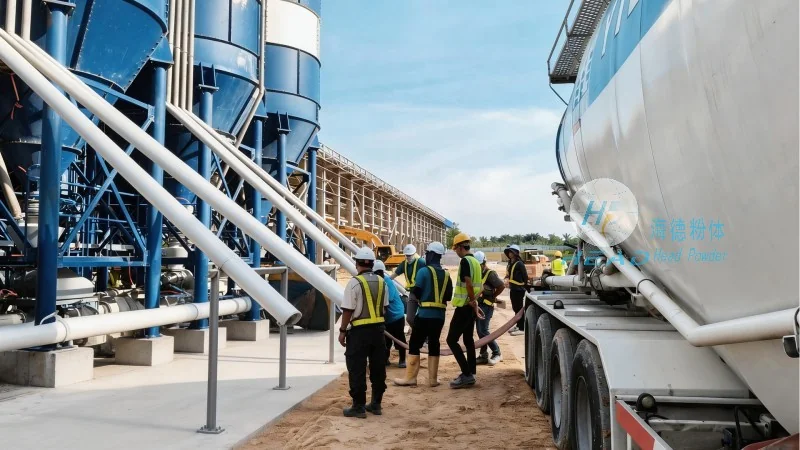
Furthermore, the pneumatic conveying aspect of the system offers advantages in terms of space efficiency and contamination control. Unlike traditional mechanical conveying methods, which may involve moving parts and potential for material contamination, pneumatic systems use enclosed pipes and air flow to transport materials, reducing the risk of cross-contamination and maintaining product purity. This is especially important in industries like pharmaceuticals and food processing, where product safety is a top priority.
Applications and Benefits in Industrial Settings
Weighing feeding and pneumatic conveying systems are widely used in various industrial applications. In the pharmaceutical industry, for example, these systems are used to handle active pharmaceutical ingredients (APIs) and excipients with high precision, ensuring that the correct dosage is delivered in each batch. In the food industry, they are employed to process ingredients like flour, sugar, and spices, maintaining consistent quality and preventing product spoilage. In chemical manufacturing, they help in the handling of reactive or hazardous materials, providing a safe and controlled method of material transfer.
The benefits of these systems extend beyond precision and safety. They also contribute to improved operational efficiency by reducing downtime and minimizing material waste. The closed-loop control system allows for quick adjustments in response to changes in production demand or material availability, ensuring that the system operates at optimal performance levels. Additionally, the reduced need for manual intervention lowers labor costs and enhances workplace safety.




