Efficient and reliable powder milk transport is a critical aspect of the dairy industry, directly impacting production efficiency, product quality, and operational costs. As a leading manufacturer in the field, Shandong HeadPowder Engineering Co., Ltd. specializes in providing advanced powder handling solutions tailored to the unique needs of dairy processing facilities. This article provides a detailed comparison of common powder milk transport methods, highlighting their advantages and disadvantages to help businesses make informed decisions when selecting the most suitable system for their operations.
Company Overview: HeadPowder Engineering
HeadPowder, a division of Shandong HeadPowder Engineering Co., Ltd., is a professional manufacturer dedicated to the research, development, and production of powder handling equipment. With years of experience in the dairy and food processing sectors, HeadPowder has established itself as a trusted partner for businesses seeking high-quality, efficient powder transport solutions. The company's headquarters is located in Shandong, China, where it leverages advanced technology and rigorous quality control to deliver products that meet international standards. HeadPowder's commitment to innovation and customer satisfaction ensures that its solutions are not only effective but also adaptable to evolving industry requirements.
Overview of Common Powder Milk Transport Methods
Several methods are commonly used for transporting powder milk, each with distinct characteristics and applications. The primary options include positive pressure pneumatic conveying, negative pressure pneumatic conveying, and mechanical conveying systems. Understanding the advantages and disadvantages of each method is essential for selecting the most appropriate solution for a specific dairy processing environment.

Positive Pressure Pneumatic Conveying
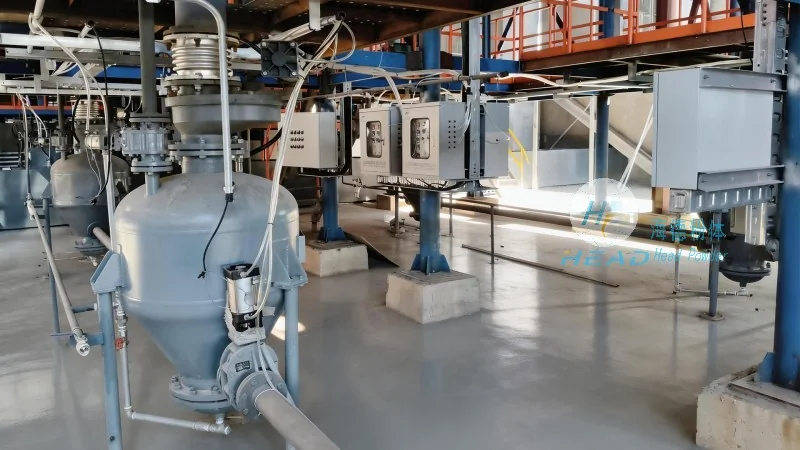
Positive pressure pneumatic conveying systems operate by using a positive pressure air stream to move powder milk through a pipeline. This method is widely used in the dairy industry due to its ability to handle a wide range of powder characteristics, including fine powders and those with high moisture content. The primary advantage of positive pressure systems is their high efficiency in transporting large volumes of powder over long distances with minimal pressure drop. Additionally, these systems are relatively simple to install and maintain, making them a cost-effective solution for many facilities. However, a significant disadvantage is the potential for dust generation and air leakage, which can lead to product contamination and increased energy consumption. Another drawback is the need for proper filtration and air cleaning systems to comply with hygiene standards, adding to the overall operational complexity and cost.
Negative Pressure Pneumatic Conveying
Negative pressure pneumatic conveying, also known as vacuum conveying, uses a vacuum to draw powder milk into a collection system. This method is particularly suitable for applications requiring gentle handling of delicate powders, such as infant formula, where excessive pressure could damage the product. The main advantage of negative pressure systems is their ability to handle fine powders and powders with low bulk density without the need for high air velocities. This gentle handling minimizes product degradation and ensures consistent quality. Furthermore, negative pressure systems are effective in transporting powders from multiple sources to a central collection point, making them ideal for complex processing lines. However, the primary disadvantage is the higher energy consumption compared to positive pressure systems, as maintaining a vacuum requires more power. Additionally, the system is more susceptible to blockages and clogging, especially with powders that have high moisture content or are prone to agglomeration. Regular maintenance and cleaning are essential to prevent system downtime and ensure reliable operation.

Mechanical Conveying Systems
Mechanical conveying systems, such as screw conveyors and belt conveyors, rely on mechanical components to transport powder milk. These systems are commonly used for short-distance transport within a facility or for moving bulk powders from storage to processing areas. The primary advantage of mechanical conveyors is their low energy consumption and minimal air pollution, as they do not require compressed air. This makes them an environmentally friendly option and suitable for facilities with strict air quality regulations. Additionally, mechanical systems are generally more cost-effective for short-distance applications and can handle a wide variety of powder types without the need for specialized equipment. However, a significant disadvantage is their limited ability to transport powders over long distances or through complex layouts, as the system may require multiple components and increased maintenance. Another drawback is the potential for product degradation due to friction and heat generation, especially with heat-sensitive powders. Proper lubrication and temperature control are necessary to mitigate these issues and maintain product quality.

Choosing the Right Powder Milk Transport Method
When selecting a powder milk transport method, several factors must be considered to ensure optimal performance and cost-effectiveness. The first consideration is the specific characteristics of the powder, including particle size, moisture content, and bulk density. Fine powders with high moisture content may require gentle handling, making negative pressure systems more suitable. In contrast, coarse powders with low moisture content can be efficiently transported using positive pressure systems. The second factor is the distance and layout of the processing facility. For long-distance transport or complex layouts, positive pressure or negative pressure pneumatic systems are preferred, while mechanical conveyors are ideal for short distances. Third, operational costs, including energy consumption, maintenance, and initial investment, play a crucial role in the decision-making process. Positive pressure systems may have lower initial costs but higher energy and maintenance expenses, whereas negative pressure systems have higher energy costs but lower maintenance requirements. Finally, hygiene and regulatory compliance are critical, especially in the dairy industry, where strict standards must be met to ensure product safety. Positive pressure systems may require additional filtration and cleaning systems to maintain hygiene, while mechanical systems offer a more closed environment, reducing the risk of contamination.
Conclusion
In conclusion, the choice of powder milk transport method depends on a combination of factors, including powder characteristics, distance, operational costs, and regulatory requirements. Shandong HeadPowder Engineering Co., Ltd. offers a range of advanced powder handling solutions that cater to these diverse needs, providing businesses with reliable and efficient transport systems. By understanding the advantages and disadvantages of each method, dairy processing facilities can make informed decisions that enhance production efficiency, maintain product quality, and reduce operational costs. HeadPowder's expertise and commitment to quality ensure that its solutions are tailored to meet the unique challenges of each application, helping businesses achieve their operational goals while adhering to industry standards.




