Heavy powder handling is a critical aspect of industrial operations, particularly in sectors such as chemical, pharmaceutical, and food processing. The efficient and safe transfer of bulk powders is essential for maintaining production continuity and ensuring product quality. Among the various methods available, several stand out as the most common and effective solutions. This article provides a detailed comparison of the primary heavy powder conveying methods, focusing on their operational principles, advantages, disadvantages, and typical applications.
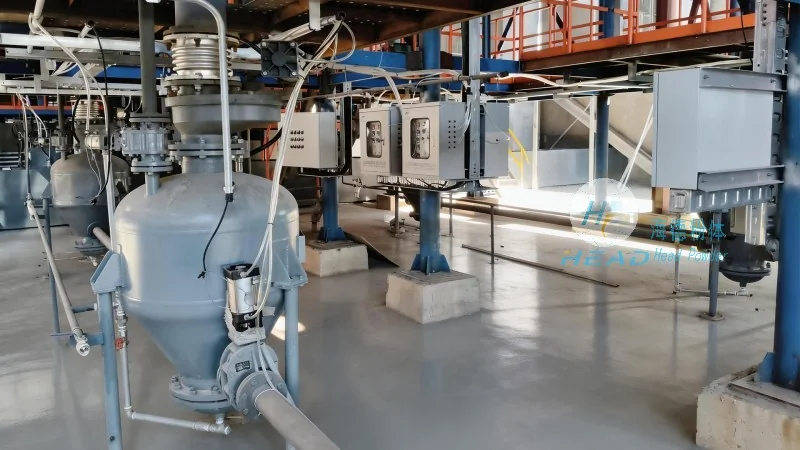
Introduction to Heavy Powder Conveying
Before delving into the specific methods, it is important to understand the fundamental requirements for powder conveying. Key considerations include material properties (e.g., particle size, density, moisture content), process demands (e.g., flow rate, distance, and environment), and safety regulations. The choice of conveying system directly impacts productivity, energy consumption, and maintenance costs. Shandong HeadPowder Engineering Co., Ltd., a leading provider of powder handling solutions based in China, specializes in designing and implementing tailored conveying systems to meet diverse industrial needs.
1. Positive Pressure Pneumatic Conveying
Positive pressure pneumatic conveying systems operate by using a positive pressure air stream to transport powders through a pipeline. This method is widely used for short to medium distances and is particularly effective for handling fine or cohesive powders. The system typically consists of a blower, a hopper, and a discharge point. The blower generates a high-pressure air flow that draws the powder from the hopper into the pipeline, where it is carried to the destination. One of the main advantages of this method is its ability to handle powders with high moisture content or those that are prone to caking. Additionally, positive pressure systems are generally more reliable for conveying abrasive materials as they reduce wear on the equipment. However, they require more energy compared to other methods and may not be suitable for long-distance transport due to pressure drop limitations. The system is commonly used in applications such as chemical processing, where precise control over powder flow is essential.

2. Negative Pressure Pneumatic Conveying
Negative pressure pneumatic conveying, also known as suction conveying, uses a vacuum to draw powders into the system. Unlike positive pressure systems, negative pressure systems are ideal for long-distance transport and can handle larger volumes of material. The setup includes a vacuum pump, a hopper, and a discharge point at the receiving end. The vacuum pump creates a low-pressure environment that pulls the powder from the source into the pipeline. This method is particularly advantageous for applications where the material needs to be transported from multiple points to a central location, such as in bulk material handling in food processing plants. Negative pressure systems are also more energy-efficient for long distances as they rely on the vacuum to move the material. However, they are more susceptible to clogging and require more maintenance due to the presence of dust and particles in the air stream. The system is commonly used in industries like pharmaceuticals, where the need for clean and hygienic handling is paramount.
3. Screw Conveyors
Screw conveyors, also known as auger conveyors, are mechanical devices that use a rotating screw to move powders through a trough or tube. This method is suitable for both horizontal and inclined transport and is commonly used in applications where the material is relatively free-flowing and non-abrasive. The screw, which is typically made of stainless steel or other corrosion-resistant materials, rotates within a housing, pushing the powder forward. Screw conveyors are known for their simplicity and low cost, making them a popular choice for small to medium-scale operations. They are also easy to install and maintain, with minimal moving parts. However, they are not suitable for handling highly abrasive or sticky powders, as this can lead to excessive wear and clogging. The system is commonly used in industries such as agriculture and food processing, where the transport of grains or other bulk materials is required.
4. Belt Conveyors
Belt conveyors are another common method for heavy powder transport, particularly for bulk materials with larger particle sizes. This system consists of a continuous belt that moves over rollers or pulleys, transporting the material from one point to another. The belt is typically made of rubber or other durable materials and is supported by a frame. Belt conveyors are highly efficient for long-distance transport and can handle large volumes of material at high speeds. They are also suitable for transporting materials over uneven terrain or at steep inclines. One of the main advantages of belt conveyors is their ability to handle abrasive materials without significant wear, as the belt and rollers are designed to withstand heavy loads. However, they require more space compared to other methods and may not be suitable for fine powders that can easily fall through the belt. The system is commonly used in mining and construction industries, where the transport of raw materials is a critical part of the production process.

5. Comparison and Selection Criteria
When selecting a heavy powder conveying method, several factors must be considered to ensure optimal performance and cost-effectiveness. The first consideration is the distance and layout of the transport system. Positive pressure systems are best for short to medium distances, while negative pressure systems are more suitable for long distances. Screw and belt conveyors are generally used for horizontal or inclined transport over shorter distances. The second factor is the material properties, including particle size, density, moisture content, and abrasiveness. Fine or cohesive powders are better suited for pneumatic systems, while larger or free-flowing materials are ideal for screw or belt conveyors. The third factor is the required flow rate and capacity. Pneumatic systems can handle high flow rates, while screw and belt conveyors are more suitable for moderate to low flow rates. The fourth factor is the environmental and safety requirements. Pneumatic systems may require dust collection equipment, while screw and belt conveyors are more enclosed and can be designed for hygienic applications. Shandong HeadPowder Engineering Co., Ltd. offers comprehensive solutions that take into account all these factors, ensuring that the chosen system meets the specific needs of the client.
Conclusion
In conclusion, the choice of heavy powder conveying method depends on a variety of factors, including distance, material properties, and operational requirements. Positive pressure pneumatic conveying is suitable for short to medium distances and fine powders, while negative pressure systems are ideal for long-distance transport. Screw and belt conveyors are effective for horizontal or inclined transport of bulk materials. By carefully evaluating these factors and consulting with experts like Shandong HeadPowder Engineering Co., Ltd., industries can select the most appropriate conveying system to enhance productivity, reduce costs, and ensure safe and efficient powder handling. The company's expertise in designing and implementing tailored solutions ensures that clients receive the best possible outcome for their specific applications.




