For industrial applications, the efficient and safe transportation of calcium hydroxide powder is crucial. This article explores various methods used for conveying this material, considering factors such as material properties, operational requirements, and system reliability. The information is presented by Shandong HeadPowder Engineering Co., Ltd., a leading provider in the field, based in China.

Properties of Calcium Hydroxide Powder and Their Impact on Conveying
Calcium hydroxide, also known as slaked lime, is a white powder with a Mohs hardness of about 1.5. It is hygroscopic, meaning it can absorb moisture from the air, which affects its flowability and handling. The powder is relatively fine, with a typical particle size ranging from 100 to 200 microns, making it prone to dust generation and caking under certain conditions. These characteristics influence the choice of conveying equipment and systems. For instance, high moisture content can lead to increased stickiness, requiring equipment with better sealing and cleaning capabilities. The material's density is approximately 2.2 g/cm³, which affects the power consumption and capacity of the conveying system. Understanding these properties is essential for selecting the most suitable conveying method.
Common Conveying Methods for Calcium Hydroxide Powder
Several methods are commonly employed for the transport of calcium hydroxide powder, each with its advantages and limitations. The selection depends on factors like the distance of transport, the required flow rate, and the environment of the application. The primary methods include pneumatic conveying, mechanical conveying, and hybrid systems.
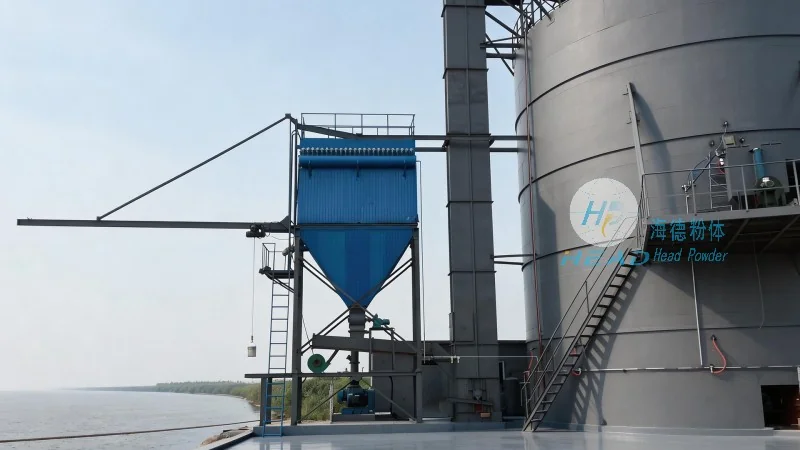
Pneumatic Conveying Systems
Pneumatic conveying uses air or other gases to transport the powder through a pipeline. This method is suitable for both short and long distances and can handle a wide range of particle sizes. There are two main types: pressure and vacuum systems. In pressure systems, air is blown into the conveying line, pushing the powder forward. Vacuum systems, on the other hand, use a vacuum to draw the powder into the line. For calcium hydroxide powder, pressure systems are often preferred due to their ability to handle higher flow rates and prevent dust accumulation. The system typically consists of a hopper, a feeder, a pipeline, and a receiver. The feeder controls the flow rate of the powder into the system, while the pipeline transports it to the destination. The receiver collects the powder and may include a dust collection system to prevent environmental contamination. Pneumatic conveying is effective for applications where the powder needs to be transported over long distances or to multiple points. However, it requires a higher energy input compared to mechanical systems and may not be suitable for very fine powders that are prone to segregation.
Mechanical Conveying Systems
Mechanical conveying relies on mechanical components such as screws, belts, or buckets to move the powder. Screw conveyors are widely used for calcium hydroxide powder due to their simplicity and reliability. They consist of a rotating screw inside a trough, which pushes the powder forward. Screw conveyors are suitable for horizontal or slightly inclined transport and can handle a moderate flow rate. They are particularly effective for short distances and when the powder needs to be mixed or blended. However, they may not be suitable for very fine powders that can cause the screw to clog or for long vertical lifts. Belt conveyors are another option, especially for horizontal transport over longer distances. They use a continuous belt to move the powder and are capable of handling large quantities. Belt conveyors are often used in bulk handling applications and can be integrated with other equipment such as feeders and elevators. However, they require regular maintenance and may be affected by the material's stickiness, which can cause the belt to slip or the material to accumulate.

Hybrid Conveying Systems
Hybrid systems combine pneumatic and mechanical components to leverage the advantages of both methods. For example, a screw feeder can be used to feed the powder into a pneumatic line, ensuring a consistent flow rate and preventing the powder from clogging the feeder. This approach is particularly useful for handling fine powders that are prone to segregation or for applications where the powder needs to be transported over long distances with high efficiency. Hybrid systems can also include mechanical components such as vibrators or agitators to improve the flowability of the powder and reduce the risk of clogging. These systems are often used in industrial plants where the powder is processed and then transported to different areas. The combination of pneumatic and mechanical elements allows for better control over the conveying process and can improve the overall efficiency and reliability of the system.
Factors Influencing the Choice of Conveying Method
The selection of a conveying method for calcium hydroxide powder depends on several factors. The first is the distance of transport. For short distances, mechanical systems such as screw conveyors may be sufficient. For longer distances, pneumatic systems are more appropriate. The second factor is the required flow rate. If a high flow rate is needed, pneumatic systems are generally more effective. The third factor is the environment of the application. If the powder needs to be transported in a clean environment, mechanical systems may be preferred to avoid dust generation. The fourth factor is the material's properties, such as its moisture content and stickiness. If the powder is hygroscopic and prone to caking, a system with better sealing and cleaning capabilities is required. The fifth factor is the cost of the system. Mechanical systems are generally less expensive than pneumatic systems, but they may require more maintenance. The sixth factor is the space available for the system. If space is limited, a compact system such as a screw conveyor may be preferred. By considering these factors, the most suitable conveying method can be selected for a specific application.




