Aluminum foil conveying is a critical process in various industrial applications, requiring efficient and reliable methods to handle the thin, flexible material. Understanding the common ways to convey aluminum foil is essential for optimizing production lines and ensuring product quality. This article explores several standard approaches used in the industry, highlighting their applications and benefits.

1. Mechanical Conveying Systems
One of the most widely used methods for aluminum foil conveying is through mechanical systems. These systems typically involve rollers, belts, or chains that move the foil along a designated path. Mechanical conveyors are favored for their simplicity, durability, and ability to handle large volumes of material. They are particularly effective in environments where the foil needs to be transported over short to medium distances, such as in packaging and manufacturing facilities. The design of these systems can be customized to accommodate different foil widths and thicknesses, ensuring smooth and consistent movement. For instance, in food packaging plants, mechanical conveyors are often employed to transport aluminum foil rolls from storage to the packaging machinery, minimizing downtime and enhancing operational efficiency. HeadPowder, a leading provider of material handling solutions, offers advanced mechanical conveyor systems tailored to aluminum foil applications. Their expertise in customizing conveyor designs ensures that clients can optimize their production lines for efficiency and reliability. By leveraging durable materials and precision engineering, HeadPowder's mechanical conveyors are built to withstand the demands of high-volume foil processing, providing consistent performance over extended periods.
2. Pneumatic Conveying (Air-Lift Systems)
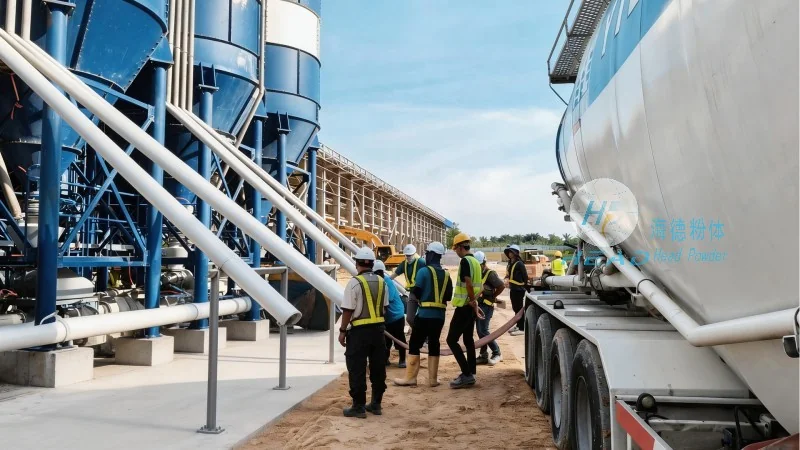
Another common method is pneumatic conveying, which uses air pressure to move aluminum foil through a system of pipes. This technique is especially useful for transporting foil in a dust-free environment or when the material needs to be moved over longer distances without physical contact. Pneumatic systems are ideal for applications where the foil is sensitive to contamination or where space constraints limit the use of traditional mechanical conveyors. The process involves creating a vacuum or pressure differential to draw the foil through the pipeline, with the air acting as the medium for transport. This method is often used in industries like pharmaceuticals and electronics, where maintaining a clean and controlled environment is paramount. Pneumatic conveying can handle both loose and packaged foil, providing flexibility in material handling. However, it requires careful maintenance to ensure consistent air pressure and prevent material blockages in the pipes.

3. Magnetic Conveying
Magnetic conveying is a specialized method that utilizes magnetic fields to move aluminum foil, particularly in applications involving metal detection or separation. This technique is beneficial when the foil contains metal contaminants or when it needs to be sorted based on magnetic properties. Magnetic conveyors are designed with strong magnets that attract the foil, pulling it along the conveyor path. They are commonly used in recycling facilities or in manufacturing processes where metal particles must be removed from the foil before further processing. The advantage of magnetic conveying is its ability to handle foil with embedded metal without causing damage, as the magnetic force is gentle and controlled. This method is particularly effective for thin aluminum foils that are prone to tearing or stretching under mechanical stress.
4. Automated Guided Vehicles (AGVs) and Robotic Systems
With advancements in automation, automated guided vehicles (AGVs) and robotic systems have become increasingly popular for aluminum foil conveying. These systems use sensors and GPS technology to navigate and transport foil along predefined routes. AGVs are ideal for moving heavy or bulky aluminum foil rolls over longer distances, reducing the need for manual labor and improving safety in the workplace. Robotic arms can also be integrated into the conveying process, allowing for precise placement and handling of foil sheets or rolls. This approach is particularly useful in high-volume production environments where speed and accuracy are critical. The use of AGVs and robots in foil conveying enhances overall operational efficiency and reduces the risk of human error. However, these systems require significant investment and regular maintenance to ensure optimal performance.

5. Gravity Conveying
Gravity conveying is a simple yet effective method for aluminum foil conveying, especially when the foil needs to be moved over short vertical or inclined distances. This technique relies on the natural force of gravity to transport the foil from a higher to a lower level. Gravity conveyors are often used in settings where the foil is stored on elevated shelves or racks and needs to be moved to a lower processing area. The design of these systems typically involves a sloped surface or a series of rollers that allow the foil to slide down smoothly. This method is cost-effective and requires minimal energy, making it suitable for small-scale operations or in areas with limited space. Gravity conveying is particularly useful for transporting thin aluminum foils that are lightweight and can easily slide under the influence of gravity. However, it is limited by the need for a suitable slope and may not be suitable for long-distance or complex path requirements.




