When it comes to efficiently transporting fiber materials in industrial settings, selecting the right conveying method is crucial for maintaining product quality, minimizing downtime, and optimizing overall operational costs. As a leading provider in the field, Shandong HeadPowder Engineering Co., Ltd. specializes in offering a range of advanced solutions tailored to meet diverse material handling needs. This article explores the primary fiber material conveying methods, highlighting their applications, advantages, and considerations for effective implementation.

1. Screw Conveyors (Auger Conveyors)
Screw conveyors, also known as auger conveyors, are among the most common and versatile equipment for moving bulk fiber materials. These systems consist of a rotating helical screw inside a U-shaped or cylindrical trough. As the screw rotates, it pushes the material forward through the trough, making them ideal for horizontal, vertical, or inclined transport. The design allows for gentle handling of delicate fiber materials, preventing damage and maintaining their integrity. Screw conveyors are particularly effective for transporting materials like wood chips, paper pulp, and agricultural fibers. They are also easy to install and maintain, with minimal moving parts, which reduces operational costs and enhances reliability. The compact design makes them suitable for confined spaces, and their ability to handle a wide range of material densities and moisture levels makes them a popular choice in various industries, including pulp and paper, agriculture, and construction.
2. Pneumatic Conveying Systems
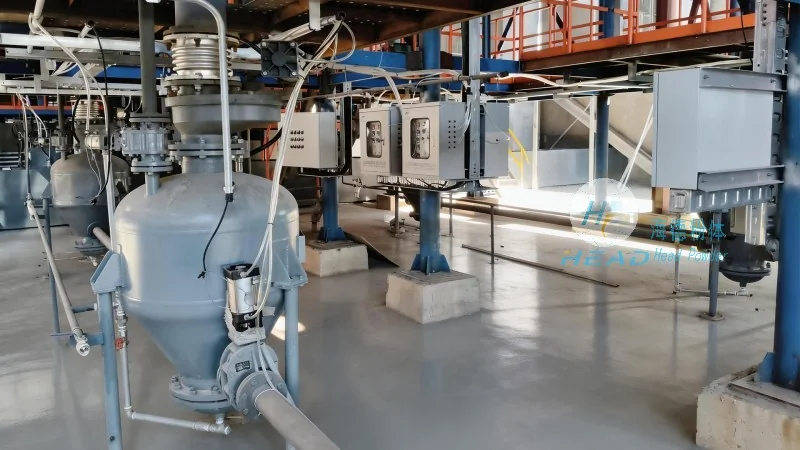
Pneumatic conveying systems utilize air or gas to transport fiber materials through a pipeline network. These systems can be categorized into two main types: pressure and vacuum. Pressure systems use compressed air to push material from the source to the destination, while vacuum systems use suction to draw material into the pipeline. Pneumatic conveying offers several advantages, including the ability to transport materials over long distances, handle fine or dusty fibers without clogging, and integrate with other processing equipment seamlessly. This method is particularly beneficial for applications requiring dust control and contamination prevention, as the material is enclosed within the pipeline. However, the system's performance is highly dependent on the material's properties, such as moisture content and particle size, and may require additional equipment like cyclones or filters to separate the material from the air stream. Pneumatic conveying is widely used in the paper industry for transporting pulp and in the food industry for handling fibrous products.

3. Belt Conveyors
Belt conveyors are another widely adopted method for conveying fiber materials, especially in applications requiring high-volume transport over short to medium distances. These systems consist of a continuous belt looped over two or more pulleys, with the material placed on the belt and moved by the rotation of the pulleys. Belt conveyors are known for their durability and ability to handle a wide range of material types, including heavy or abrasive fibers. They are particularly effective for transporting materials that are prone to sticking or that require gentle handling, as the belt can be designed with special surfaces or coatings to prevent material buildup. Belt conveyors are commonly used in the wood processing industry for moving sawdust and wood chips, as well as in the paper industry for transporting raw materials to processing units. The design allows for easy integration with other equipment, such as feeders or sorters, and can be customized to accommodate different material loads and speeds. However, they may require more space compared to other conveying methods and can be susceptible to material spillage if not properly maintained.

4. Bucket Elevators
Bucket elevators are vertical or inclined conveying systems that use a series of buckets attached to a belt or chain to transport fiber materials vertically. The buckets are filled with material at the bottom and then lifted to the top, where the material is discharged. This method is highly efficient for vertical transport and is particularly suitable for materials that are heavy or have a high moisture content, as the vertical movement minimizes the risk of material degradation. Bucket elevators are commonly used in the agricultural and food processing industries for handling grain, hay, and other fibrous materials. They are also effective for transporting materials in high-rise buildings or industrial facilities where vertical space is limited. The design allows for continuous operation with minimal downtime, and the enclosed structure helps prevent dust and contamination. However, bucket elevators can be more complex to install and maintain compared to other systems, and they may require regular inspection of the buckets and chains to ensure proper operation.
5. Vibrating Conveyors
Vibrating conveyors utilize vibration to move fiber materials along a trough or conveyor belt. These systems consist of a conveyor bed that is vibrated at a specific frequency and amplitude, causing the material to move forward. The vibration can be generated by electric motors, pneumatics, or mechanical means. Vibrating conveyors are particularly effective for handling materials that are sticky, cohesive, or have a high moisture content, as the vibration helps break up clumps and prevent material buildup. They are also suitable for transporting materials with irregular shapes or sizes, as the gentle movement does not cause damage. This method is commonly used in the chemical and food industries for handling powders and granules, as well as in the mining industry for transporting ore and other fibrous materials. The design allows for easy cleaning and maintenance, and the low speed of operation reduces energy consumption. However, vibrating conveyors may not be as efficient for high-volume transport over long distances and can be affected by the material's properties, such as density and flowability.
6. Hydraulic Conveying
Hydraulic conveying systems use water or other liquids to transport fiber materials through a pipeline. The material is suspended in the liquid and carried to the destination by the flow of the liquid. This method is particularly effective for transporting materials that are difficult to handle by other means, such as fine powders or highly abrasive fibers. Hydraulic conveying offers the advantage of being able to transport materials over long distances with minimal energy consumption and low maintenance. It is commonly used in the mining industry for transporting ore and in the chemical industry for handling slurry materials. However, the system requires a large amount of water, which can be a challenge in areas with water scarcity. Additionally, the material must be compatible with the liquid used, as some materials may react with the liquid or cause clogging. Hydraulic conveying is less common for fiber materials compared to other methods, but it can be a viable option for specific applications where other systems are not suitable.




