Calcium nitrite is a widely used chemical compound in various industrial applications, and efficient material handling is crucial for its safe and reliable transport. Pneumatic conveying systems offer a solution to move calcium nitrite from storage to processing units without the need for mechanical components that could introduce contamination or wear. This article provides a comprehensive overview of the design calculation process and equipment selection for calcium nitrite pneumatic conveying systems, ensuring optimal performance and safety.

Understanding Calcium Nitrite and Its Handling Requirements
Calcium nitrite (Ca(NO₂)₂) is a white crystalline powder with a high solubility in water and a relatively low melting point. It is commonly used as a corrosion inhibitor, in water treatment, and as a food preservative. Due to its chemical properties, handling calcium nitrite requires careful consideration of dust control, temperature management, and material compatibility. Pneumatic conveying systems are particularly suitable for this application as they can transport the powder in a closed system, minimizing exposure to the environment and preventing product degradation.
Key Design Considerations for Pneumatic Conveying Systems
The design of a calcium nitrite pneumatic conveying system involves several critical factors to ensure efficient and safe operation. The first step is to determine the required conveying capacity, which depends on the production rate and the distance between the source and destination. The system must be capable of maintaining a consistent flow rate to avoid blockages or uneven distribution of the material. Additionally, the selection of the conveying air velocity is crucial; it must be high enough to overcome the resistance of the material but low enough to prevent excessive wear on the equipment and to minimize dust generation.
Another important design consideration is the pressure drop across the system. This is influenced by the length of the pipeline, the diameter of the pipes, the number of bends, and the type of material being conveyed. Accurate calculation of the pressure drop is essential to determine the required power for the air compressor and to ensure that the system can maintain the necessary pressure for reliable operation. Engineers typically use empirical formulas or computational fluid dynamics (CFD) simulations to model the flow and pressure characteristics of the system.
Equipment Selection for Calcium Nitrite Pneumatic Conveying
Choosing the right equipment for a calcium nitrite pneumatic conveying system is vital to achieve long-term performance and low maintenance costs. The primary components include the material feeders, air compressors, conveying lines, and dust collectors. For calcium nitrite, which is a fine powder, rotary valves or star feeders are commonly used as material feeders to provide a controlled and consistent flow into the system. These devices prevent the material from clogging and ensure that the air flow is not disrupted.
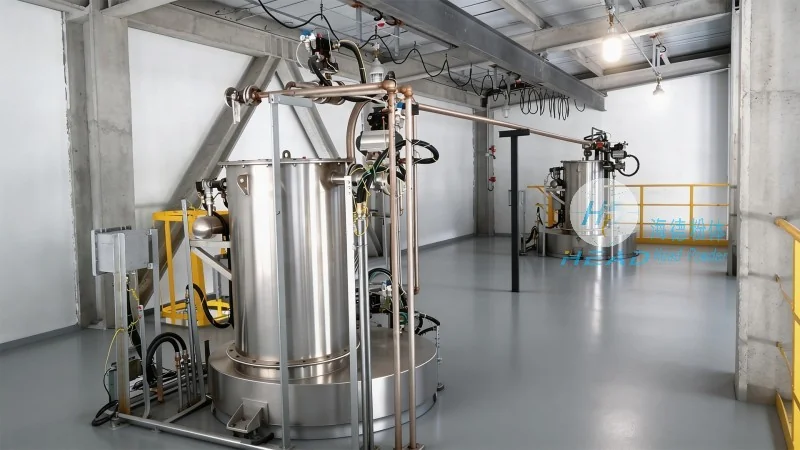
The air compressor is the heart of the system, providing the necessary pressure and volume of air to move the material. Centrifugal or positive displacement compressors are used depending on the required pressure and flow rate. Centrifugal compressors are suitable for high-volume, low-pressure applications, while positive displacement compressors are better for low-volume, high-pressure systems. The choice of compressor type affects the energy efficiency and operational costs of the system.
The conveying lines are typically made of stainless steel or other corrosion-resistant materials to withstand the chemical properties of calcium nitrite. The diameter of the pipes is selected based on the required air velocity and the material's bulk density. Larger diameters reduce pressure drop and improve flow, but they increase the cost and space requirements. The number and type of bends in the pipeline also impact the pressure drop and the risk of material accumulation. Elbows with a larger radius are preferred to minimize friction and prevent blockages.
Dust collectors are essential for maintaining a clean and safe working environment. They capture any fine particles that may escape from the system and prevent them from being released into the atmosphere. Cartridge filters or baghouse filters are commonly used for calcium nitrite, as they can effectively capture the fine powder without clogging. The design of the dust collector must be compatible with the system's pressure and temperature to ensure reliable operation.
Calculation Methods for Pneumatic Conveying System Design
Designing a calcium nitrite pneumatic conveying system requires precise calculations to ensure that all components are properly sized and that the system operates within safe limits. The first step is to determine the material's bulk density and flow characteristics. The bulk density of calcium nitrite is typically around 1.2 to 1.4 g/cm³, and its flowability is influenced by moisture content and particle size. These properties affect the required air velocity and the pressure drop across the system.

The conveying capacity is calculated based on the desired flow rate and the material's bulk density. The formula for the mass flow rate (ṁ) is given by: ṁ = (ρ * A * v), where ρ is the bulk density, A is the cross-sectional area of the pipe, and v is the air velocity. The air velocity is chosen based on the material's properties and the system's design. For calcium nitrite, a typical air velocity is between 20 to 30 m/s for dilute phase conveying and 10 to 15 m/s for dense phase conveying.
The pressure drop (ΔP) in the system is calculated using the Darcy-Weisbach equation or empirical correlations. The Darcy-Weisbach equation is: ΔP = f * (L/D) * (ρ * v²/2), where f is the friction factor, L is the length of the pipe, D is the diameter of the pipe, and ρ is the air density. The friction factor depends on the Reynolds number and the roughness of the pipe surface. For smooth stainless steel pipes, the friction factor can be calculated using the Colebrook equation.
Once the pressure drop is determined, the required power for the air compressor is calculated. The power (P) is given by: P = (ΔP * Q)/η, where ΔP is the pressure drop, Q is the volumetric flow rate of air, and η is the efficiency of the compressor. The compressor size is selected based on the required power and the system's operating conditions. It is important to consider the power consumption and the noise level of the compressor, as these factors affect the overall operational costs and environmental impact.
Case Study: Equipment Selection and Design for a Calcium Nitrite Plant
Shandong HeadPowder Engineering Co., Ltd., a leading provider of material handling solutions, recently designed and supplied a pneumatic conveying system for a calcium nitrite production plant. The plant required a system to transport 10 tons of calcium nitrite per hour from a storage silo to a processing unit located 50 meters away. The design process involved the following steps:

First, the engineers at HeadPowder calculated the required conveying capacity and determined that a dilute phase system with an air velocity of 25 m/s was suitable. The bulk density of calcium nitrite was 1.3 g/cm³, and the pipe diameter was selected as 150 mm to ensure a smooth flow. The pressure drop across the system was calculated to be 150 kPa, which required a centrifugal air compressor with a capacity of 10 m³/min and a pressure of 200 kPa.
The material feeder was chosen as a rotary valve with a capacity of 12 tons per hour, which provided a consistent flow of calcium nitrite into the system. The conveying lines were made of stainless steel with a smooth finish to minimize friction and prevent corrosion. The system included a dust collector with a filtration area of 10 m², which was capable of capturing 99.9% of the fine particles.
The final system was installed and commissioned by HeadPowder's technical team. The system operated at a flow rate of 9.8 tons per hour, with a pressure drop of 145 kPa, which was within the design specifications. The energy consumption was 0.8 kW per ton of material, which was lower than the industry average. The plant operators reported that the system was easy to maintain and that the material was transported safely and efficiently.
Conclusion and Company Information
Designing and selecting the appropriate equipment for calcium nitrite pneumatic conveying systems requires a thorough understanding of the material's properties and the system's operating conditions. By following the design calculations and selecting high-quality equipment, industrial facilities can achieve efficient and safe material handling. Shandong HeadPowder Engineering Co., Ltd. specializes in providing customized material handling solutions for various chemical applications, including calcium nitrite. With years of experience and a team of skilled engineers, HeadPowder ensures that each project is tailored to meet the specific needs of the client, ensuring optimal performance and long-term reliability.




