Coal particle pneumatic conveying systems are essential equipment in modern industrial processes, particularly for the efficient transportation of bulk materials like coal. These systems utilize air or other gases to move solid particles through a pipeline, offering advantages such as low maintenance, flexibility in layout, and the ability to handle abrasive materials without mechanical wear. The core components and operational principles of such systems are crucial for understanding their application and performance in various industrial settings.

HeadPowder, a leading provider in the field, specializes in the design, manufacturing, and integration of advanced pneumatic conveying solutions tailored to the unique needs of coal handling operations. With a strong presence in Shandong, China, the company leverages years of expertise to deliver reliable and efficient systems that meet the demands of coal processing and transportation industries.
Key Components of Coal Particle Pneumatic Conveying Systems
The structure of a typical coal particle pneumatic conveying system comprises several critical components that work in concert to ensure smooth material transport. The primary elements include the material feed hopper, which stores and feeds the coal particles into the system; the conveying line, which is the main pipeline through which the particles and air travel; the air compressor or blower, which generates the necessary pressure to move the material; and the control valves and regulators that manage the flow and pressure within the system. Additionally, the system may include a separator or filter to remove excess air and return it to the compressor, as well as a discharge hopper at the receiving end to collect the transported coal.
Each component plays a vital role in the overall functionality of the system. The feed hopper ensures a consistent supply of coal particles, preventing blockages and maintaining a steady flow. The conveying line, often made of durable materials like stainless steel or special alloys, withstands the abrasive nature of coal particles and the pressure from the air flow. The air compressor or blower provides the driving force, with its capacity and pressure rating tailored to the system's requirements. Control valves and regulators allow operators to adjust the system's performance, ensuring optimal operation under varying load conditions. The separator or filter is essential for maintaining air quality and reducing wear on the compressor, while the discharge hopper facilitates the collection and handling of the transported coal.

Working Principles of Coal Particle Pneumatic Conveying
The operational principle of a coal particle pneumatic conveying system is based on the creation of a gas-solid suspension. When the air compressor or blower operates, it generates a flow of air that enters the conveying line. The coal particles are then introduced into the line, either by gravity from the feed hopper or by a feeder mechanism. The air flow, moving at a sufficient velocity, lifts and transports the coal particles through the pipeline. The velocity of the air must be high enough to overcome the gravitational force acting on the particles and any friction within the line, ensuring that the particles remain suspended and move efficiently.
There are two main types of pneumatic conveying systems used for coal transportation: dilute-phase and dense-phase. Dilute-phase systems operate at higher air velocities, with particles suspended in the air stream and occupying a small fraction of the pipeline volume. This type is suitable for short to medium distances and low to medium particle sizes. Dense-phase systems, on the other hand, operate at lower air velocities, with particles forming a slurry-like mixture with the air, occupying a larger portion of the pipeline volume. Dense-phase systems are ideal for longer distances and larger particle sizes, as they provide better control over the material flow and reduce the risk of particle degradation.
In both systems, the air flow is carefully controlled to maintain the desired particle suspension and transport velocity. The system's design, including the size and layout of the conveying line, the capacity of the air compressor, and the type of feed mechanism, is optimized to achieve the best performance for the specific application. Proper maintenance and monitoring of the system components are essential to ensure consistent operation and minimize downtime.
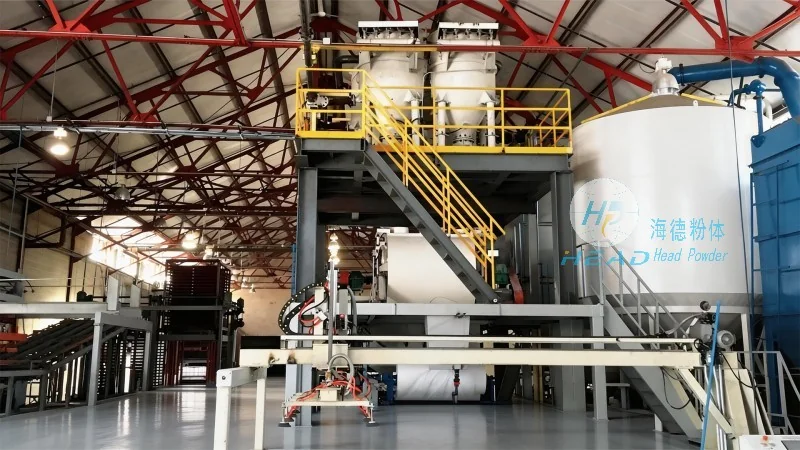
Advantages and Applications of Coal Particle Pneumatic Conveying Systems
Coal particle pneumatic conveying systems offer several advantages over traditional mechanical conveying methods, making them a preferred choice in many industrial applications. One of the key benefits is the ability to handle abrasive and corrosive materials without significant wear on the equipment. The absence of moving parts in the conveying line reduces the risk of mechanical failure and maintenance costs. Additionally, these systems provide flexibility in layout, allowing for complex and non-linear transport routes, which is particularly useful in confined or irregularly shaped facilities.
HeadPowder's coal particle pneumatic conveying systems are widely used in various coal processing and handling applications. These include the transport of raw coal from storage facilities to processing plants, the movement of coal between different stages of processing, such as crushing and screening, and the delivery of coal to storage or loading areas. The systems are also employed in power plants for the transport of coal from storage to the boiler, ensuring a continuous and reliable supply of fuel. In addition, they are used in mining operations for the removal of coal from mines and its transportation to processing facilities.
Conclusion
Coal particle pneumatic conveying systems are a critical component of modern industrial operations, providing efficient and reliable transportation of bulk coal materials. The structure and working principles of these systems, as explained above, highlight the importance of each component and the operational parameters required for optimal performance. HeadPowder, with its expertise and presence in Shandong, China, continues to deliver high-quality pneumatic conveying solutions that meet the evolving needs of the coal industry. By understanding the design and functionality of these systems, industries can make informed decisions to enhance their operational efficiency and sustainability.




