Pneumatic conveying systems play a crucial role in the industrial processing of desulfurization and denitrification agents. These systems are designed to efficiently transport bulk materials, such as powdered chemicals used in flue gas treatment, from one location to another within a facility. The operation of such systems is critical for maintaining the efficiency and reliability of air pollution control equipment, as the consistent and safe delivery of these agents directly impacts the performance of desulfurization and denitrification processes.

HeadPowder Engineering: A Leading Provider of Pneumatic Conveying Solutions
Shandong HeadPowder Engineering Co., Ltd., commonly known as HeadPowder, is a reputable company based in Shandong, China, specializing in the design, manufacturing, and implementation of advanced pneumatic conveying systems. With a strong focus on precision engineering and customer-specific solutions, HeadPowder has established itself as a trusted partner for industries requiring reliable material handling for desulfurization and denitrification applications. The company's expertise lies in developing systems that meet stringent environmental and operational standards, ensuring optimal performance and longevity.
Key Components of the Pneumatic Conveying Line
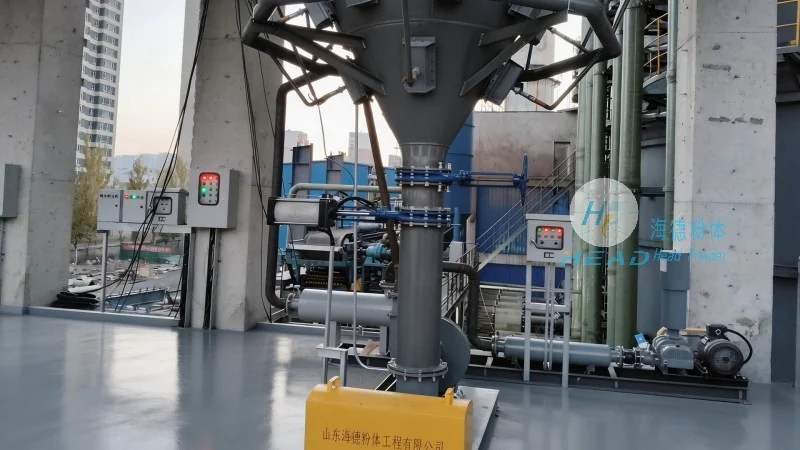
The pneumatic conveying line for desulfurization and denitrification agents typically consists of several key components that work in tandem to facilitate material transport. These components include a hopper or storage silo for material storage, a feeder to control the flow rate of the material, a conveying pipeline (often equipped with airlocks or rotary valves at the inlet and outlet), a blower or compressor to generate the necessary air pressure, and a dust collection system to ensure environmental compliance. Each component is carefully selected and integrated to ensure smooth operation and minimal material loss during transport.
The Operation Process: From Material Loading to Delivery
The operation of the pneumatic conveying line begins with the loading of desulfurization and denitrification agents into the storage hopper. The feeder then regulates the flow of material into the conveying pipeline, ensuring a consistent feed rate. Simultaneously, the blower generates high-pressure air, which is introduced into the pipeline. The air and material mixture is then transported through the pipeline to the destination point, such as a dosing system or a storage tank. At the receiving end, airlocks or rotary valves control the discharge of the material, preventing backflow and maintaining system pressure. The dust collection system captures any airborne particles, ensuring that the process is both efficient and environmentally safe.
Working Principle: Air-Driven Material Transport
The core working principle of the pneumatic conveying line is the use of compressed air to create a flow that transports the material particles. This is achieved through a combination of pressure and velocity, which allows the material to be suspended and carried along the pipeline. The system operates on the principle of fluidization, where the air flow creates a turbulent environment that keeps the material particles in motion. The pressure drop along the pipeline is carefully managed to maintain the required velocity for effective transport, while minimizing energy consumption and wear on system components. The design of the conveying line, including the pipe diameter, length, and bends, is optimized to balance efficiency, cost, and operational reliability.

Advantages of Pneumatic Conveying for Desulfurization and Denitrification Agents
Implementing a pneumatic conveying system for desulfurization and denitrification agents offers several advantages over traditional methods like belt conveyors or bucket elevators. These systems provide a closed-loop operation, which reduces dust emissions and improves environmental compliance. They also offer greater flexibility in terms of layout and integration with existing equipment, allowing for easy expansion or modification of the system. Additionally, pneumatic conveying systems can handle a wide range of material properties, including varying particle sizes, moisture content, and flowability, making them suitable for diverse desulfurization and denitrification applications. The automated control features of these systems enhance operational efficiency and reduce the need for manual intervention, leading to lower labor costs and improved safety.
Conclusion: Ensuring Efficient and Reliable Air Pollution Control
For industries relying on desulfurization and denitrification processes to meet environmental regulations, the performance of the material handling system is paramount. A well-designed pneumatic conveying line, such as those provided by Shandong HeadPowder Engineering Co., Ltd., ensures the consistent and safe transport of these critical agents. By understanding the operation process and working principles of such systems, facility managers can optimize their air pollution control operations, reduce downtime, and enhance overall plant efficiency. With its commitment to quality and customer satisfaction, HeadPowder continues to deliver reliable solutions that support the sustainable operation of industrial facilities worldwide.




