HeadPowder Engineering Co., Ltd., a prominent enterprise based in Shandong, China, specializes in the development and implementation of industrial alkali powder pneumatic conveying systems. As a leading manufacturer in the field, the company provides comprehensive solutions tailored to the unique demands of various industrial sectors. This article explores the operational process and working principles of these systems, offering valuable insights for professionals seeking to optimize material handling in their facilities.

Key Components of the Pneumatic Conveying System
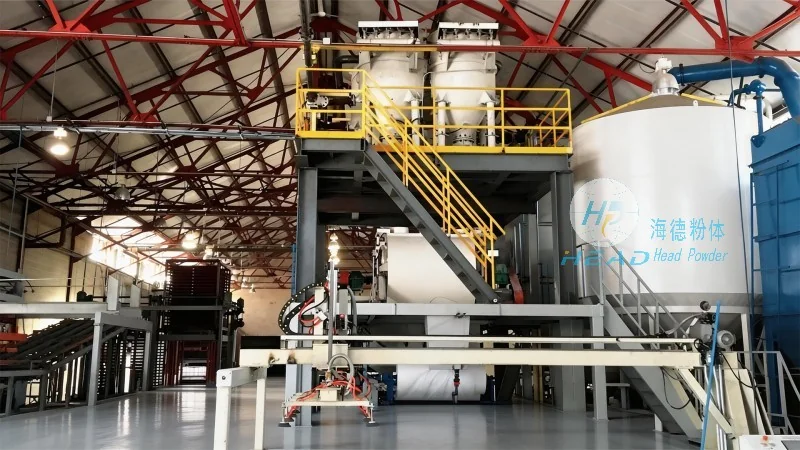
The industrial alkali powder pneumatic conveying system consists of several critical components that work in tandem to ensure reliable and efficient material transport. These components include a material hopper for storage, a rotary valve or feeder to control the flow of powder, a conveying line (often equipped with bends and straight sections), a dust collector or filter to capture airborne particles, and a blower or compressor that generates the necessary air pressure. Each component plays a vital role in maintaining the system's performance and safety.

Operation Process of the Pneumatic Conveying System
The operation of an industrial alkali powder pneumatic conveying system typically follows a sequential process. Initially, the alkali powder is stored in the material hopper. The rotary valve or feeder then regulates the discharge of the powder into the conveying line. Simultaneously, the blower or compressor supplies compressed air, which creates a flow within the pipeline. As the air and powder mixture travels through the conveying line, the powder is suspended and transported to the destination point, such as a storage silo or processing unit. At the receiving end, a rotary valve or similar device controls the discharge of the powder into the target container. The entire process is automated and can be controlled through a programmable logic controller (PLC) or other control systems, ensuring precise and consistent operation.
Working Principle of the Pneumatic Conveying System
The core working principle of the industrial alkali powder pneumatic conveying system is based on the use of air as the conveying medium. The system operates by creating a pressure differential between the material hopper and the receiving end. The blower or compressor generates a high-pressure air stream, which draws the alkali powder from the hopper and transports it through the pipeline. The powder particles are suspended in the air stream due to the air's velocity and the system's design, which minimizes particle separation and ensures smooth transport. The dust collector or filter is integrated to capture any fine particles that may escape during the conveying process, maintaining air quality and compliance with environmental regulations. This pneumatic method offers advantages over traditional mechanical conveying, such as reduced wear and tear on equipment, lower maintenance costs, and the ability to handle materials with varying properties.

Advantages and Applications
Industrial alkali powder pneumatic conveying systems offer several advantages that make them suitable for a wide range of applications. These include the ability to handle abrasive or corrosive materials, such as certain alkali powders, without causing significant wear on components. The system also provides flexibility in terms of layout, as the conveying line can be installed in various configurations to suit the specific needs of the facility. Additionally, the pneumatic method allows for the transport of materials over long distances and at high speeds, improving overall production efficiency. HeadPowder Engineering's systems are commonly used in industries such as chemical manufacturing, food processing, and pharmaceuticals, where the handling of alkali powders is essential for production processes.




