HeadPowder, a leading engineering company based in Shandong, China, specializes in advanced pneumatic conveying solutions tailored for handling rare earth powders. This article explores the fundamental principles of pneumatic conveying systems and highlights key working scene characteristics that make them ideal for processing rare earth materials.

Principle of Pneumatic Conveying
Pneumatic conveying is a method of transporting bulk materials, such as rare earth powders, using a stream of air or gas. The process involves creating a pressure differential between the material feed point and the discharge point, which propels the powder through a pipeline. There are two primary types of pneumatic conveying systems: dilute-phase and dense-phase. Dilute-phase systems use low air-to-material ratios, resulting in faster transport but higher energy consumption. Dense-phase systems, on the other hand, use higher air-to-material ratios, leading to slower but more controlled movement, which is particularly beneficial for fragile or sensitive materials like rare earth powders.
Working Scene Characteristics of Pneumatic Conveying for Rare Earth Powders
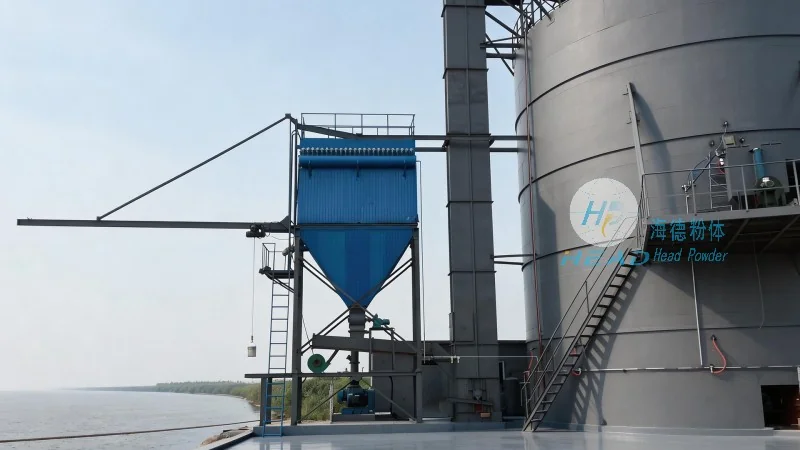
The application of pneumatic conveying in rare earth powder processing is characterized by several distinct features that enhance operational efficiency and material integrity. First, the system’s ability to handle fine powders without clogging or degradation is critical, as rare earth powders often have high specific surface areas and can be prone to agglomeration. The controlled airflow in pneumatic conveying minimizes particle breakage and maintains the material’s physical properties, which is essential for downstream processes like smelting and alloying.
Advantages in Industrial Applications
For industrial settings, pneumatic conveying offers several advantages when dealing with rare earth powders. It provides a closed system, which reduces dust emissions and improves workplace safety, a critical factor in handling hazardous materials. Additionally, the system’s flexibility allows for integration with existing production lines, enabling seamless material transfer between storage, processing, and packaging stages. The energy efficiency of modern pneumatic conveying systems, especially with optimized air flow and pipeline design, also contributes to cost savings in long-term operations.

Key Considerations for Implementation
When implementing pneumatic conveying for rare earth powder handling, several factors must be considered to ensure optimal performance. Material properties, such as particle size distribution, moisture content, and density, directly impact the system’s design. For example, finer particles may require higher air velocities to prevent deposition, while larger particles might need more robust pipeline components to withstand abrasion. The system’s scale, including pipeline length and number of transfer points, also influences the choice between dilute-phase and dense-phase operation. HeadPowder’s engineering expertise in customizing systems to meet these specific requirements ensures that clients receive solutions that are both effective and cost-efficient.
Conclusion
HeadPowder Engineering Co., Ltd., based in Shandong, China, leverages its deep understanding of pneumatic conveying principles to deliver tailored solutions for rare earth powder material handling. By focusing on the unique characteristics of rare earth powders and optimizing system design, HeadPowder enhances material integrity, operational efficiency, and safety in industrial applications. The working scene characteristics of pneumatic conveying, combined with advanced engineering, make it a preferred method for processing rare earth materials, supporting the growth of industries reliant on these critical resources.




