Pneumatic conveying systems have become essential in modern industrial processes, particularly for handling materials like perlite. Perlite, a naturally occurring volcanic glass, is widely used in insulation, horticulture, and chemical applications due to its lightweight and thermal properties. The efficient transportation of perlite from storage to processing units or packaging areas is critical for maintaining production efficiency and product quality. This article explores the fundamental principles of perlite pneumatic conveying systems and highlights the key characteristics of their operational environments.

Key Characteristics of Perlite
Perlite is a unique material known for its low bulk density and high porosity, which makes it an ideal candidate for pneumatic transport. Its lightweight nature reduces the energy required for conveying, while its thermal stability ensures it retains its properties during handling. In industrial settings, perlite is often processed in bulk, requiring systems that can handle large volumes with minimal degradation. The material's non-corrosive properties also simplify the design of conveying equipment, as it does not react with metal or other components of the system.
Principle of Pneumatic Conveying
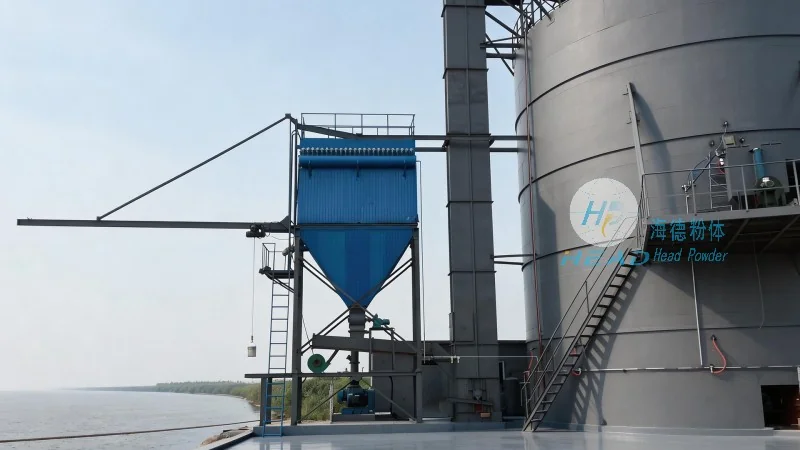
The core principle of pneumatic conveying involves the use of air or gas to transport solid particles through a pipeline. For perlite applications, systems typically operate under positive pressure (pressure conveying) or negative pressure (vacuum conveying). Positive pressure systems use a blower to force air and perlite particles through the pipeline, while negative pressure systems use a vacuum to draw materials into the system. The choice between these methods depends on factors such as the distance of transport, the volume of material, and the need for dust control. Key components of a typical system include a material feeder, a conveying line, a separation unit (to separate air from the material), and a discharge device. The material feeder ensures a consistent flow of perlite into the system, while the separation unit, often a cyclone or bag filter, recovers the material and returns it to the process or collects it for reuse.

Working Scene Characteristics
The operational environment of perlite pneumatic conveying systems varies significantly based on the industry and application. In the building insulation sector, for example, systems are often integrated into production lines that manufacture perlite boards or loose-fill insulation. These systems must handle large volumes of perlite and maintain a clean, dust-free environment to meet quality standards. In horticulture, the systems may be used to transport perlite to greenhouses or nurseries, where it is used as a growing medium. The key characteristics of these working scenes include high throughput requirements, the need for gentle handling to avoid particle breakage, and compliance with safety regulations regarding dust emissions. Additionally, the systems must be designed to handle variations in material moisture content, as perlite can absorb moisture from the air, which affects its flow properties and the efficiency of the conveying process.

Applications in Different Industries
Perlite pneumatic conveying systems are versatile and find applications across multiple industries. In the chemical industry, they are used to transport perlite as a filler in the production of coatings or adhesives. The systems must be capable of handling fine particles and maintaining a consistent particle size distribution, which is crucial for product performance. In the food industry, although less common due to safety regulations, perlite is sometimes used as a carrier for food additives, and the conveying systems must meet strict hygiene standards. The working scene characteristics in these industries include the need for explosion-proof designs in hazardous environments and the integration of the system with existing production lines to minimize downtime.
Efficiency and Maintenance Considerations
The efficiency of a perlite pneumatic conveying system is directly related to its design and maintenance. Proper sizing of the conveying line and the blower or vacuum pump ensures that the system operates at optimal pressure and flow rates, minimizing energy consumption. Regular maintenance, such as cleaning the separation unit and checking for blockages in the pipeline, is essential to prevent system downtime and maintain material quality. The working scene characteristics also influence maintenance practices; for example, in dusty environments, more frequent cleaning of filters and components is required to prevent clogging. Additionally, the system's ability to handle variations in material properties, such as changes in particle size or moisture content, is a key factor in its long-term performance and reliability.
About Shandong HeadPowder Engineering Co., Ltd.
Shandong HeadPowder Engineering Co., Ltd., operating under the brand name headpowder, specializes in the design, manufacturing, and installation of pneumatic conveying systems for various industrial applications. With a focus on perlite and other lightweight materials, the company provides customized solutions tailored to the specific needs of its clients. Headpowder's systems are engineered to meet the highest standards of efficiency, reliability, and safety, ensuring that clients can achieve optimal performance in their production processes. The company's headquarters is located in Shandong, China, where it leverages local expertise and resources to deliver cutting-edge solutions to the global market.




