Shandong HeadPowder Engineering Co., Ltd., commonly known as Headpowder, is a professional manufacturer based in Shandong, China. The company specializes in providing advanced solutions for material handling, particularly focusing on the pneumatic conveying of calcium carbonate powder materials. This article aims to explore the working principle and key characteristics of pneumatic conveying systems designed for such applications.

Pneumatic conveying, also known as air conveying, is a method of transporting bulk materials like calcium carbonate powder through a pipeline using a stream of air. The system typically consists of a blower or compressor to generate airflow, a hopper to store the material, and a pipeline network to direct the material from the source to the destination. In the case of calcium carbonate powder, which is commonly used in industries such as paper, plastics, and coatings, efficient material handling is crucial for maintaining product quality and operational efficiency.
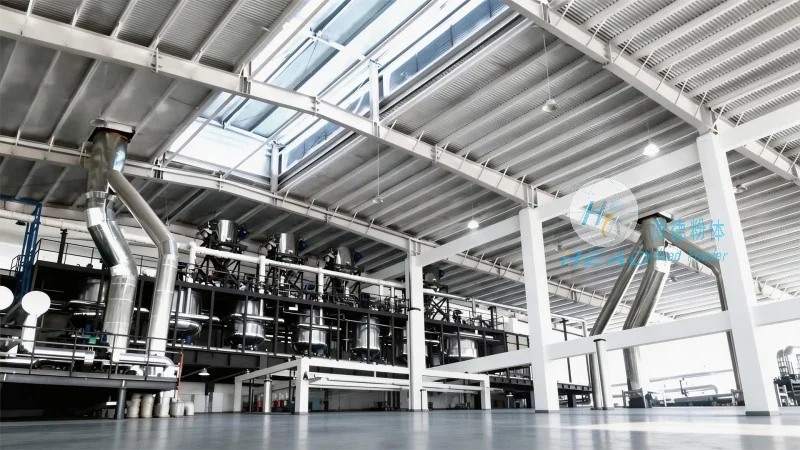
Working Principle of Pneumatic Conveying for Calcium Carbonate Powder
The working principle of a pneumatic conveying system for calcium carbonate powder involves several key steps. First, the calcium carbonate powder is fed into a hopper equipped with a feeder, which controls the flow rate of the material. Simultaneously, a blower or compressor generates a high-pressure air stream that is introduced into the pipeline. The feeder then releases the powder into the air stream, creating a mixture of powder and air. This mixture is then transported through the pipeline under pressure, with the air providing the necessary force to move the powder particles. The system may include components such as a filter or cyclone separator at the receiving end to separate the powder from the air, ensuring that the material is delivered to the target location without contamination.

During the conveying process, the air velocity within the pipeline is a critical parameter that determines the efficiency of the system. The velocity must be sufficient to overcome the resistance of the powder particles and the friction within the pipeline, while also preventing the powder from settling or clogging the system. In practice, the air velocity is typically maintained at a level that ensures the powder particles remain suspended in the air stream, which is known as the "air-to-material ratio." This ratio is carefully controlled to balance the conveying capacity with energy consumption. The system may also include features such as pulse-jet cleaning or vibration to prevent the buildup of powder on the pipeline walls, which could lead to blockages or reduced efficiency.
Key Characteristics of Pneumatic Conveying for Calcium Carbonate Powder
Several important characteristics define the effectiveness of pneumatic conveying systems for calcium carbonate powder. One of the primary advantages is the high conveying efficiency, as the system can transport large volumes of material over long distances with minimal energy consumption compared to traditional methods like belt conveyors or bucket elevators. Additionally, pneumatic conveying offers excellent flexibility in terms of layout, as the pipeline can be easily routed around obstacles or integrated into existing production lines without significant modifications. Another significant characteristic is the ability to maintain product quality, as the enclosed system prevents contamination from dust, moisture, or other environmental factors that could affect the purity of the calcium carbonate powder. The system also provides a hygienic and clean operation environment, which is particularly important for applications where product purity is critical, such as in the food or pharmaceutical industries. Furthermore, pneumatic conveying systems are relatively easy to install and maintain, with components like blowers and filters being readily available and requiring routine maintenance to ensure optimal performance.

Another important characteristic is the ability to handle a wide range of particle sizes and shapes in calcium carbonate powder. Pneumatic conveying systems can effectively transport fine powders, as well as coarser particles, without causing excessive wear or damage to the equipment. This versatility makes the system suitable for various applications, from small-scale laboratory use to large-scale industrial production. The system also offers a high degree of automation, with sensors and control systems that monitor the flow rate, pressure, and temperature of the material, ensuring consistent performance and reducing the risk of operational issues. Furthermore, pneumatic conveying is a relatively low-cost solution compared to other material handling methods, as it eliminates the need for complex machinery like conveyors or elevators, and reduces labor costs associated with manual handling.




