HeadPowder, a leading engineering firm based in Shandong, China, specializes in the design, manufacturing, and installation of advanced material handling systems tailored for the lithium-ion battery industry. The company's expertise lies in developing efficient and reliable pneumatic conveying solutions for positive electrode materials, which are critical components in modern battery production. This article provides a detailed overview of the operation process and working principle of a typical pneumatic conveying line used in the handling of lithium-ion battery positive electrode materials, highlighting key aspects that ensure optimal performance and material integrity.

Overview of the Pneumatic Conveying System
The pneumatic conveying line for lithium-ion battery positive electrode material is a closed-loop system designed to transport powders or granules from a source to a destination without the need for mechanical components like belts or buckets. The system primarily consists of several key components, including a material hopper, a feeder, a conveying pipe, a control unit, and a dust collection system. Each component plays a crucial role in the overall operation, ensuring that the material is transported safely and efficiently while maintaining its physical and chemical properties.
Working Principle of the Pneumatic Conveying Line
The core of the pneumatic conveying line's operation is the use of compressed air to create a flow that propels the material through the conveying pipe. The process begins with the material being fed from the hopper into the feeder, which regulates the flow rate to match the system's capacity. As the material enters the conveying pipe, it is entrained by the high-velocity air stream generated by the compressor. The air and material mixture travels through the pipe to the discharge point, where the material is separated from the air and collected in the receiving hopper. The air, now containing fine particles, is then directed to a dust collector for filtration and recycling, ensuring minimal environmental impact and material loss.
Operation Process: Step-by-Step Guide
The operation of the pneumatic conveying line follows a systematic sequence to ensure smooth and continuous material transport. The process typically includes the following steps:
1. Preparation and Startup: Before initiating the conveying process, all components are inspected for proper functionality. The compressed air system is activated, and the pressure is adjusted to the optimal level for the specific material being handled. The feeder is set to the desired flow rate, and the system is checked for any leaks or obstructions.
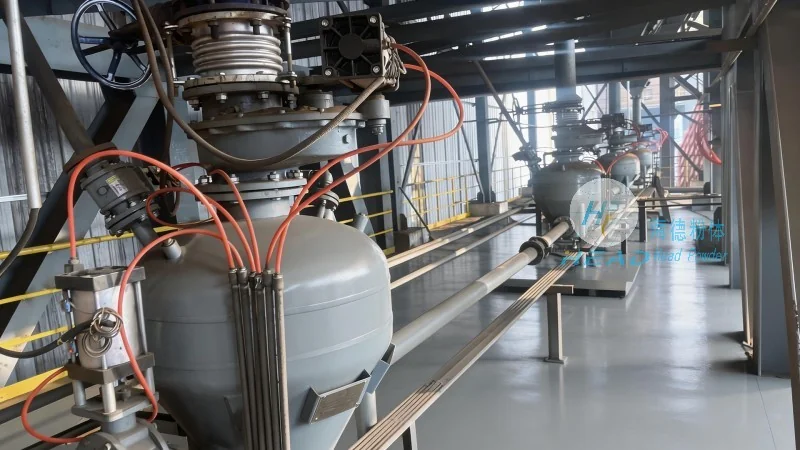
2. Material Loading: The positive electrode material is fed into the hopper from the storage silo. The hopper is designed with a smooth interior to prevent material buildup and ensure consistent flow. As the material accumulates, it is gradually transferred to the feeder, which maintains a steady supply to the conveying line.
3. Conveying Phase: Once the system is fully operational, the feeder releases the material into the conveying pipe. The compressed air, flowing at a high velocity, entrains the material particles, creating a dense phase or dilute phase flow depending on the system design. The material travels through the pipe to the discharge point, where it is deposited into the receiving container. The speed and pressure of the air are continuously monitored to maintain the desired conveying rate and prevent material degradation.
4. Termination and Maintenance: When the material transfer is complete, the system is shut down in a controlled manner. The compressed air is turned off, and the pressure is released gradually to avoid sudden pressure changes. The hopper and feeder are emptied, and the system is inspected for any residual material or blockages. Regular maintenance, including cleaning the conveying pipe, checking the air filter, and lubricating moving parts, is performed to ensure long-term reliability and prevent downtime.

Key Features and Benefits of the Pneumatic Conveying Line
The pneumatic conveying line for lithium-ion battery positive electrode material offers several advantages that make it an ideal choice for battery manufacturers. These include:
• Hygienic and Contamination-Free Transport: The closed-loop system prevents exposure to external contaminants, ensuring that the positive electrode material remains pure and free from impurities that could affect battery performance.
• Energy Efficiency: Compared to traditional mechanical conveying methods, pneumatic systems are more energy-efficient, reducing operational costs while maintaining high throughput.

• Flexibility and Scalability: The system can be easily adjusted to handle different material types and quantities, making it suitable for various production scales and future expansion.
• Space Efficiency: The compact design of the pneumatic conveying line requires less floor space compared to other material handling solutions, allowing for efficient use of factory layouts.
Ensuring Material Integrity and System Reliability
For lithium-ion battery positive electrode materials, maintaining the integrity of the powder is critical. The pneumatic conveying line is designed with features that minimize material degradation, such as avoiding high shear forces and preventing exposure to moisture or air. The use of appropriate materials for the conveying pipe (e.g., stainless steel or PTFE-coated) and the incorporation of temperature control systems help preserve the material's properties. Additionally, the system's control unit monitors key parameters like pressure, flow rate, and temperature in real-time, providing alerts for any deviations and enabling proactive maintenance to prevent equipment failure.
Conclusion
HeadPowder's pneumatic conveying line for lithium-ion battery positive electrode material is a sophisticated solution that combines advanced engineering with practical application to meet the demanding requirements of modern battery production. By understanding the operation process and working principle of this system, manufacturers can optimize their material handling processes, improve efficiency, and ensure the quality of their final products. The system's reliability, flexibility, and ability to maintain material integrity make it a valuable asset for any battery manufacturing facility.




