Pneumatic conveying systems have emerged as a vital technology in modern industrial processing, especially for handling PVC materials. These systems enable the efficient and safe transport of bulk PVC materials like pellets, powders, and granules over varying distances, from short intra-facility transfers to longer inter-facility movements. The operation of such systems is based on the principle of using an air stream to move material particles through a pipeline, offering advantages over traditional mechanical conveying methods, such as reduced equipment wear, lower maintenance requirements, and improved product cleanliness. Understanding the operation process and working principles of PVC pneumatic conveying systems is crucial for industries relying on PVC processing, as it directly impacts production efficiency, material quality, and overall operational costs.
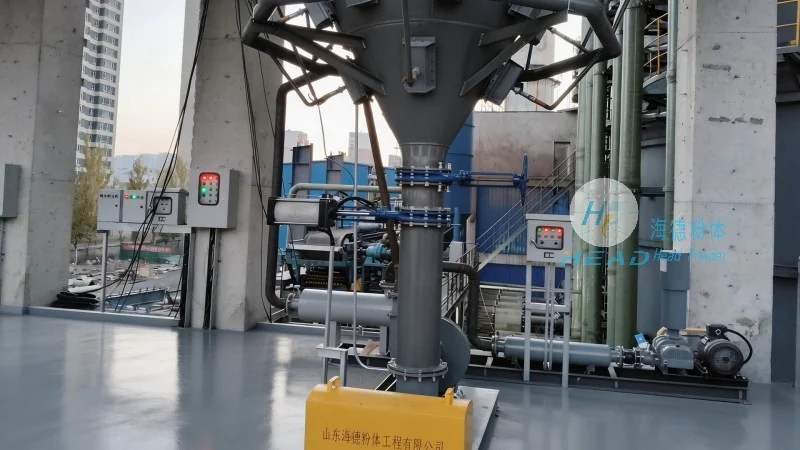

Key Components and Their Roles in PVC Pneumatic Conveying
The effectiveness of a PVC pneumatic conveying system hinges on its key components, each designed to perform a specific function in the material transport process. The primary components include the material hopper or storage bin, the feeder mechanism, the conveying pipeline, the air supply unit (blower or compressor), and the separation or discharge equipment. The material hopper serves as the initial storage container for the PVC material, ensuring a consistent supply for the system. The feeder, typically a rotary valve or screw feeder, regulates the flow of material from the hopper into the conveying line, preventing overfeeding or underfeeding that could disrupt the system's operation. The conveying pipeline, usually made of stainless steel or other corrosion-resistant materials, is the pathway through which the material and air travel. The air supply system generates the necessary airflow, either by creating a vacuum (suction system) or by applying pressure (pressure system), to move the material through the pipeline. The separation equipment, such as cyclone separators or bag filters, is responsible for removing the PVC material from the air stream at the discharge end, allowing the material to be collected in a designated container and the air to be either recirculated or vented to the atmosphere.

Operation Process of a PVC Pneumatic Conveying System
The operation of a PVC pneumatic conveying system follows a systematic sequence of steps that ensure continuous and reliable material transport. The process begins with the loading of PVC material into the material hopper. The feeder then controls the rate at which material is released into the conveying line, maintaining a steady flow. Simultaneously, the air supply system activates, generating the required airflow. The material is then drawn into the conveying line by the airflow, forming a suspension of material particles and air. This mixture travels through the pipeline to the discharge point, where the separation equipment separates the material from the air. The separated PVC material is collected in a storage bin or processing equipment, while the air, now free of material particles, is either returned to the system for recirculation or released to the atmosphere. This cycle repeats continuously as long as material is being fed into the system, providing a seamless flow of PVC material from the source to the destination. Proper operation of each component is essential to maintain the system's efficiency and prevent issues such as blockages or material loss.

Working Principle of Pneumatic Conveying for PVC Materials
The working principle of a PVC pneumatic conveying system is rooted in the fundamental physics of fluid dynamics and particle transport. The system operates by creating a stable suspension of PVC material particles within an air stream, which allows the material to be transported through the pipeline. The two main types of pneumatic conveying systems—suction (or aspirating) and pressure (or blow)—differ in how they generate the airflow and the direction of material movement. In a suction system, a vacuum is created by the air supply unit, drawing the material into the conveying line. This method is suitable for short to medium distances and is commonly used for handling fine PVC powders or granules. In a pressure system, compressed air is used to push the material through the pipeline, making it ideal for longer distances and handling a wider range of PVC materials, including pellets and larger granules. The key to successful pneumatic conveying is maintaining an appropriate air velocity, which is determined by the size and density of the PVC particles. If the air velocity is too low, the material may settle and cause blockages; if it is too high, excessive wear on the pipeline and equipment may occur. HeadPowder Engineering, with its expertise in material science and pneumatic systems, ensures that the system design optimizes air velocity and material flow to achieve the best balance between efficiency and durability.




