HeadPowder, a leading engineering firm based in Shandong, China, specializes in the design and implementation of advanced material handling solutions. This article delves into the core principles and operational characteristics of pneumatic conveying systems specifically tailored for ammonium sulfate, a widely used fertilizer and industrial chemical. The focus is on how these systems efficiently transport the material, addressing key aspects of system design, operational efficiency, and practical application scenarios.

Principle of Pneumatic Conveying for Ammonium Sulfate
Pneumatic conveying systems operate on the fundamental principle of using air or gas to transport bulk materials through a pipeline. In the case of ammonium sulfate, which is typically a fine, granular powder, the system employs a combination of pressure or vacuum to move the material from a source to a destination. The process involves several key components, including a hopper for material storage, a conveyor line, and a control system to regulate air flow and material movement. The system can function under either positive pressure (where air is forced through the line) or negative pressure (where air is drawn out, creating a vacuum). For ammonium sulfate, positive pressure systems are commonly preferred due to the material's flow characteristics and the need to maintain consistent particle size and moisture content during transport.
The core mechanism involves injecting air into the conveying line at a controlled velocity, which lifts and propels the ammonium sulfate particles. The velocity of the air must be sufficient to overcome the gravitational forces acting on the particles while ensuring that the particles do not settle or clog the pipeline. This requires precise engineering to match the air flow rate with the material's bulk density and particle size distribution. The system also incorporates features such as in-line mixers or agitators to prevent material bridging or segregation, which are critical for maintaining the quality of the ammonium sulfate during transport.
Working Scene Characteristics of Ammonium Sulfate Pneumatic Conveying Systems
The operational characteristics of these systems are heavily influenced by the specific application environment and the physical properties of ammonium sulfate. Ammonium sulfate is a hygroscopic material, meaning it can absorb moisture from the air, which can affect its flowability and the overall system performance. Therefore, the design of the conveying system must account for moisture control, often incorporating drying or dehumidification components to maintain optimal material conditions. Additionally, the material's fine particle size (typically in the range of 100-500 microns) makes it susceptible to dust generation and clogging, necessitating the use of specialized filters and cleaning mechanisms to ensure smooth operation.

Another key characteristic is the system's ability to handle varying material flow rates. In industrial settings, such as fertilizer production or chemical processing plants, the demand for ammonium sulfate can fluctuate, requiring the conveying system to adapt dynamically. The control system in these applications often includes variable frequency drives (VFDs) to adjust the air pressure and flow rate in real-time, ensuring that the system operates efficiently under different load conditions. This adaptability is crucial for maintaining production continuity and minimizing downtime.
Advantages and Practical Applications
Pneumatic conveying systems for ammonium sulfate offer several advantages over traditional methods like belt conveyors or bucket elevators. One of the primary benefits is the ability to transport the material in a closed system, which reduces dust exposure and environmental contamination. This is particularly important in industrial settings where air quality regulations are stringent. Additionally, the system allows for a more hygienic and controlled environment, which is essential for food-grade or pharmaceutical applications where ammonium sulfate might be used as an ingredient.
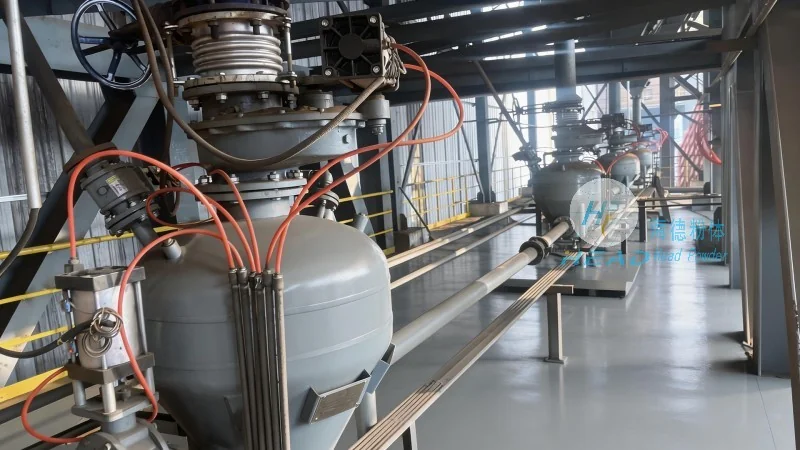
The systems also provide flexibility in terms of layout and integration with existing infrastructure. They can be installed in various configurations, including horizontal, vertical, or a combination of both, to suit the spatial constraints of the facility. This flexibility makes them suitable for both new construction projects and retrofitting into existing plants. Furthermore, the closed-loop design minimizes material loss and waste, contributing to cost savings and environmental sustainability.
Technical Considerations and Maintenance
Implementing an effective pneumatic conveying system for ammonium sulfate requires careful consideration of several technical factors. The material's properties, such as its bulk density, angle of repose, and abrasiveness, directly impact the system's design. For example, a higher bulk density may require higher air velocities to maintain flow, while an abrasive material may necessitate the use of corrosion-resistant materials for the pipeline and components to extend the system's lifespan.
Maintenance is another critical aspect of ensuring the system's long-term performance. Regular cleaning of the conveying line and filters is essential to prevent clogging and maintain air flow efficiency. The system may also include monitoring sensors to detect pressure drops or blockages, allowing for immediate intervention to prevent system failure. HeadPowder, with its expertise in material handling engineering, provides comprehensive maintenance services and support to ensure that the pneumatic conveying systems operate at peak efficiency, minimizing downtime and maximizing productivity.




