HeadPowder, a leading provider in the field of material handling solutions, specializes in the design and implementation of efficient pneumatic conveying systems for sawdust and similar fine powders. This article delves into the fundamental principles behind sawdust pneumatic conveying and highlights the key characteristics of its operational environments.

At the core of sawdust pneumatic conveying is the use of air as the conveying medium to transport dry, fine materials like sawdust from one location to another. The process typically involves a system where air is drawn or blown through a pipeline, creating a flow that carries the sawdust particles along. This method eliminates the need for mechanical components such as belts or buckets, offering a cleaner and more flexible solution for material transport in various industrial settings.
The fundamental principle of pneumatic conveying for sawdust revolves around the balance between the air velocity and the particle size and density. For effective transport, the air velocity must be sufficient to overcome the gravitational forces acting on the sawdust particles and to maintain them in suspension within the pipeline. This ensures that the sawdust moves smoothly without settling or causing blockages. The system often incorporates components like a hopper for material storage, a blower or fan to generate the air flow, and a pipeline network that connects the source and destination points.
One of the primary advantages of sawdust pneumatic conveying is its ability to handle fine powders that are difficult to transport using traditional methods. Sawdust, being a lightweight and often dusty material, can easily create dust clouds and cause environmental issues if not managed properly. Pneumatic conveying systems, however, are designed to contain the material within the pipeline, reducing dust emissions and improving workplace safety. This makes them ideal for applications where dust control is a critical concern.

The working scene characteristics of sawdust pneumatic conveying systems are tailored to meet the specific demands of industrial environments. These systems are commonly used in woodworking facilities, sawmills, and other wood processing plants where sawdust is generated as a byproduct. The operational environment often involves high volumes of material, requiring robust and reliable equipment that can handle continuous operation without frequent maintenance.
In industrial settings, the design of the pneumatic conveying system must consider factors such as the distance between the source and destination, the volume of sawdust to be transported, and the required flow rate. The system may include different types of conveying lines, such as dilute phase or dense phase, depending on the specific application. Dilute phase systems use higher air velocities to transport materials in a more fluidized state, while dense phase systems use lower velocities to move material in a more compacted form, which is beneficial for longer distances or when transporting materials with higher moisture content.
Another key characteristic is the flexibility of the system in adapting to different operational conditions. Sawdust pneumatic conveying systems can be configured to handle varying particle sizes and moisture levels, making them versatile for different wood processing operations. For instance, in a sawmill, the system may need to transport sawdust from the cutting area to a storage silo or to a pelletizing machine. The flexibility allows the system to be adjusted to accommodate changes in production rates or material characteristics without significant modifications.
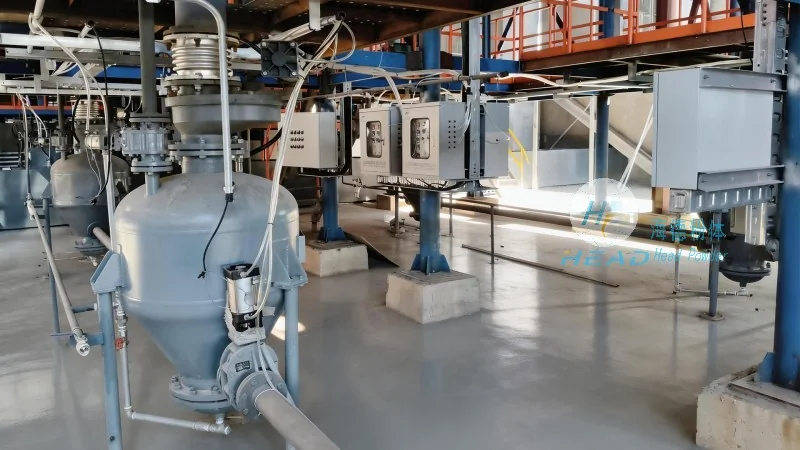
The operational efficiency of sawdust pneumatic conveying is enhanced by the integration of advanced control systems. These systems monitor parameters such as air pressure, flow rate, and material level, ensuring optimal performance and preventing issues like blockages or air leaks. The use of sensors and automation technology helps maintain consistent material transport, reducing downtime and improving overall productivity. This is particularly important in high-volume industrial operations where efficiency directly impacts profitability.
From a safety perspective, sawdust pneumatic conveying systems are designed to minimize the risks associated with handling fine powders. The enclosed pipeline system prevents dust from escaping into the workplace, reducing the risk of respiratory issues and fire hazards. Additionally, the system is equipped with safety features such as pressure relief valves and emergency shut-off mechanisms to ensure safe operation in case of malfunctions. These features are crucial in maintaining a safe working environment, especially in facilities where sawdust is a common byproduct.
In conclusion, sawdust pneumatic conveying is a highly effective and efficient method for transporting fine materials like sawdust in industrial settings. The principles behind the system, combined with its working scene characteristics, make it a preferred choice for many wood processing and material handling applications. As a leading company in this field, Shandong HeadPowder Engineering Co., Ltd. specializes in providing customized pneumatic conveying solutions that meet the specific needs of its clients, ensuring reliable and safe material transport in various operational environments.




